Solar Panel Cost in Hempstead, NY: Village or Town?
Hempstead means two different jurisdictions, and for many households here the real question is not price at all but who owns the roof and which meter the array would feed.
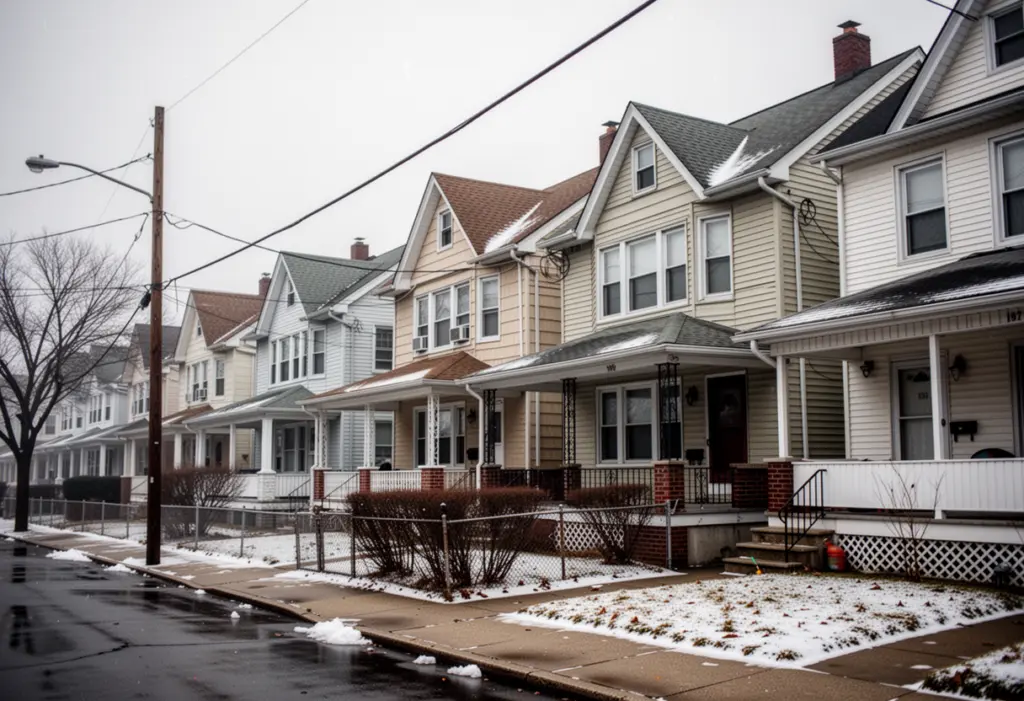
Ask what solar costs in Hempstead and the useful first answer is a question back: do you mean the Village of Hempstead, or the Town of Hempstead? They are different governments with different building departments, and only one of them will be reviewing your permit.
Two Hempsteads
The Village of Hempstead is an incorporated village around the 11550 postal area with its own village government and its own building department. The Town of Hempstead is one of the largest towns in the country and covers a wide band of southwestern Nassau County, including many hamlets and a long list of separate incorporated villages that permit for themselves. If you live inside any incorporated village, the town does not issue your permit.
Get this settled in the first conversation. An installer who cannot name the exact authority having jurisdiction for your address has not looked at your address. New York’s Unified Solar Permit for systems of 25 kW DC and under exists precisely to standardise this paperwork, and more than 300 authorities having jurisdiction across the state have adopted it, but you should still ask which form is being filed and where.
The question that comes before price: who owns the roof
A large share of the housing here is rented, two-family, or part of a multi-unit building, and that changes the entire conversation.
- If you rent, you cannot put an array on a roof you do not own, and the state credit requires equipment used at your principal residence with expenditure you made. Community solar is the route that actually works for tenants.
- If you own a two-family house, ask which meter the array will be connected to. Net metering credits the account attached to that meter. An array wired to your own meter does not reduce a tenant’s separately metered bill, and an array on a house meter does not reduce yours.
- If the building is a co-op or condominium, the roof is common property and the decision belongs to the board, not to a single unit owner.
What the utility side costs
Most of the Town of Hempstead, and the Village of Hempstead with it, is served by PSEG Long Island, which operates the LIPA system. Two villages inside the town are not: Freeport and Rockville Centre run their own municipal electric utilities, and a municipal electric customer sits outside Public Service Commission jurisdiction altogether, with no PSC net metering, no Customer Benefit Contribution and no state interconnection process. Terms there are set by the village utility and have to be asked for directly. Confirm the utility name printed on your own bill before using any of the figures below. Where PSEG Long Island is the utility, the Customer Benefit Contribution is charged monthly on the DC size of the array, not on how much it generates. The 2026 residential rate is $1.13 per kW-month, so a modest 6 kW array on a smaller roof pays 6 x $1.13 = $6.78 a month, roughly $81 a year. It applies to systems interconnected on or after 1 January 2022 and the rates are recalculated each year.
Community solar subscribers pay no Customer Benefit Contribution at all, because the charge does not apply to front-of-the-meter projects. For a tenant or a shareholder in a building with no usable roof, that is the whole comparison.
If a third party offers to put panels on your roof for nothing
Read the term. New York’s 25 percent credit reaches a lease or a power purchase agreement, but only where the agreement runs for at least ten years. The ten year minimum applies to the lease as well as to the PPA, and a shorter agreement earns you nothing from the state. For a lease or PPA the $5,000 is a lifetime ceiling for that agreement rather than an annual figure, and for an agreement running beyond fifteen years no credit is allowed after the fifteenth year. The company that owns the equipment is the party claiming the business-side federal benefit, which is exactly why these offers still price in an incentive you will never see on your own return.
2026 in one paragraph
There is no federal residential credit for a 2026 buyer. Section 25D was terminated for expenditures made after 31 December 2025, and an expenditure is treated as made when the original installation is completed. New York’s own 25 percent credit capped at $5,000 on Form IT-255 is still live for a principal residence. NY-Sun is not: the last Long Island residential block closed on 17 April 2016, and NYSERDA’s Affordable Solar incentive for lower-income households is not open either. As of September 2026 NYSERDA has no open NY-Sun block for homes in any utility territory; check NYSERDA’s NY-Sun dashboard for a new one. All of this moves, so confirm at tax.ny.gov and nyserda.ny.gov rather than trusting a printed proposal.
Frequently Asked Questions
Is Hempstead a village or a town?
Both exist. The Village of Hempstead is an incorporated village around 11550 with its own building department, and the Town of Hempstead is a much larger town covering a wide band of southwestern Nassau County.
Can a renter in Hempstead get solar?
Not on a roof they do not own. Community solar is the practical route for tenants, and community solar subscribers pay no Customer Benefit Contribution at all because the charge does not apply to front-of-the-meter projects.
Which meter does solar feed in a two-family house?
Whichever meter the array is connected to. Net metering credits that account only, so an array on your meter does not reduce a separately metered tenant bill, and the reverse is equally true.
Does a solar lease qualify for the New York credit?
Only if the lease runs at least ten years. The ten year minimum applies to leases as well as to power purchase agreements, and the $5,000 is a lifetime ceiling for that agreement.
This article is general information, not tax, legal or financial advice. Incentive amounts, eligibility rules and deadlines change and depend on your utility, your tax situation and your property. Confirm current terms with NYSERDA, your utility and a qualified tax professional before making a decision.
NY Solar Incentives
Independent New York solar research. We summarise NYSERDA, NY-Sun and federal programme rules from published sources and state plainly when a figure is an estimate. We are not a government agency and do not sell equipment.
Run the arithmetic on your own system
Check the dated program table and your arrangement before counting an incentive. Standard residential NY-Sun blocks are closed; Long Island Affordable Solar has a conditional income-verification route. The NY credit depends on qualified costs and tax liability, while the NYC abatement reduces future property-tax bills. The estimator keeps those timings separate.