Solar Monitoring: What Is Actually Worth Watching
Daily production tells you what the weather did. Here are the four things worth watching, and the one comparison that matters.
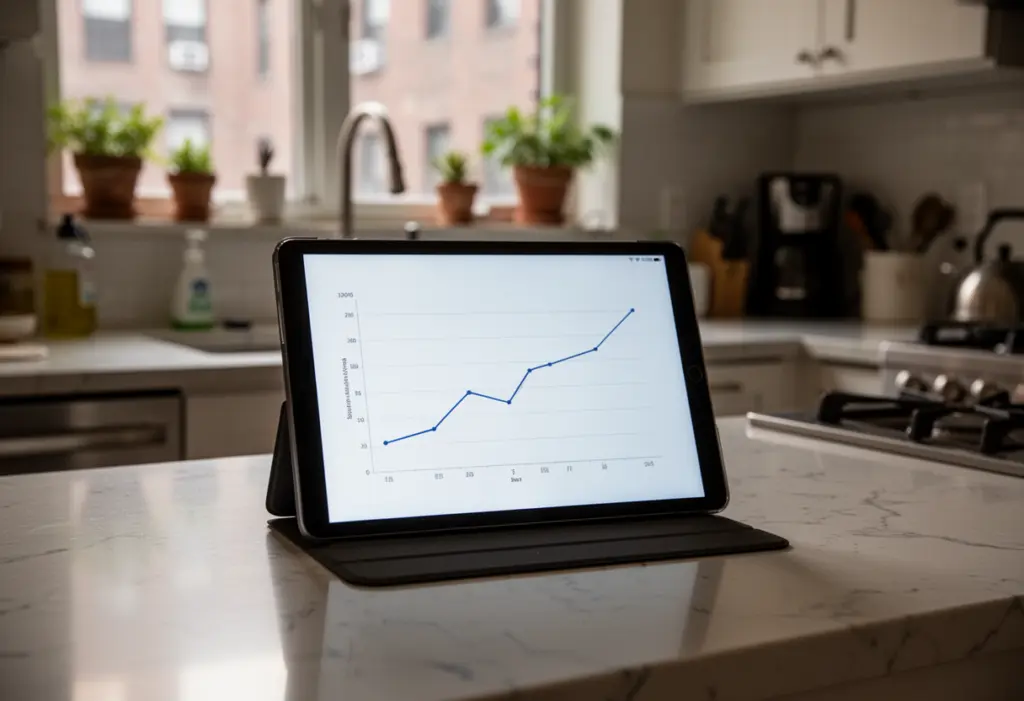
Every new solar owner checks the app daily for the first month and then stops. Both behaviours are reasonable, because daily production mostly tells you what the weather did. Here is the smaller set of things that actually tells you whether the system is working.
1. The annual total against the estimate
This is the number that matters, and it is the only one that settles whether you got what you paid for.
Your proposal contained an estimated annual production figure in kWh. After a full year, compare. A result within a reasonable margin of the estimate means the system is performing as designed and weather variation explains the rest.
A result well below it is worth a conversation — and it is worth having it before your workmanship warranty is old, which is another reason to note the number at twelve months rather than at three years.
New York seasonality is severe enough that any period shorter than a year is misleading. A March-to-September comparison flatters; an October-to-February one alarms. Twelve months is the unit.
2. Month against the same month last year
Once you have a year of history, this is the fastest check available. Same month, same sun angle, same seasonal pattern. A large unexplained gap is a real signal in a way that any month-to-month comparison is not.
Before you have that history, use the monthly figures from your proposal if it broke them out.
3. Panel-level view on a clear day, occasionally
If you have microinverters or optimizers, you have per-panel data, and it is genuinely diagnostic. Look at it a few times a year, around midday, on a clear day:
- All panels similar — healthy.
- One consistently low or dead — that module or its electronics. A warranty claim, and worth raising promptly with the date you first saw it.
- A group dimming in a pattern that tracks the sun — shading, not hardware. If it is new, something has grown or been built.
- A contiguous group dead — a wiring or connector fault.
A plain string inverter cannot show you this, which is worth knowing when choosing: panel-level monitoring is how you find a single failed module in year eight rather than discovering it in the annual total.
4. Alerts, configured once
Most platforms will email you when the system stops producing or reports a fault. Turn that on. It is the difference between finding out in a day and finding out at the next annual comparison — and in New York, where a system may legitimately produce nothing for days under snow, a fault can hide for a long time in winter.
What is not worth watching
- Daily production. It is a weather report.
- Live output in watts. Interesting for a week.
- Lifetime carbon-equivalent counters. Marketing.
- Comparisons with other users. Different roofs, different orientations, different shading — not a like-for-like comparison.
Winter is not a fault
Specific to this state, and it prevents most unnecessary calls. A New York array under snow produces nothing, and that is correct behaviour rather than a failure. Days at zero in January are normal, the panels shed faster than the roof around them, and the annual total absorbs it.
Judge the system on the year, not on the fortnight you are looking at.
Two practical points
- Make sure the monitoring is registered to you, not only to your installer. If they cease trading you want your own access, and it is much easier to arrange now than later.
- Note the annual figure somewhere permanent each year. Fifteen years of annual totals is the evidence that settles any performance-warranty question, and no app guarantees it will still hold your history.
Frequently Asked Questions
What should I actually check on my solar monitoring app?
The annual total against your proposal's estimate, this month against the same month last year, the panel-level view on a clear day a few times a year, and alerts configured once so a fault emails you. Daily production is essentially a weather report.
How do I know if my solar system is underperforming?
Compare a full twelve months against the estimated annual production in your proposal. New York seasonality is severe enough that any shorter period misleads — a summer comparison flatters and a winter one alarms.
Is zero production in January normal in New York?
Yes, when the array is under snow. That is correct behaviour rather than a fault, panels shed faster than the roof around them, and the annual total absorbs it. Judge the system on the year.
Should the monitoring account be in my name?
Yes. Make sure it is registered to you and not only to your installer — if they cease trading you want your own access, and arranging it now is far easier than later. Also note the annual production figure somewhere permanent each year.
This article is general information, not tax, legal or financial advice. Incentive amounts, eligibility rules and deadlines change and depend on your utility, your tax situation and your property. Confirm current terms with NYSERDA, your utility and a qualified tax professional before making a decision.
NY Solar Incentives
Independent New York solar research. We summarise NYSERDA, NY-Sun and federal programme rules from published sources and state plainly when a figure is an estimate. We are not a government agency and do not sell equipment.
Run the arithmetic on your own system
Check the dated program table and your arrangement before counting an incentive. Standard residential NY-Sun blocks are closed; Long Island Affordable Solar has a conditional income-verification route. The NY credit depends on qualified costs and tax liability, while the NYC abatement reduces future property-tax bills. The estimator keeps those timings separate.