Solar Panels on a North Facing Roof in New York
Panels on a north-facing pitch will generate electricity. They will generate less of it than the same panels anywhere else on the house, and they cost exactly the same to own each month.
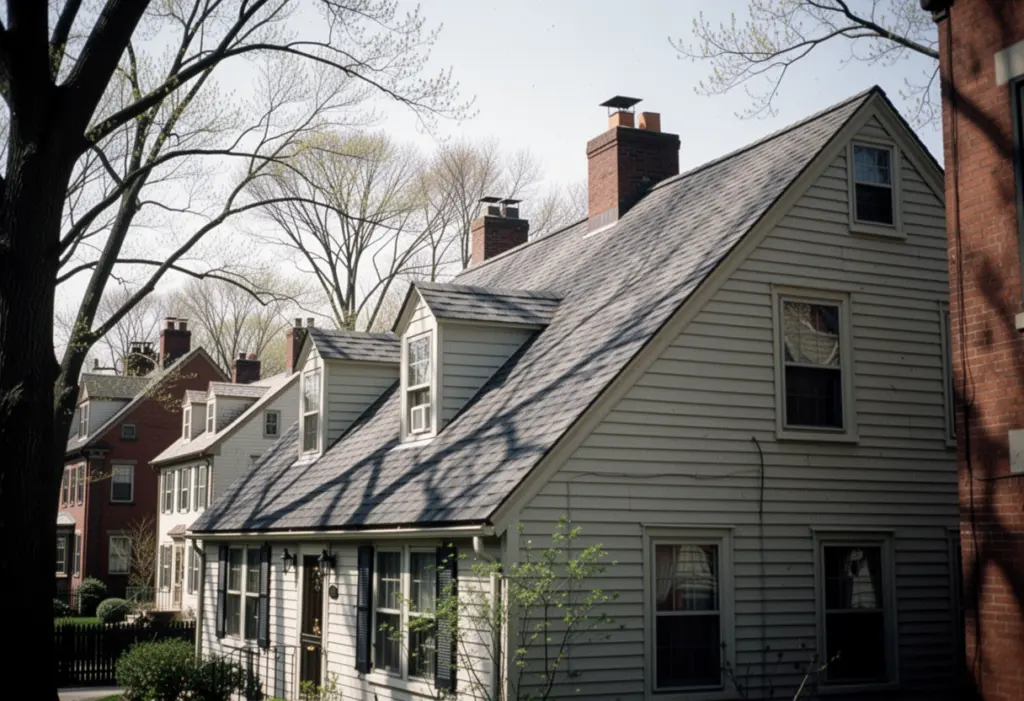
Panels on a north-facing pitch in New York will generate electricity. They will generate meaningfully less of it than the same panels on the south, east or west side of the same house, and they will cost you exactly the same monthly capacity charge for the privilege. That is the entire decision: a north array is not broken, it is simply the least productive kilowatt available to you, and it should be bought only once the better surfaces are full.
What orientation actually does
New York sits between roughly 40 and 45 degrees north. The sun tracks across the southern sky all year, high in summer and low in winter, and it never crosses to the north side except very early and very late on midsummer days. A panel facing north spends the whole year pointed away from where the light is.
Pitch decides how much that costs. A steep north-facing roof is the worst case, because the panels are tilted firmly away from the sun. A shallow pitch is far less punishing, since a nearly flat panel is closer to facing straight up and collects diffuse light from the whole sky. A genuinely flat roof is not a north roof at all — there the array is tilted by the racking, and the racking can face it wherever you like.
The charge that does not care which way the roof faces
The Customer Benefit Contribution is billed per kilowatt of DC size each month, regardless of production, on residential systems interconnected on or after 1 January 2022. Four kilowatts of north-facing panels on RG&E pay 4 multiplied by $1.31, which is $5.24 a month and $62.88 a year — the identical rate the south-facing kilowatts pay, for measurably less electricity. That is the cleanest way to see the problem: the fixed cost of a panel scales with its nameplate, and only the benefit scales with where it points.
Check which utility you are on from your own bill. Territory does not follow county lines, and RG&E does not cover all of Monroe County — Fairport, Spencerport and Churchville run their own municipal electric utilities. A municipal customer sits outside the Customer Benefit Contribution, state net metering rules and the state interconnection process entirely, and has to ask the village directly.
Four things to try before accepting a north pitch
- East and west. Both are far better than north and can be genuinely good, particularly where your consumption concentrates in the morning or the evening.
- A smaller array on the good surfaces. Fewer, better-placed panels can beat more panels spread onto a bad plane, and they cost less to buy and less every month to own.
- A ground mount, if you have the land. Orientation and tilt become choices rather than constraints, at the cost of a trench and more racking.
- Community solar. Where the roof cannot carry what you need, a subscription puts your money on somebody else’s well-oriented array, and community solar subscribers pay no Customer Benefit Contribution at all.
When north is defensible
There are real cases. A low-slope north plane on an otherwise full roof, where the marginal panels still cover load you would otherwise buy at retail. An all-electric household whose consumption is large enough that every additional kilowatt-hour is consumed rather than banked. A house where the south face is taken by a dormer, a chimney and a mature tree that is not coming down. In each of those the north panels are not the best kilowatts available, they are the only ones left, and that is a legitimate reason to install them.
What makes it a bad decision is buying them without knowing. Ask for production figures per array or per string rather than one system total, and ask for them month by month. A whole-system annual number quietly averages the good roof and the bad one together, and that is precisely where a weak north plane becomes invisible.
Where 2026 incentives stand
Orientation interacts with incentives in one direction only: nothing pays you more for pointing panels the right way, and several things charge you the same for pointing them the wrong way. NY-Sun was calculated per watt of capacity and applied by your contractor as a price reduction, so a larger, worse-oriented array attracted a larger incentive for a system that produced no more, which flattered a proposal without helping the owner. As of September 2026 NYSERDA has no open NY-Sun block for homes in any utility territory; check NYSERDA’s NY-Sun dashboard for a new one, and if a proposal still shows a NY-Sun reduction, ask which open block it comes from.
The RPTL 487 property tax exemption covers the added value of the system for 15 years, subject to the municipality, the county and the school district each not having opted out. In New York City, Buffalo, Rochester, Syracuse and Yonkers there is no separate school district check, because those districts are fiscally dependent and levy no separate property tax. Section 487 also requires construction before 1 January 2030. The New York credit of 25% capped at $5,000 on Form IT-255, for equipment installed and used at your principal residence, and the state sales tax exemption apply as normal. The 30% federal residential credit does not, because section 25D ended for expenditures made after 31 December 2025 with the test being completion of the original installation. Verify all of it with NYSERDA and your own assessor before signing.
Frequently Asked Questions
Do solar panels work on a north facing roof in New York?
They work, but produce meaningfully less than the same panels facing south, east or west. New York sits between roughly 40 and 45 degrees north, so the sun stays in the southern sky nearly all year.
Does roof pitch change the answer?
Considerably. A steep north pitch is the worst case. A shallow pitch is far less punishing because a nearly flat panel collects diffuse light from the whole sky, and a flat roof is not a north roof at all.
Do north facing panels cost less to own each month?
No. The Customer Benefit Contribution is billed on DC size regardless of orientation or production. Four kilowatts of north-facing panels on RG&E pay 4 x $1.31 = $5.24 a month, the same rate as south-facing ones.
How do I tell how bad a north array really is?
Ask for production figures per array or per string, month by month, rather than one whole-system annual total. A single system number averages the good roof and the bad one together and hides the weak plane.
This article is general information, not tax, legal or financial advice. Incentive amounts, eligibility rules and deadlines change and depend on your utility, your tax situation and your property. Confirm current terms with NYSERDA, your utility and a qualified tax professional before making a decision.
NY Solar Incentives
Independent New York solar research. We summarise NYSERDA, NY-Sun and federal programme rules from published sources and state plainly when a figure is an estimate. We are not a government agency and do not sell equipment.
Run the arithmetic on your own system
Check the dated program table and your arrangement before counting an incentive. Standard residential NY-Sun blocks are closed; Long Island Affordable Solar has a conditional income-verification route. The NY credit depends on qualified costs and tax liability, while the NYC abatement reduces future property-tax bills. The estimator keeps those timings separate.