Solar Incentives in Allegany County, NY
Allegany is deep rural hill country with modest incomes. Which incentives matter here is a different list from the one downstate.
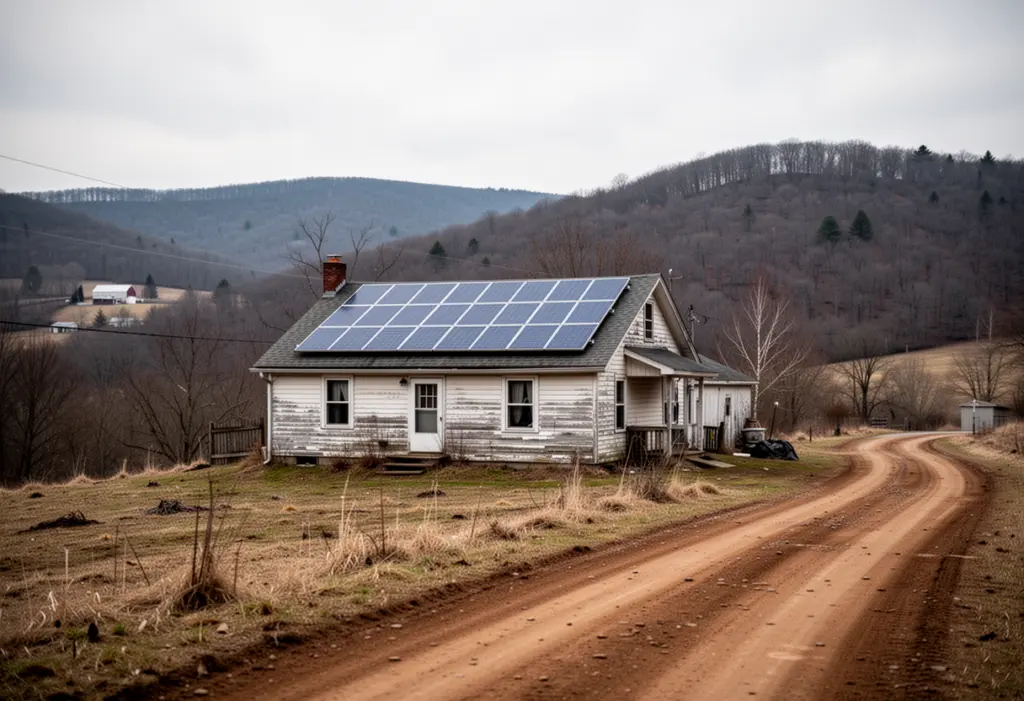
Allegany County sits in the hills of south-western New York — Wellsville, Belmont, Alfred, Cuba, Angelica, Friendship. ZIP codes here begin 148 and 147. It is one of the most rural and least prosperous counties in the state, and that changes which parts of a solar decision actually matter.
Which incentives matter here
The headline percentages are the same everywhere. What differs is which of them a household can actually use.
The carry-forward on the state credit is the important detail. New York’s credit is 25% of qualified expenditure capped at $5,000 on Form IT-255, and it is not refundable — but unused credit carries forward for up to five years. On a modest tax liability that is the difference between a credit spread over several returns and a credit largely lost. Ask any proposal to state how it assumes the credit will be used, and over how long.
Affordable Solar would matter more here than almost anywhere, but it is closed. NYSERDA’s incentive for lower-income households last ran in its Upstate region in a block that closed on 9 March 2026, and as of September 2026 NYSERDA has no open NY-Sun block for homes in any utility territory. Check before counting on it: NYSERDA’s NY-Sun dashboard shows whether a new block has opened, and a quote that subtracts one should name it.
And the credit that no longer exists. The 30% federal residential credit ended for expenditures made after 31 December 2025, with an expenditure treated as made when the original installation is completed. On a tight budget a quote still showing a 30% federal line does not merely overstate the saving — it can make an unaffordable project look affordable until the tax return arrives.
Roof age decides the timing
Where house values are modest, roof condition determines whether a project makes sense now rather than in a few years. Under roughly ten years of shingle life left means the roof comes first, because removing and reinstalling an array later costs considerably more — and that second cost lands on a household that budgeted once and has no room for it.
Get the roof assessed by someone who is not selling you panels. It is the most useful independent opinion available and it usually costs nothing.
Hill shading and land
Wooded ridges and valley properties mean the southern horizon varies enormously across short distances, and the low December sun is what makes it decisive. Insist on an on-site shading assessment and ask what the model assumes about winter.
Where the roof will not work, most properties here have land for a ground mount, which lets the array go where the sun is and removes the roof-age question entirely.
Long rural circuits
This is exactly the territory where an interconnection application comes back requiring a study or a distribution upgrade. Ask whether hosting capacity was checked for your circuit before designing, and settle in writing when the application will be filed and what happens to your deposit if an upgrade is required. Confirm which utility serves you from your own bill.
The alternative that costs nothing
Community solar needs no roof, no equipment and no up-front cost, and its subscribers pay no Customer Benefit Contribution at all. For a household whose roof must be replaced first, or whose horizon rules a roof out, it is not a consolation prize — it is simply the better arrangement for the next several years, and it can be left easily if circumstances change.
The rest
Also still available: the state sales tax exemption on residential solar equipment, which covers the 4% state tax only: Allegany County still charges its own 4½% local sales tax on it (Publication 718-S, Part 1); and RPTL 487’s 15-year property tax exemption where your town, the county and your school district have not opted out. In a county of very small towns, check all three rather than assuming. The exemption needs a system built before 1 January 2030 and form RP-487 filed with your assessor by the taxable status date (March 1 in most towns; your assessor confirms yours). NY-Sun is not available for a home now: as of September 2026 NYSERDA has no open NY-Sun block for homes in any utility territory.
Frequently Asked Questions
Is the New York solar credit useful on a low tax bill?
Yes, and the carry-forward is why. The credit is not refundable, but unused amounts carry forward for up to five years, so a modest liability spreads it over several returns rather than losing most of it. Ask any proposal how it assumes the credit will be used.
What extra help exists for lower-income households in Allegany County?
None from NY-Sun right now. NYSERDA's Affordable Solar incentive for lower-income households closed in its Upstate region on 9 March 2026, and as of September 2026 no NY-Sun block for homes is open in any utility territory. What NYSERDA does offer now is Statewide Solar for All: households enrolled in their utility's Energy Assistance Program (EAP) get a monthly community-solar credit on their electric bill, with no upfront cost or fees, and enrolment in EAP enrolls you automatically. On a modest tax bill, the state credit's five-year carry-forward also helps; check NYSERDA's NY-Sun dashboard for a new block.
What if I cannot afford a new roof and solar?
Community solar needs no roof, no equipment and no up-front cost, and its subscribers pay no Customer Benefit Contribution. For a household in that position it is simply the better arrangement for the next several years, and it can be left easily.
Can a rural Allegany County interconnection be refused?
An application can come back requiring a study or a distribution upgrade on a long feeder serving few customers. Ask whether hosting capacity was checked for your circuit, and settle what happens to your deposit if an upgrade is required.
This article is general information, not tax, legal or financial advice. Incentive amounts, eligibility rules and deadlines change and depend on your utility, your tax situation and your property. Confirm current terms with NYSERDA, your utility and a qualified tax professional before making a decision.
NY Solar Incentives
Independent New York solar research. We summarise NYSERDA, NY-Sun and federal programme rules from published sources and state plainly when a figure is an estimate. We are not a government agency and do not sell equipment.
Run the arithmetic on your own system
Check the dated program table and your arrangement before counting an incentive. Standard residential NY-Sun blocks are closed; Long Island Affordable Solar has a conditional income-verification route. The NY credit depends on qualified costs and tax liability, while the NYC abatement reduces future property-tax bills. The estimator keeps those timings separate.