The New York Solar Credit: What It Covers
A New York State income tax credit worth 25% of qualifying solar costs, up to a cap — and since the end of 2025, the only tax credit a New York buyer actually claims.
On this page 9 sections
- 01What the credit is worth and how it is calculated
- 02What the NY solar credit covers
- 03The lease and PPA route, which is unusual
- 04What it does not cover
- 05When you claim it, and what to keep
- 06How it differs from the other things called incentives
- 07Why the NY-Sun incentive is not double counting
- 08Who can claim it
- 09Frequently asked questions
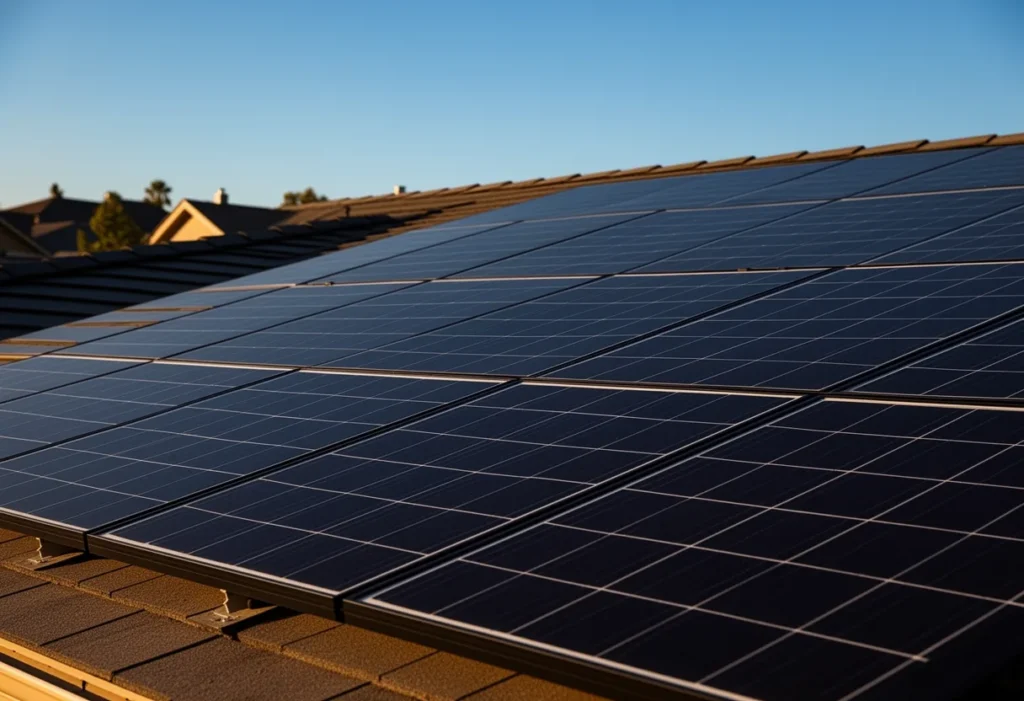
The ny solar credit is a New York State income tax credit worth 25% of qualifying solar costs, up to a cap fixed in statute. It is claimed by the homeowner on their own state return, and it is the only tax credit a New York household buying solar in 2026 will actually claim.
That last point is new, and it is the source of most of the confusion around the topic. Until the end of 2025 the state credit sat alongside a federal one, and nearly everything written about New York solar assumes both exist. Only the state credit does now.
What the credit is worth and how it is calculated
The calculation runs in two steps. Take the qualifying expenditure, apply 25%, then apply the statutory dollar cap. Whichever is smaller is the credit.
For most residential systems in New York the cap binds before the percentage does, which means two households spending noticeably different amounts can end up with the same credit. That flattens the benefit at the top end and makes the credit proportionally more valuable on a smaller system.
The credit is claimed on Form IT-255, filed with the state income tax return. It is not refundable, so it reduces tax owed rather than generating a payment, but unused amounts carry forward.
What the NY solar credit covers
It covers the purchase and installation of solar energy system equipment at a principal residence in New York State. That means the modules, the inverter and the mounting hardware, plus the labour and the electrical work that turn those components into a working system.
It covers solar thermal as well as solar electric. Systems that heat water rather than generate electricity are within scope, which is a point often missed because the market has moved so heavily towards photovoltaics.
The lease and PPA route, which is unusual
The credit also covers amounts paid under a written lease or power purchase agreement of at least ten years. A homeowner who never owns the hardware can still claim it, which is rare among solar tax provisions and matters more now that buyers have lost the federal credit.
The mechanics differ from a purchase. Where a buyer has a single qualifying expenditure, someone on a lease or PPA is making payments over a term, so the credit is based on what is paid rather than on a purchase price — which can mean the claim is spread across more than one tax year, subject to the same overall cap. Because the arrangements vary, confirm how your specific contract is treated with the Department of Taxation and Finance or a preparer before assuming a figure.
What it does not cover
Work that is not part of the solar energy system falls outside the credit even when it happens on the same day. A roof replacement is the standard example. Structural reinforcement, panel upgrades unrelated to the array, tree removal and general electrical work are treated the same way.
It is not a property tax benefit. It does nothing to a property tax bill, and the New York City abatement described in the abatement guide is an entirely separate programme with a separate application.
It is also not a rebate. Nothing is paid at the point of sale and nothing arrives as a cheque. The benefit appears only when a state return is filed.
The federal credit is gone for buyers
The federal residential clean energy credit under section 25D terminated for expenditures made after 31 December 2025. An expenditure counts as made when the original installation is completed, so a system finished in December 2025 but switched on in January 2026 still falls under the old rules. A homeowner who buys a system with cash or a loan in 2026 receives nothing on their federal return — there is no phase-down and no transition rule. Any quote showing a federal credit line for a 2026 purchase is using out-of-date assumptions.
When you claim it, and what to keep
The credit belongs to a tax year, and for a purchased system that is normally the year the equipment is placed in service rather than the year a deposit was paid. A project that starts in one calendar year and finishes in the next therefore lands on a specific return, and getting that wrong means filing an amendment later.
Keep the signed contract, the invoices, proof of payment and the documentation showing the system was commissioned. Because the credit carries forward when your liability is too small to absorb it, those records may still matter several returns after the installation, which is longer than most households keep paperwork of this kind.
How it differs from the other things called incentives
New Yorkers encounter at least four benefits described loosely as solar incentives, and they behave completely differently. One is a tax credit, one is an upfront price reduction, one is a property tax mechanism and one is a billing arrangement with the utility.
| Programme | Administered by | How it reaches the homeowner |
|---|---|---|
| State solar credit | NYS Department of Taxation and Finance | Reduces state income tax when you file Form IT-255 |
| NY-Sun incentive | NYSERDA, paid through the installer | Appears as a lower contract price before you pay, when a block is open; none is open for homes as of September 2026 |
| NYC solar abatement | NYC Department of Buildings and Finance | Instalments against four years of property tax |
| Net metering | Your utility | Credits on the electricity bill for exported generation |
Why the NY-Sun incentive is not double counting
As of September 2026 NYSERDA has no open NY-Sun block for homes in any utility territory; check NYSERDA’s NY-Sun dashboard for a new one. When a block is open, NY-Sun pays a per-watt incentive to the contractor, not to the homeowner, and it steps down as regional megawatt blocks fill. Because it is paid through the installer, it shows up in a quote as a lower price rather than as money received.
So the amount a homeowner pays is already net of NY-Sun, and that net amount is the basis for the state credit. There is nothing to add back and nothing extra to subtract. The block mechanism itself is explained in the megawatt block guide.
Read quotes as one number
The only figure that tells you anything reliable is the net price after any NY-Sun incentive has been applied by the installer; with no NY-Sun block open for homes as of September 2026, that is normally the full contract price. Compare that number across quotes, then treat the state credit as a separate calculation on your return rather than as a discount on the contract.
Who can claim it
The installation has to be at your principal residence in New York State. A holiday home, a pure rental property or a system installed for a business does not fit the residential credit, though other provisions may apply to those situations.
Owners in condominiums and co-operatives can be eligible where the system serves their residence and the costs are properly allocated, but the mechanics are building-specific. The detailed conditions are covered in the full statutory rules.
Whether the credit is worth much to any particular household depends on how much New York State income tax they owe across the current year and the carry-forward years that follow. A household with very little state tax liability may not absorb the whole credit.
Frequently asked questions
Is the NY solar credit a payment or a reduction in tax?
It is a reduction in New York State income tax owed. The credit is not refundable, so it cannot generate a payment to you beyond the tax you owe. Unused credit can be carried forward to later tax years rather than being lost.
Which tax year do I claim it for?
For a purchased system it is normally the year the equipment is placed in service, not the year you paid a deposit or signed the contract. That matters for installations that straddle a year end. Keep the commissioning documentation with your records, and confirm the year with a preparer if your project finished close to 31 December.
Can I claim both the state credit and the NY-Sun incentive?
As of September 2026 there is no NY-Sun incentive to combine: NYSERDA has no open NY-Sun block for homes in any utility territory. Where a contract does carry one, the two do not conflict, because they work at different points. NY-Sun is paid to your installer and reduces the price you are quoted, while the state credit is calculated on what you actually pay and claimed later on your return. The net contract price is the correct starting point for the credit calculation.
Does the credit apply to battery storage?
The credit is defined around solar energy system equipment, and storage is treated separately from the panels and inverter. New York has run its own incentives for residential storage at various points, administered separately. Ask your installer how the storage portion is itemised, and confirm the current treatment with the Department of Taxation and Finance before assuming it is included.
What if I move before using the whole credit?
The credit belongs to the taxpayer who made the qualifying expenditure, not to the house, so an unused carry-forward stays with you rather than transferring to a buyer. What matters is continuing to have New York State tax liability to apply it against. If you leave the state, discuss the effect on your remaining carry-forward with a tax preparer.
Confirm current figures before you rely on them
Caps, definitions and programme terms change by legislation and by administrative decision. Confirm the state credit with the New York State Department of Taxation and Finance and the NY-Sun position for your region with NYSERDA before making a purchase decision based on either.
This article is general information, not tax, legal or financial advice. Incentive amounts, eligibility rules and deadlines change and depend on your utility, your tax situation and your property. Confirm current terms with NYSERDA, your utility and a qualified tax professional before making a decision.
NY Solar Incentives
Independent New York solar research. We summarise NYSERDA, NY-Sun and federal programme rules from published sources and state plainly when a figure is an estimate. We are not a government agency and do not sell equipment.
Run the arithmetic on your own system
Check the dated program table and your arrangement before counting an incentive. Standard residential NY-Sun blocks are closed; Long Island Affordable Solar has a conditional income-verification route. The NY credit depends on qualified costs and tax liability, while the NYC abatement reduces future property-tax bills. The estimator keeps those timings separate.