Community Solar for a New York Renter With No Roof
If you rent, the roof is not yours to decide about. Community solar is the one route that needs no roof, no landlord permission and no equipment at your address — provided the electricity account is in your name.
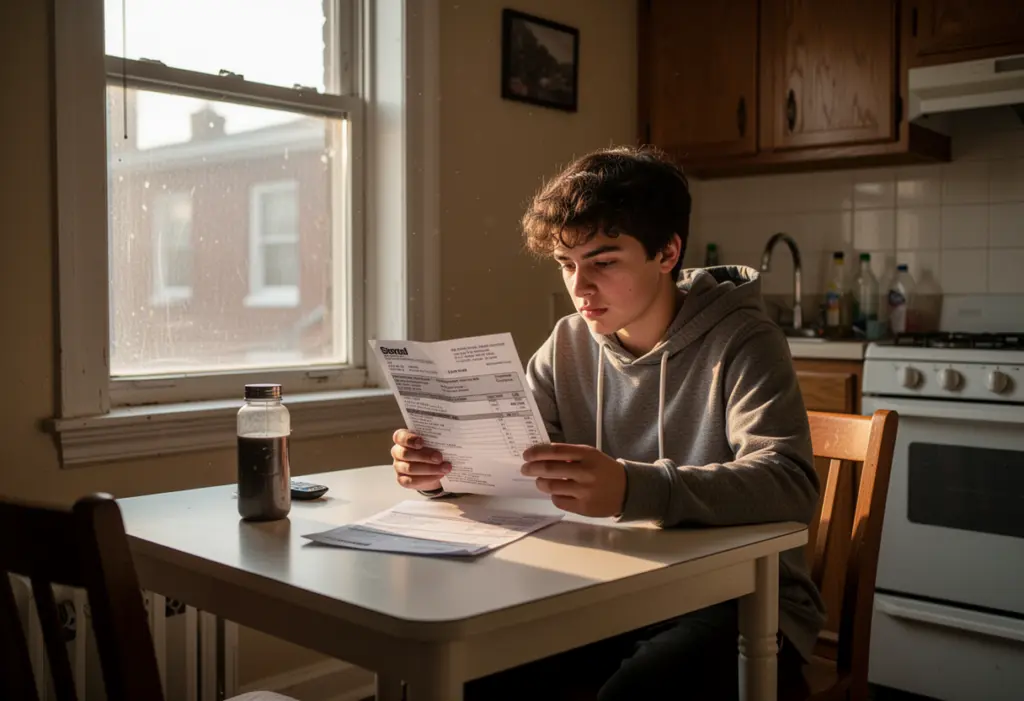
If you rent, the roof is not yours to decide about, and that removes almost every option on this site. Community solar is the exception. It needs no roof, no landlord permission and no equipment at your address: you subscribe to a share of a project built somewhere else in your utility territory, and the credits that share earns arrive on the electricity bill that already has your name on it.
The one requirement that decides it
Everything turns on a single question — is the electricity account in your own name? Community solar works by allocating credits to a utility account, so if you have an account number, you can subscribe. If your building is master metered, or the electricity is bundled into the rent, or the account is in the landlord name, there is nothing for the credits to land on and you cannot subscribe. That is the uncomfortable half of the answer, and it is worth checking on the first page of your bill before you spend an evening comparing providers.
The second thing to check on that same bill is which utility serves you. Community solar in New York runs inside the utility territories regulated by the Public Service Commission. If your bill comes from a municipal electric utility — Massena, Jamestown, Plattsburgh, Solvay and Sherrill are five of roughly fifty New York municipalities that run their own — you sit outside the state framework entirely, and the terms are whatever your own municipal utility offers. Ask them directly rather than assuming a statewide programme reaches you.
What a subscription actually costs
A subscription is not a purchase and it is not a loan. You are allocated a share of the output of a project, the utility posts the value of that output as bill credits, and you pay the project sponsor for those credits at a discount. Your saving is the discount, and nothing else.
So the number that matters is the discount percentage, and the questions that matter are whether it is fixed for the life of the agreement or whether it escalates, and whether your allocation can be resized if your usage falls. A subscription sized to a heavy winter can leave you buying credits you do not consume in a mild spring. Ask what happens to unused credits and whether the sponsor rebalances the allocation.
One charge that never reaches you is the Customer Benefit Contribution. That monthly charge is billed on the DC size of a rooftop array interconnected on or after 1 January 2022, regardless of what the array produces — a homeowner with a 7 kW system on National Grid pays 7 × $0.97, about $6.79 a month, and rather more on other utilities. An array interconnected before that date pays none of it. Community solar subscribers pay no Customer Benefit Contribution at all. It is a small line, but it belongs in the comparison because it is one of the few costs that follows equipment rather than consumption.
Four things to establish before you sign
- The cancellation terms in writing. A tenancy can end faster than a subscription. Ask for the notice period and any early termination charge in the document, not in an email.
- What happens when you move. Within the same utility territory a subscription can usually follow you to a new account. Across territories it usually cannot, because the credits are issued by the utility you are leaving.
- How the credits appear. Some sponsors bill separately from the utility, so you will see two documents rather than one. Know which arrangement you are joining before the first month arrives.
- Whether there is a waiting period. Allocation to a specific project can take time, and nothing is credited until the project is producing and your account is attached to it.
What a renter does not get
Be clear about the trade. A subscriber owns no equipment, so there is nothing to depreciate, nothing to insure, nothing to remove at the end of a tenancy, no roof penetration to argue about and no lien recorded anywhere against anything. In exchange, a subscriber captures only the discount rather than the full retail value of generation, and has no claim on the equipment incentives that attach to ownership.
Where the 2026 incentives land
The federal picture is the same for everybody and it is short: the 30% residential credit is gone. Section 25D was terminated for expenditures made after 31 December 2025, and an expenditure counts as made when the original installation is completed. Any 2026 offer still showing a 30% federal line is materially wrong, whoever it is addressed to.
New York keeps a 25% credit capped at $5,000 on Form IT-255, but read what it is written around: qualified solar energy system equipment installed and used at the taxpayer principal residence in New York, whether purchased, leased for at least ten years, or supplied under a power purchase agreement of at least ten years. A subscription to a project on someone else land is not equipment at your residence, so do not assume it qualifies because a sales page implies it — put the question to a tax preparer with the agreement in front of them. The practical position for most renters is that the saving comes from the subscription discount alone, which is a modest and entirely real benefit, and it is available with no capital, no roof and no permission from anybody.
Incentive programmes move. Confirm the current terms with your own utility and with NYSERDA before you sign anything, and confirm the utility itself from the top of your own bill.
Frequently Asked Questions
Can I get community solar if I rent?
Yes, provided the electricity account is in your own name. Credits are allocated to a utility account, so if the building is master metered or electricity is bundled into your rent, there is no account for the credits to land on.
Do I need my landlord to agree?
No. Nothing is installed at the property, nothing is attached to the roof and no lien is recorded, so there is nothing for a landlord to approve. The agreement is between you, the project sponsor and your utility account.
What happens to my subscription if I move?
Within the same utility territory a subscription can usually transfer to your new account. Across territories it usually cannot, because the credits are issued by the utility you are leaving. Ask for the moving process in writing before you sign.
Do community solar subscribers pay the Customer Benefit Contribution?
No. That monthly charge is billed on the DC size of an interconnected rooftop system. Community solar subscribers pay none of it, which is one of the few cost lines that follows equipment rather than consumption.
This article is general information, not tax, legal or financial advice. Incentive amounts, eligibility rules and deadlines change and depend on your utility, your tax situation and your property. Confirm current terms with NYSERDA, your utility and a qualified tax professional before making a decision.
NY Solar Incentives
Independent New York solar research. We summarise NYSERDA, NY-Sun and federal programme rules from published sources and state plainly when a figure is an estimate. We are not a government agency and do not sell equipment.
Run the arithmetic on your own system
Check the dated program table and your arrangement before counting an incentive. Standard residential NY-Sun blocks are closed; Long Island Affordable Solar has a conditional income-verification route. The NY credit depends on qualified costs and tax liability, while the NYC abatement reduces future property-tax bills. The estimator keeps those timings separate.