Electrifying a New York Home Around Solar: The Right Order
A practical sequence for New York homeowners planning solar alongside a heat pump, EV charger, or electric water heater, so the panel and the system are sized for where the home is going, not where it is today.
On this page 11 sections
- 01Why the Order Matters More Than the Wishlist
- 02Step One: Check the Panel Before You Commit to Anything
- 03Step Two: Size Solar for the Home You’re Building Toward
- 04Where a Heat Pump Fits
- 05Where EV Charging Fits
- 06The Load Everyone Forgets: Water Heating and Cooking
- 07One Plan, Several Contractors
- 08What Changed for Incentives in 2026, and Why Timing Now Matters
- 09When It Makes Sense to Slow Down
- 10The Practical Order
- 11Frequently Asked Questions
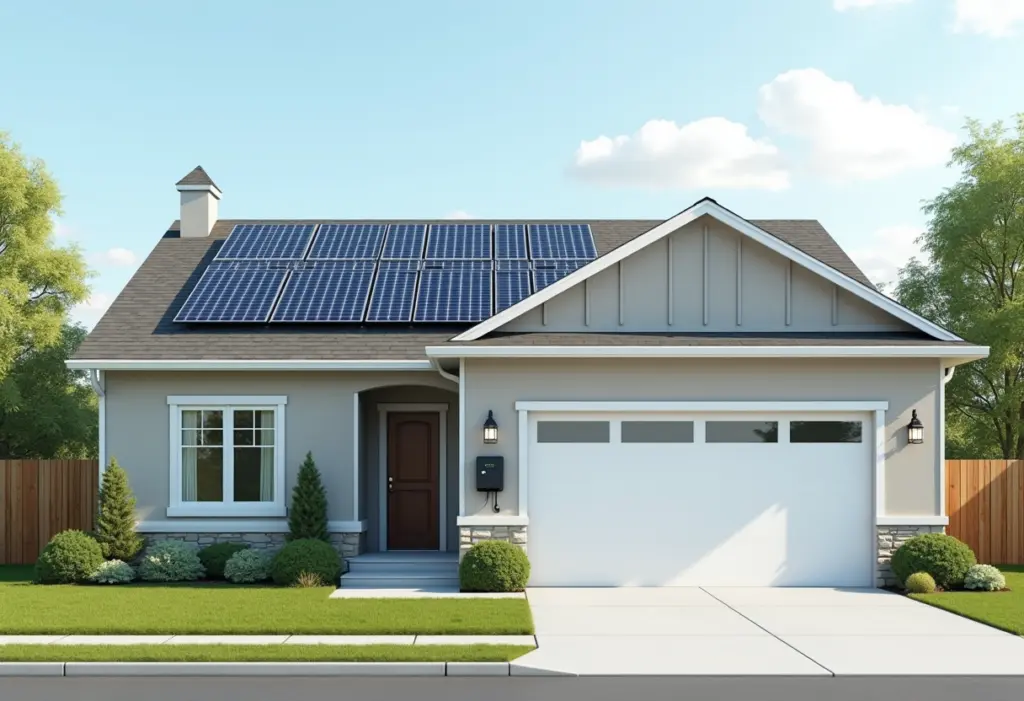
Solar, a heat pump, an EV charger and an induction range each make sense on their own. Adding all of them to one New York home without a plan is how a homeowner ends up with a panel that can’t support what they actually want, or a solar system sized for today’s usage that’s undersized the moment the second electrified load goes in. The order you tackle these in matters as much as which ones you choose, and it’s rarely the order a single contractor pitching one product will walk you through.
Why the Order Matters More Than the Wishlist
Every electrified load you add increases how much power your home draws and, at certain points, how much current your panel and service line need to carry. Solar interacts with all of it, because Phase One net metering credits your exports at the retail rate for 20 years once you interconnect — which means the system size you lock in early is worth getting right, rather than installing a system for your current bill and finding out later that a heat pump and an EV charger have pushed your usage well past what it offsets. Sequencing the decision correctly once, before any equipment is ordered, avoids paying twice: once for an undersized system, and again to expand or re-permit it later.
Step One: Check the Panel Before You Commit to Anything
Your electrical panel’s capacity is the single most common constraint on how much you can electrify, and it’s the first thing to have an electrician actually assess — not estimate from the age of the house. An older panel that was adequate for a gas furnace, a gas range and ordinary household loads is frequently not sized for a heat pump, an EV charger and a larger solar interconnection added on top. Whether that means a service upgrade or just careful load management depends on your specific panel and service size, which is exactly why this is step one and not something to discover mid-installation. Get this answered before you sign a contract for anything else on this list, since it can change what’s realistic for every subsequent step.
Step Two: Size Solar for the Home You’re Building Toward
A solar quote based only on last year’s electric bill sizes the system for a home that’s about to change. If a heat pump or an EV charger is part of the plan even a year or two out, tell your installer that during the sizing conversation, not after the system is already interconnected. Oversizing carries its own cost — exports beyond what you use in a given month settle at the lower annual true-up rate rather than the full retail credit — so this isn’t a case of simply buying the largest system available. It’s a case of sizing to your realistic future usage, not your current one, and being explicit with the installer about which loads are coming and on what timeline.
Where a Heat Pump Fits
A heat pump is usually the single largest new electric load a New York home takes on, and it changes both your winter usage pattern and your solar sizing math in a way worth understanding on its own terms before you commit to a system size. The sizing tradeoffs specific to pairing a heat pump with solar in New York are covered in depth elsewhere on this site; the short version for sequencing purposes is that a heat pump’s winter draw, when the state’s shorter days already produce less solar, is the load most likely to justify sizing a system larger than your current bill alone would suggest.
Where EV Charging Fits
An EV charger is more forgiving to sequence than a heat pump, because charging is schedulable — you control when it draws power in a way you can’t control when a heat pump needs to run in January. That flexibility means an EV charger can often be added to an existing solar system’s capacity more easily than a heat pump can, provided the panel itself has room. It still belongs in the same upfront conversation with your installer as everything else, so the system accounts for it rather than treating it as an afterthought once the charger is already installed.
The Load Everyone Forgets: Water Heating and Cooking
An induction range and an electric or heat-pump water heater draw far less than a heat pump or an EV charger individually, but they’re easy to leave out of the conversation entirely because they don’t get pitched by a solar or HVAC contractor the way the bigger-ticket items do. If either is part of your longer-term plan, mention it during the same panel assessment and sizing conversation as everything else — the incremental load is small, but it still counts toward what the panel and the system need to support, and it’s a much smaller problem to account for upfront than to discover after the panel’s already been sized around everything else.
One Plan, Several Contractors
A solar installer, an HVAC contractor, an electrician and possibly an EV charger installer are rarely the same company, and each one is naturally going to size and scope their own piece of the project without full visibility into the others’ plans unless you give it to them. The practical fix is boring but effective: write down the full list of loads you’re planning, in the order you intend to add them, and hand the same list to every contractor who quotes any part of the project — the solar installer sizing the system, the electrician assessing the panel, and the HVAC contractor spec’ing the heat pump. A quote built without that context is a quote for a smaller, disconnected project, even when every individual number in it is accurate.
What Changed for Incentives in 2026, and Why Timing Now Matters
The federal 30% Residential Clean Energy Credit that used to apply to solar and qualifying battery storage was terminated for property placed in service after December 31, 2025 — a homeowner electrifying in 2026 gets none of it, on any of these purchases. New York’s own state credit, the 25% credit capped at $5,000 on Form IT-255, is still available for qualified solar energy system equipment, and any amount that exceeds your tax liability in one year carries forward for up to five years rather than being lost. That carryforward is worth factoring into how you sequence and time purchases across tax years if you’re spreading solar, a heat pump, and an EV charger across more than one project — talk to a tax preparer about which components of each purchase actually qualify under IT-255 before assuming a combined invoice all counts the same way.
When It Makes Sense to Slow Down
None of this means every New York homeowner should electrify everything at once. If your existing furnace, water heater or range has years of useful life left, replacing it early just to bundle the project rarely pencils out — the sequencing advice here is about getting the order right for the loads you’re actually planning to add, not a case for rushing loads you don’t need yet. The one piece worth deciding early regardless of timeline is the panel assessment, since that answer shapes what every later step can realistically do, even if the heat pump or the EV charger is still a few years out.
The Practical Order
| Step | What to confirm |
|---|---|
| 1. Panel assessment | Have an electrician evaluate actual capacity, not the panel’s age or nameplate alone |
| 2. Full load list | Heat pump, EV charger, induction range, water heater — named upfront, even ones you’re not installing yet |
| 3. Solar sizing | Sized to future usage across that full list, not just the current bill |
| 4. Sequencing by urgency | The load most likely to break under the existing panel or system goes first |
| 5. Tax-year timing | Spread purchases with IT-255’s five-year carryforward in mind if a single year’s credit would go unused |
Frequently Asked Questions
Should I install solar before or after a heat pump in New York?
Have the panel assessed and the full load list decided before either goes in, even if you install them separately. Sizing solar without knowing a heat pump is coming means resizing or living with an undersized system; installing a heat pump without checking panel capacity first risks discovering a service upgrade is needed mid-project.
Does adding an EV charger require a bigger solar system?
Not automatically — it depends on your existing system's capacity and your panel. An EV charger's power draw is schedulable, which makes it easier to accommodate than a heat pump's less flexible winter demand, but it should still be part of the sizing conversation before the system is installed.
Is there still a federal tax credit for a heat pump or EV charger installed with solar in 2026?
Not the 30% Residential Clean Energy Credit that covered solar and battery storage — that credit ended for property placed in service after December 31, 2025. Separate federal and state incentives for heat pumps and EV chargers have their own rules and should be checked independently; they are not part of the solar-specific credit.
What happens if my New York solar tax credit is bigger than my tax bill?
The unused portion of the 25% credit on Form IT-255 carries forward for up to five tax years — it isn't refunded, and it isn't lost immediately if you can't use all of it in the year you install.
NY Solar Incentives
Independent New York solar research. We summarise NYSERDA, NY-Sun and federal programme rules from published sources and state plainly when a figure is an estimate. We are not a government agency and do not sell equipment.
Run the arithmetic on your own system
Check the dated program table and your arrangement before counting an incentive. Standard residential NY-Sun blocks are closed; Long Island Affordable Solar has a conditional income-verification route. The NY credit depends on qualified costs and tax liability, while the NYC abatement reduces future property-tax bills. The estimator keeps those timings separate.