Solar Panel Cost in Rye, New York
Rye has large houses on the Sound, which means large systems — and a $5,000 credit cap that covers proportionally less of them.
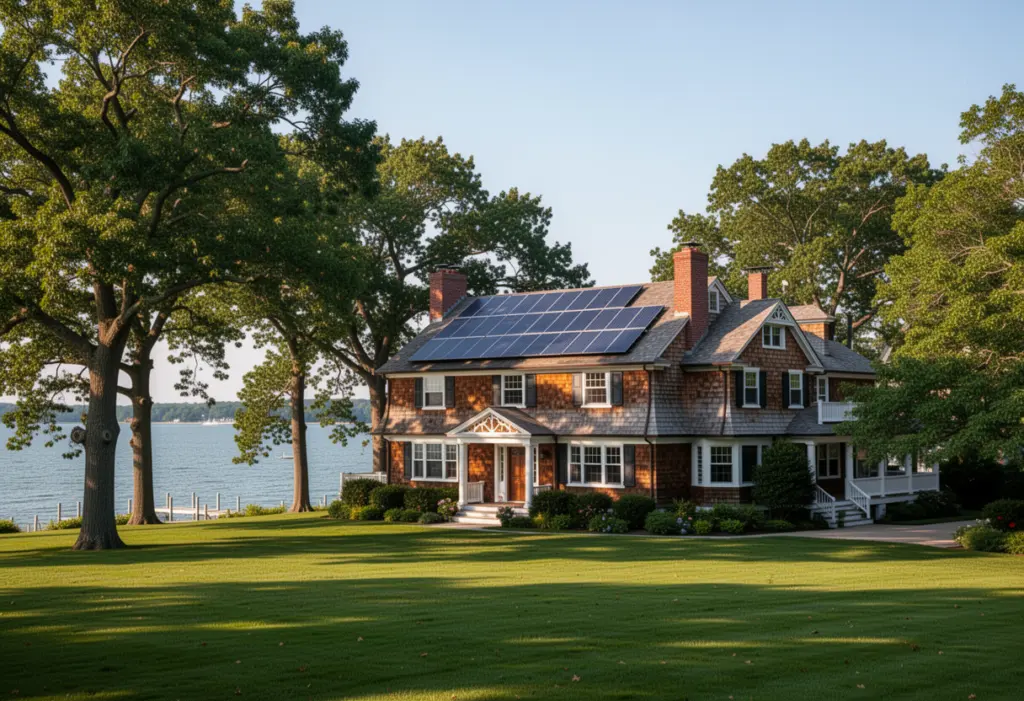
Rye sits on Long Island Sound in southern Westchester. ZIP code 10580. Large houses, mature trees and a coastline all bear on a solar project here.
Large systems change two numbers
Consumption here runs well above the county average, so systems do too — and two costs scale with that.
The Customer Benefit Contribution is charged on DC system size. At Con Edison’s 2026 residential rate of $1.29 per kW-month:
- A 12 kW system: $15.48 a month, about $186 a year.
- A 16 kW system: $20.64 a month, about $248 a year.
- A 20 kW system: $25.80 a month, about $310 a year.
And New York’s credit is capped at $5,000 regardless of system size. On a large Rye array that cap binds, so the credit covers a smaller proportion of the total than it would on a modest system. Worth knowing when a proposal quotes 25% as though it applied to the whole cost.
Why the economics still work
Phase One net metering credits every exported kilowatt-hour at the full retail rate, and Con Edison’s Westchester rate is high by national standards. That is what makes a large Rye system pay despite the absolute cost, and it holds for 20 years from interconnection.
Coastal considerations
Proximity to the Sound brings two things a mid-county property does not have. Wind exposure is greater, so racking and attachment should be specified for it — ask what wind load as well as snow load. And flood zones affect low-lying properties, changing where the inverter, disconnects and any battery may be mounted.
Salt exposure near the water also affects mounting hardware and outdoor equipment enclosure ratings.
Trees
Rye’s residential streets carry mature canopy, and the low December sun makes it decisive in the month the credit balance is being drawn down. Insist on an on-site shading assessment and ask what the model assumes about winter.
If tree removal is proposed, treat it as your decision. It carries real cost, may need a city permit, and permanently changes a property where the trees are part of the value.
Batteries
Battery interest is higher in this part of Westchester than the county average, because coastal storms take the lines down and the outages are long enough to matter. Two things to be clear about before it is quoted.
A battery is a backup device here, not an economic one. Con Edison’s Phase One net metering credits exports at the full retail rate, so there is no meaningful price spread for a residential battery to arbitrage — you are buying resilience, and it should be priced and judged as resilience.
And the federal credit that used to cover 30% of a residential battery went with the rest of section 25D at the end of 2025. New York’s Form IT-255 credit is for solar energy system equipment; a battery is not automatically inside it, so confirm the treatment with your accountant rather than with the proposal.
Permits
The City of Rye issues its own permits; Rye Brook and Port Chester are separate villages, and the Town of Rye is different again. Establish which authority covers your address — the similar names cause genuine confusion here.
2026 incentives
The 30% federal residential credit has ended — section 25D was terminated for expenditures made after 31 December 2025, with an expenditure treated as made when the original installation is completed. On a large system the loss is a large absolute number, and any proposal still showing it is materially wrong.
Still available: New York’s 25% credit capped at $5,000 on Form IT-255, which also reaches leases and PPAs of ten years or more; the state sales tax exemption; and RPTL 487’s 15-year property tax exemption where the city or village, Westchester County and your school district have not opted out, once you file form RP-487 with each assessor for your address by its taxable status date. Check the school district too — it decides for its own levy. Not available: NY-Sun — as of September 2026 NYSERDA has no open NY-Sun block for homes in any utility territory; check NYSERDA’s NY-Sun dashboard for a new one.
Frequently Asked Questions
Is the New York solar credit worth less on a large Rye system?
Proportionally, yes. It is 25% of qualified expenditure but capped at $5,000 regardless of size, so on a large array the cap binds and the credit covers a smaller share of the total than a proposal quoting 25% might suggest.
How much is the Con Edison charge on a large system?
At $1.29 per kW-month for 2026, a 12 kW system pays about $186 a year, 16 kW about $248 and 20 kW about $310. It is charged on DC system size rather than production, so it scales with the array.
Do coastal conditions affect solar in Rye?
Yes. Proximity to Long Island Sound means greater wind exposure, so ask for a wind load as well as a snow load; flood zones affect where equipment may be mounted on low-lying properties; and salt affects hardware and outdoor enclosure ratings.
Which authority issues my permit in Rye?
The City of Rye issues its own, while Rye Brook and Port Chester are separate villages and the Town of Rye is different again. The similar names cause genuine confusion, so establish which covers your address.
This article is general information, not tax, legal or financial advice. Incentive amounts, eligibility rules and deadlines change and depend on your utility, your tax situation and your property. Confirm current terms with NYSERDA, your utility and a qualified tax professional before making a decision.
NY Solar Incentives
Independent New York solar research. We summarise NYSERDA, NY-Sun and federal programme rules from published sources and state plainly when a figure is an estimate. We are not a government agency and do not sell equipment.
Run the arithmetic on your own system
Check the dated program table and your arrangement before counting an incentive. Standard residential NY-Sun blocks are closed; Long Island Affordable Solar has a conditional income-verification route. The NY credit depends on qualified costs and tax liability, while the NYC abatement reduces future property-tax bills. The estimator keeps those timings separate.