Solar Incentives in Washington County, NY
Washington County is farmland along the Vermont border. Land makes ground mounts easy; long rural circuits make the interconnection question worth asking early.
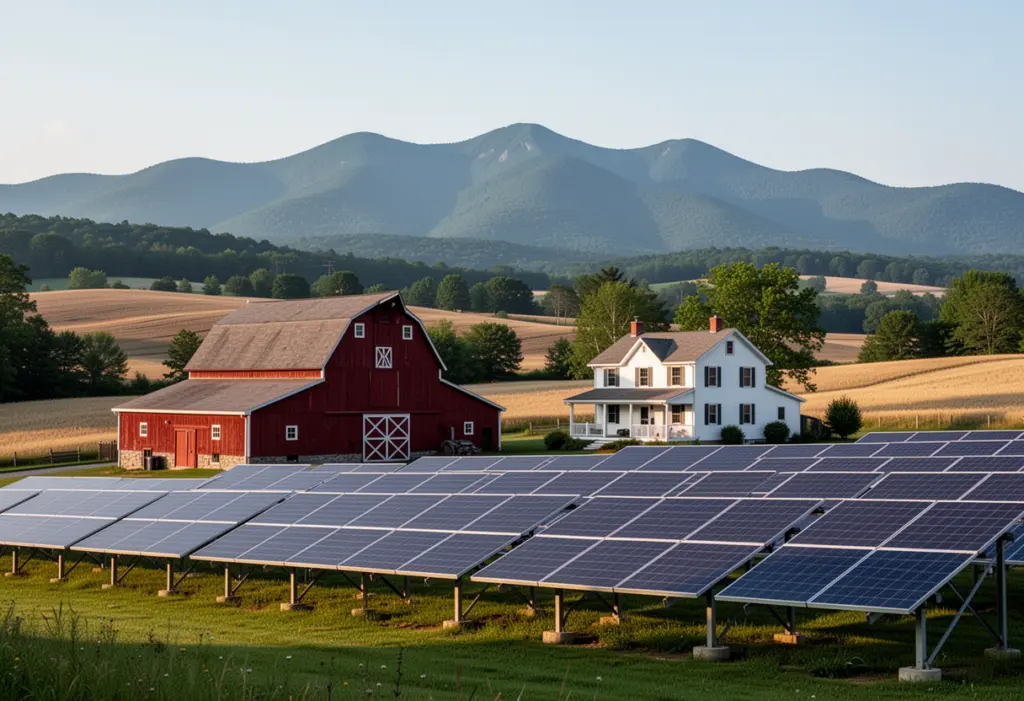
Washington County runs along the Vermont border from Hudson Falls up to Whitehall — Granville, Salem, Cambridge, Greenwich, Fort Edward, Argyle. ZIP codes here begin 128 and 121. It is farming country, and the two facts that shape solar here are both about being rural.
Land makes ground mounts straightforward
Space is the one thing this county has, and a ground-mounted array removes several constraints at once: orientation and tilt become yours to choose rather than inherited from whichever way the roof faces, roof age stops mattering now and in fifteen years, shading is solved by siting, and maintenance and any snow clearing happen safely at ground level.
Ask for one to be quoted alongside the roof option, and ask early about setbacks and foundation depth below the frost line. On open ground, ask what wind load the structure is specified for as well as the snow load.
Long circuits make interconnection the question to ask early
Long feeders serving relatively few customers are exactly where an application comes back requiring a study or a distribution upgrade before a system can be accepted.
Two things to settle in writing before signing:
- When the interconnection application will be filed — before installation, so an unexpected result arrives before your roof has been drilled.
- What happens if a study or upgrade is required: your deposit, your right to cancel, and who pays.
Ask too whether the installer checked hosting capacity information for your circuit before designing, and confirm from your own bill which utility serves you — service in the eastern counties is not uniform.
Farm projects and land leases
Two different decisions that get conflated. Solar to offset a farm’s own consumption sits on the business side of the tax code, where the investment tax credit and depreciation did not follow the residential credit into repeal at the end of 2025 — a live question for your accountant with your own figures. Get interval data from the utility rather than bill totals.
Leasing ground to a developer is a decades-long agreement, and this county sees offers. Term length and renewal control, decommissioning security backed by a bond or escrow rather than a promise, the array footprint and access route, effects on drainage and tile, rent escalation, the option period, and consequences for agricultural assessment all matter more than the headline rent. Use your own attorney.
Snow and roofs
Eastern upstate snow load is real. Ask what load the racking is specified for and who verified the roof; ask whether snow guards are needed where the array discharges; and ask what snow-cover assumption is in the production estimate.
Roof age is the usual residential gate: under roughly ten years of shingle life left means re-roof first.
2026 incentives
The 30% federal residential credit is gone. Section 25D was terminated for expenditures made after 31 December 2025, with an expenditure treated as made when the original installation is completed.
Still available: New York’s 25% credit capped at $5,000 on Form IT-255, non-refundable but carried forward five years and reaching leases and PPAs of ten years or more as well as purchases; the state sales tax exemption; and RPTL 487’s 15-year property tax exemption where your town or village, the county and your school district have not opted out — in a county of small rural towns, check all three rather than assuming. The RPTL 487 exemption is not automatic: file form RP-487 with your assessor by the taxable status date (March 1 in most towns; January 2 in Nassau towns; May 1 or June 1 in Westchester towns; set by charter in cities; usually January 1 in villages), and the system must be built before January 1, 2030 (RP-487 instructions).
NY-Sun is not on that list. As of September 2026 NYSERDA has no open NY-Sun block for homes in any utility territory; check NYSERDA’s NY-Sun dashboard for a new one. The last standard upstate residential block (Block 14, $0.15/W, NYSEG, RG&E and National Grid territories) closed on 17 December 2025, and the upstate Affordable Solar block for income-qualified households closed on 9 March 2026.
Frequently Asked Questions
Is a ground mount practical in Washington County?
Very much so. Land is the one thing this county has, and a ground mount lets orientation and tilt be chosen, removes the roof-age question, solves shading by siting and allows ground-level maintenance and snow clearing.
Can a rural Washington County interconnection be refused?
An application can come back requiring a study or a distribution upgrade on a long feeder serving few customers. Settle in writing when the application will be filed and what happens to your deposit if an upgrade is required.
What should a farmer check before signing a solar land lease?
Term length and who controls renewals, decommissioning security backed by a bond or escrow rather than a promise, the footprint and access route, effects on drainage and tile, rent escalation, the option period, and consequences for agricultural assessment.
Does a farm project have a different tax position?
Yes. A project to offset the farm's own consumption sits on the business side of the tax code, where the investment tax credit and depreciation did not follow the residential credit into repeal. It is a live question for your accountant.
This article is general information, not tax, legal or financial advice. Incentive amounts, eligibility rules and deadlines change and depend on your utility, your tax situation and your property. Confirm current terms with NYSERDA, your utility and a qualified tax professional before making a decision.
NY Solar Incentives
Independent New York solar research. We summarise NYSERDA, NY-Sun and federal programme rules from published sources and state plainly when a figure is an estimate. We are not a government agency and do not sell equipment.
Run the arithmetic on your own system
Check the dated program table and your arrangement before counting an incentive. Standard residential NY-Sun blocks are closed; Long Island Affordable Solar has a conditional income-verification route. The NY credit depends on qualified costs and tax liability, while the NYC abatement reduces future property-tax bills. The estimator keeps those timings separate.