Whole-House Backup or Critical Loads: Which Do You Need?
Backing up everything sounds better and costs several times more. Here is how to decide what genuinely has to stay on.
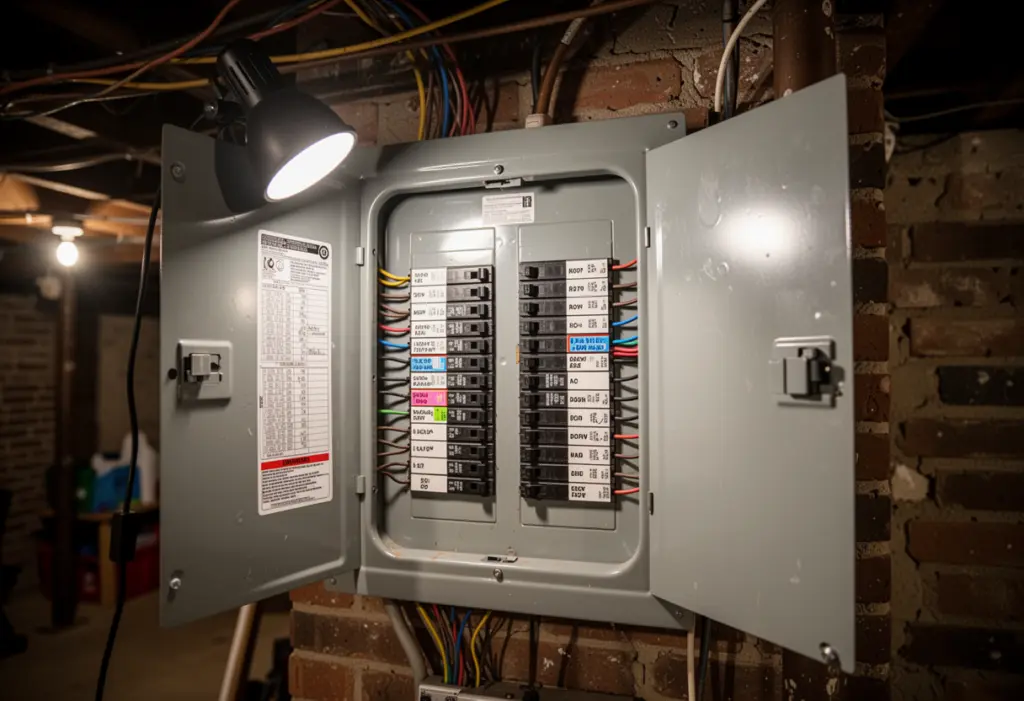
“Whole-house backup” is the phrase every homeowner starts with and very few end with, once the two options are costed side by side. The decision is not about ambition. It is about which circuits genuinely have to stay live.
What each one is
Critical loads backup puts a sub-panel between your main panel and the battery, carrying only the circuits you choose. Everything else goes dark in an outage exactly as it did before.
Whole-house backup keeps the entire panel live. Every circuit, every appliance, no thinking required during an outage.
Why the cost difference is large
Three separate multipliers, and they compound:
- Capacity. More load means more kWh to run it for the same number of hours.
- Power output. Whole-house means the battery must be able to start and run whatever anyone switches on — including central air conditioning, an electric range, a dryer, a well pump. That is a much higher kW requirement, and power output is usually the binding constraint rather than capacity.
- Electrical work. Whole-house backup frequently requires main panel work, and in older New York housing with a 100-amp service it can require a service upgrade with its own utility coordination.
A critical loads panel avoids all three by being deliberately modest.
What actually belongs on a critical loads panel
In a New York house, in rough order of how often it matters:
- Heating controls and the circulator pump. A gas or oil boiler needs very little electricity to run, and without it a January outage becomes a burst-pipe problem. This is the highest-value circuit in the state.
- Refrigerator. The most common reason people buy backup at all.
- Sump pump, where a failure means a flooded basement.
- Well pump, where no power means no water at all.
- Some lighting — LED lighting costs almost nothing to run.
- Internet, router and a few outlets for phones and laptops.
- Medical equipment, which is not a preference and should be identified first if it applies.
Notice what is absent: air conditioning, electric range, electric dryer, electric water heater, EV charging. Those are the loads that force a much larger battery, and in an outage most households can do without all of them.
When whole-house is the right answer
- An all-electric house. If your heating is a heat pump and your cooking and hot water are electric, the “non-critical” list is your actual life. The critical loads approach makes much less sense.
- A home business that cannot stop.
- Very frequent outages, where the inconvenience of a partial house adds up.
- New construction, where the panel work is happening anyway and the incremental cost is far lower than a retrofit.
That first case is becoming more common in New York as heat pumps replace oil and gas, and it genuinely changes the calculation — an all-electric house with critical-loads-only backup and no heat in January is a poor design.
The middle option nobody offers
A generous critical loads panel. There is nothing forcing the list to be minimal — you can include the boiler, fridge, pumps, lighting, outlets and a couple of larger circuits you care about, and still land far below whole-house cost and complexity.
Ask for it that way: “price a critical loads panel with this specific list”, rather than choosing between two packages someone else defined.
What to ask
- Price both, with the critical loads list written out circuit by circuit.
- What is the battery’s continuous power output, and what surges does it handle?
- Does my main panel and service have capacity for the whole-house option, and what does an upgrade cost if not?
- Will solar recharge the battery during an outage, and what does that look like in December?
- Does any figure here assume a federal tax credit? It should not — section 25D ended for expenditures made after 31 December 2025.
Frequently Asked Questions
Is whole-house battery backup worth it?
For most New York homes, no. It costs several times more because it needs more capacity, much more power output, and often main panel or service work. A critical loads panel covers what genuinely matters for far less.
What should be on a critical loads panel in New York?
Heating controls and the circulator pump first — a January outage without them becomes a burst-pipe problem — then the refrigerator, sump or well pump, some LED lighting, internet and a few outlets, plus any medical equipment.
When does whole-house backup make sense?
In an all-electric house where heating, cooking and hot water are all electric, so the non-critical list is your actual life; for a home business that cannot stop; in areas with very frequent outages; and in new construction where the panel work is happening anyway.
Can I have a larger critical loads panel instead of whole-house?
Yes, and it is the option rarely offered. Nothing forces the list to be minimal — ask for a critical loads panel priced against a specific circuit list you write, rather than choosing between two predefined packages.
This article is general information, not tax, legal or financial advice. Incentive amounts, eligibility rules and deadlines change and depend on your utility, your tax situation and your property. Confirm current terms with NYSERDA, your utility and a qualified tax professional before making a decision.
NY Solar Incentives
Independent New York solar research. We summarise NYSERDA, NY-Sun and federal programme rules from published sources and state plainly when a figure is an estimate. We are not a government agency and do not sell equipment.
Run the arithmetic on your own system
Check the dated program table and your arrangement before counting an incentive. Standard residential NY-Sun blocks are closed; Long Island Affordable Solar has a conditional income-verification route. The NY credit depends on qualified costs and tax liability, while the NYC abatement reduces future property-tax bills. The estimator keeps those timings separate.