Blower Wheel Cleaning: Where Lost Heat Pump Airflow Goes
The filter gets the credit for problems it cannot fix. When the registers have faded over several winters and a fresh filter changes nothing, the restriction has usually moved onto the blades of the blower wheel itself - where it reduces the air the machine can move without necessarily raising the pressure reading a technician takes at the door.
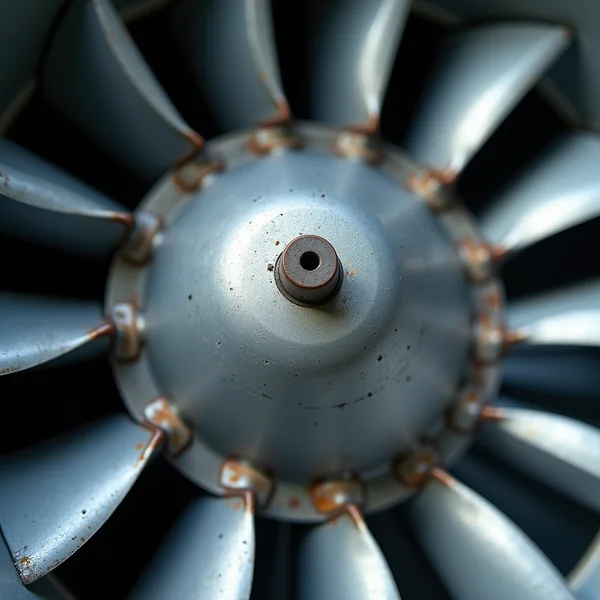
Why a dust-loaded squirrel cage costs more airflow than a dirty filter ever could, how to tell the two apart, and what a New York heat pump conversion changes about it.
Changing a filter is the maintenance every homeowner knows about, and it collects credit for problems it cannot possibly fix. When the air at the registers has faded over several winters and a fresh filter changes nothing, the restriction has usually moved somewhere a filter never touches: onto the blades of the blower wheel itself.
Blower wheel cleaning is the least visible line on an air handler service list and one of the few that moves a number you can measure. The wheel is a short drum ringed with several dozen curved blades, and each blade is a small scoop. Let a film of dust and lint pack into the throat of every scoop and the wheel stops gathering air and starts stirring it. Nothing sounds broken. The motor turns at the speed it was told to, draws close to the current it always drew, and delivers less air than it did the year before.
Why blower wheel cleaning restores airflow a new filter cannot
A residential air handler uses a forward-curved centrifugal wheel, known in the trade as a squirrel cage. Air enters at the centre through the open side of the drum, gets flung outward by the blades and leaves through the housing. The work happens in the narrow pocket between one blade and the next, so blade geometry is the whole design: pitch, depth and spacing decide how much air each pass captures and at what pressure it leaves.
A deposit changes that geometry. Dust does not settle evenly across a spinning wheel. It packs into the concave face of each blade, where the air slows and turns, and it builds outward from the root. The blade the air meets is no longer the blade the manufacturer drew: it is shallower, blunter and rougher, and the pocket it forms is smaller. The wheel keeps turning at the same speed, so the obvious indicators stay ordinary while delivered airflow falls.
That is the reason the filter comparison misleads people. A loaded filter adds resistance the blower has to fight, and it shows up as higher static pressure across the system. A fouled wheel does something different: it reduces the machine’s ability to produce pressure in the first place. Put a manometer on a system with a clogged filter and the reading climbs. Do it on a system with a loaded wheel and the reading can sit near normal, or even drift down, while the house receives noticeably less air. A technician who reads only total external static pressure and never opens the blower door can look straight past the fault.
The symptoms that point at the wheel rather than at the ducts
Both faults starve the coil, so the downstream symptoms overlap almost completely with those of a return duct that was undersized from the day it was installed. Four things separate them.
- It arrived gradually. Duct sizing is wrong on day one and stays exactly as wrong. Blade fouling accumulates, so the complaint is almost always “it used to be stronger”, measured against a memory of several years ago rather than against a specific event.
- A clean filter changes nothing. If a fresh filter restores the airflow for a few weeks, the filter was the story and the interval is too long. If it makes no difference at all, the restriction is further in.
- The noise moved. A restricted return whistles and roars at the grille. A loaded wheel is quieter than it should be at the registers, and it sometimes develops a low wobble or a periodic thump once deposit begins shedding unevenly and puts the drum out of balance.
- Cooling suffers first. Less air across an evaporator coil shows up in summer as a coil running colder than intended, and eventually as frost, well before winter heating capacity becomes the household complaint.
None of that is proof. Confirmation is visual and takes about a minute for anyone who has the blower door open already: shine a light along the blades and look at whether the metal is still visible, and whether the pocket between one blade and the next is open or bridged with grey felt.
What actually gets done, and how far the cabinet comes apart
“Cleaning the blower” covers at least three different jobs, with different durations, different results and different risks. Which one a system needs depends on how heavily the wheel is loaded and on how the equipment was built.
| Approach | What happens | Where it falls short |
|---|---|---|
| Brushed and vacuumed in place | The blower door comes off and the blades are worked from the open face of the wheel with a stiff brush and a vacuum nozzle | Reaches the outer portion of each blade and little else. Light films come away; anything packed or greasy stays where it is |
| Assembly pulled, wheel washed off the motor | The blower assembly slides out of the cabinet, the wheel comes off the shaft, and it is degreased and rinsed away from the equipment | Takes considerably longer, requires the set screw and shaft to be handled carefully, and the wheel must be dry and correctly reseated before it runs again |
| Wheel, coil and cabinet in one visit | Blower wheel, evaporator coil, drain pan and cabinet interior are cleaned together | The longest and most expensive version, and the only one that stops the wheel reloading from dirt sitting elsewhere inside the cabinet |
Two mechanical details are worth knowing before agreeing to any of them. The wheel is balanced, in some cases with small metal clips crimped onto the blade edges, and a wheel scrubbed hard enough to knock those off will vibrate afterwards. And its position on the shaft is not arbitrary: it sits at a set depth inside the housing, so a wheel reinstalled proud or deep can rub or lose performance for reasons that have nothing to do with how clean it is. Reassembly is where the damage happens in this job, which is a fair argument for asking in advance whether the wheel is coming off the motor at all.
Why a New York heat pump conversion raises the stakes
Replacing a furnace with an air-source heat pump changes the airflow requirement in the direction that punishes a dirty wheel. A furnace produces a large temperature rise across a modest volume of air. A heat pump produces a much smaller rise and makes up the difference by moving considerably more air through the same cabinet and usually the same ducts. The blower is being asked for more, not less, by equipment that may have been coasting for a decade behind a furnace that never needed its full output.
Then there is the New York winter. An air-source heat pump loses capacity as the outdoor temperature falls, so the coldest hours are precisely when it has the least margin in hand, and those are also the hours when it interrupts heating to run a defrost cycle. Airflow lost inside the cabinet subtracts from capacity that is already at its thinnest. The visible result is rarely a gentle decline: it is supplementary electric resistance heat engaging earlier in the season and staying on longer, which lands on the bill rather than on the thermostat. If you have been adjusting settings to get through a cold snap, it is worth ruling out the blower before rewriting the control strategy around a restriction.
The conversion also puts more running hours on the wheel. A heat pump commonly runs at low speed for long stretches rather than cycling hard and stopping, and continuous low-speed airflow past a filter that fits imperfectly deposits dust steadily instead of in bursts. That is why a wheel which stayed passable for twelve years behind a furnace can need attention within a few seasons of the changeover.
Keeping the wheel clean is a filtration problem, not a cleaning schedule
Dust reaches the blades because it got past the filter, and in most houses it got past around the filter rather than through it. The bypass paths are ordinary and specific: a filter slot left without a cover, so the blower draws unfiltered basement air straight through the gap; a filter one size small in an oversized rack, leaving a channel along one edge; a return plenum with open seams; and return-side duct joints upstream of the filter, which pull in whatever is suspended in the crawlspace or attic they run through.
Sealing those paths does more for the wheel than any cleaning interval, and it can be checked without instruments. With the blower running, an unsealed filter slot or a leaking return seam will pull a strip of tissue against itself hard enough to see. Deeper pleated media helps as well, but only if it seats fully in the rack, and only if the equipment can carry the extra resistance. Fitting thick high-efficiency media to an air handler that is already short of air trades a dust problem for a pressure problem.
Getting the work priced and proved
Because “blower cleaning” can mean any of the three jobs in the table, quotes are worth comparing by what physically happens rather than by the wording of the line item. Ask whether the wheel comes off the motor shaft, whether the coil is being cleaned in the same visit, and whether static pressure and the temperature difference across the coil will be recorded before and after. That last question turns an opinion into evidence: two sets of numbers taken on the same system an hour apart are the clearest demonstration available that something changed. It is the same discipline that separates a real commissioning check from a hopeful one when refrigerant charge is weighed in against the line set.
What the work costs varies with the region, with how the equipment is built, and with whether the cabinet is accessible or wedged into a closet, so a figure printed in an article ages badly and should not be treated as a quote. Where the cleaning is part of a wider heat pump installation or an efficiency upgrade, the current New York programme rules decide what is covered and by whom, and those change from season to season. Start from the state’s participating contractor listings and confirm the present terms directly rather than working from a number remembered from a previous year.
Frequently Asked Questions
How often does a blower wheel actually need cleaning?
There is no useful interval, because loading depends on how much unfiltered air the blower sees rather than on how long it has run. A well-sealed filter slot in a finished basement may keep a wheel presentable for a decade, while an open slot in a dusty crawlspace can pack the blades in a few seasons. Treat it as a condition to inspect rather than a service to schedule: whenever the blower door is open for any other reason, look along the blades with a light. If the metal is visible and the pockets between blades are open, leave it alone.
Can I clean the blower wheel myself?
Brushing and vacuuming the visible face of the blades with the power off at the disconnect is within reach of a careful homeowner, and on a lightly loaded wheel it recovers some of the airflow. Pulling the assembly and taking the wheel off the motor shaft is a different job: the set screw can round off, the wheel sits at a specific depth in the housing, and the balance clips on the blade edges are easy to dislodge. The failure mode is not a dirty wheel afterwards, it is a vibrating one. If the deposit is packed rather than dusty, that is the point to hand it over.
Will cleaning the blower wheel lower my heating bill?
It removes a restriction, and a restriction costs money in a specific way, so the honest answer is that it depends on how loaded the wheel was. On a heat pump, restored airflow means the coil works closer to its design condition and the supplementary electric resistance heat engages later and less often, which is where the bill is decided. On a furnace it mainly shows up as fewer high-limit shutdowns and steadier delivery. Neither effect can be predicted from the outside, which is exactly why the before-and-after measurements are worth asking for.
Is a dirty blower wheel the same problem as a dirty coil?
They are neighbours in the cabinet and they usually arrive together, but they act differently. A fouled coil adds resistance and insulates the heat exchange surface, so it raises static pressure and reduces capacity at the same time. A fouled wheel reduces the air the blower can move without necessarily raising the pressure reading. That difference matters diagnostically: a normal static pressure reading rules out several duct faults, but it does not rule out the wheel. In practice, whatever gets one dirty has generally been getting the other dirty for just as long.
My airflow is weak but the wheel looks clean. What else should be checked?
Look at the return path first, since a duct too small for the equipment produces the same starved coil and cannot be cleaned out of existence. After that, check the blower speed setting itself, which is often left at whatever the previous furnace used and may be well below what a heat pump needs; then the filter media, where a thick high-efficiency cartridge in an air handler with no margin can cost more airflow than the dust it is catching; then closed doors and blocked returns in individual rooms, which convert a working return into no return at all for that space.
Does a ductless mini-split have a blower wheel that needs the same attention?
It has a different one. A wall-mounted indoor head uses a long, thin cross-flow drum rather than a squirrel cage, and it sits directly behind the coil with only a thin mesh screen in front of it. That screen catches lint but not fine dust, so the drum accumulates a film that is harder to reach and, because the head runs in a living space, frequently develops mould in the slots as well. Cleaning it properly means covering the wall and washing the drum and coil in place, which is a specific service rather than something folded into a general tune-up.
NY Solar Incentives
Independent New York solar research. We summarise NYSERDA, NY-Sun and federal programme rules from published sources and state plainly when a figure is an estimate. We are not a government agency and do not sell equipment.
Run the arithmetic on your own system
Check the dated program table and your arrangement before counting an incentive. Standard residential NY-Sun blocks are closed; Long Island Affordable Solar has a conditional income-verification route. The NY credit depends on qualified costs and tax liability, while the NYC abatement reduces future property-tax bills. The estimator keeps those timings separate.