Undersized return duct: the signs, and what actually fixes it
The supply side of a duct system is the half people notice, and the return side is the half that decides whether the equipment can breathe. A return that is too small raises static pressure, drops the air crossing the coil, and turns into iced coils, short-cycling furnaces and backup heat running on mild days - all of which look like equipment faults and none of which are.
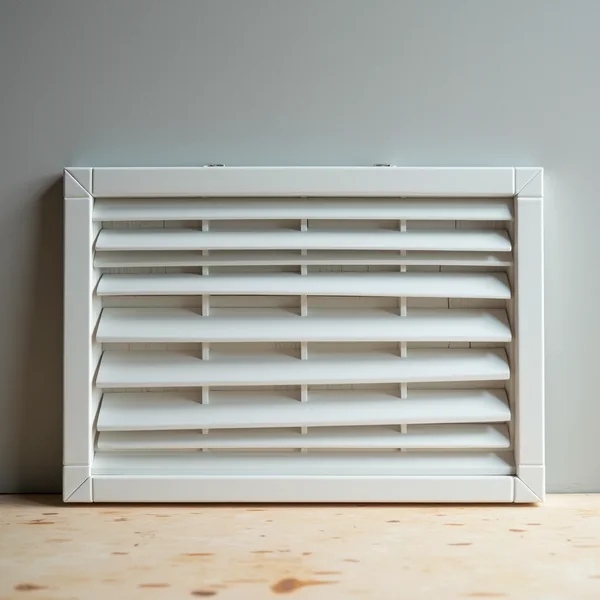
How a return that is too small starves the blower, why New York houses are prone to it, and the pressure measurement that separates a real diagnosis from a guess.
A forced-air system is a loop, not a one-way street. The blower pushes conditioned air out through the supply ducts and has to pull that same volume back in through the returns. Homeowners only ever feel one half of that loop, so when a room runs cold the conversation goes straight to the supply register. The return side is the half that quietly decides whether the equipment can breathe at all.
An undersized return duct is a common version of that failure in older New York housing stock, where for decades a house got one large central return in a hallway and nothing else, sized for a furnace long since replaced. Put a modern air handler behind it, add a deeper filter, or ask a heat pump to move considerably more air through the same hole, and that hallway grille becomes the restriction the whole system works against for the rest of its life.
What an undersized return duct does to the rest of the system
Start with the right mental model of a blower. It is not a device that moves a fixed quantity of air; it is a pump working against resistance. That resistance is called total external static pressure — the pull on the return side plus the push on the supply side, measured in inches of water column. Residential air handlers are rated against a design maximum for that total, commonly in the region of half an inch, and the manufacturer publishes a table showing how much air the blower actually delivers at each pressure. The pattern down that table is unmistakable: as static pressure rises, delivered airflow falls.
An undersized return inflates the return-side half of that number. Nothing looks broken. The blower still turns, the registers still feel like they are blowing, but the volume of air crossing the coil or the heat exchanger has dropped below what the equipment was designed around. Every symptom people report is downstream of that one fact.
- In cooling, less air over the coil means the coil runs colder than intended. Capacity falls, the system runs longer for the same result, and at the extreme the coil frosts into a block of ice — which restricts airflow further, so the problem accelerates once it starts.
- With a gas furnace, less air means less to dump heat into, so supply temperature climbs past the rated rise and the high-limit switch shuts the burner off before the thermostat is satisfied. The result reads to a homeowner as short cycling.
- With a heat pump, low airflow pushes refrigerant pressures toward the compressor’s protection limits and shifts the point at which the electric backup takes over, so resistance heat runs on milder days than it should.
- The blower itself reacts differently depending on its motor. An older PSC motor simply delivers less air and says nothing about it. A constant-airflow ECM motor tries to compensate by working harder, so it draws more watts and makes more noise to deliver the air it was asked for.
Why the return is the side that ends up too small
Supply ducts get extended. When a room is added or a basement finished, someone runs a new branch to it. Returns almost never get the same treatment, so the return side of a house stays frozen at whatever it was when the ducts were first installed while the supply side grows around it. Several other habits push the same way:
- A grille’s nominal size is not its opening. Louvres and a filter rack block a large share of the face, so the free area a grille actually passes is well under what its stamped dimensions suggest.
- Filters get upgraded without the housing changing. A higher-MERV or thicker filter dropped into a rack built for a thin one adds resistance to precisely the side that was already tight. Air quality improves; airflow does not.
- Closed doors turn one return into none. A bedroom with a supply register and no return path is fine with the door open and pressurised the moment it shuts, because the air pushed in has nowhere to leave except through the building envelope.
- The duct itself underperforms its geometry. Panned joist bays and stud cavities pressed into service as returns leak at every seam, and a crushed or sagging length of flex costs more resistance than its diameter would predict.
Symptoms that point at the return rather than the equipment
Each row moves you from something you can notice to something you can measure. A symptom on its own does not distinguish an undersized return from a failing compressor; the measurement does.
| What you notice | What it usually indicates | What to measure |
|---|---|---|
| Whistle or rush at the return grille when the blower starts | Air velocity too high for the free area available | Return-side static pressure at the air handler |
| Doors swing shut or thump when the system runs | No return path from the rooms once doors close | Room-to-hallway pressure with the door shut |
| Ice on the coil or frost on the suction line in summer | Airflow across the coil below the required range | Temperature split across the coil, then static |
| Furnace stops before the thermostat is satisfied | High limit tripping on insufficient airflow | Supply temperature rise against the rated range |
| Backup heat engaging on mild days | Heat pump capacity limited by air, not by weather | Static pressure plus delivered airflow |
| The system got louder after a filter change | Filter resistance stacked on an already tight return | Pressure drop across the filter alone |
How the restriction is confirmed rather than guessed
Diagnosis here is a pressure measurement, and it takes a manometer and two small test ports drilled into the duct. Anyone quoting duct work without having taken that reading is estimating from appearances.
Where the readings are taken
One probe goes into the return between the filter and the blower, the other into the supply plenum past the coil. Added together they are the total external static pressure, which is the number to compare against the equipment’s own rating table. Taking them separately matters because the split says which side is at fault — a return reading that dwarfs the supply reading is the signature of the problem this article is about.
Isolating the component
Once the return side is implicated, the same instrument can measure the pressure drop across the filter alone, across the coil, and across the grille. That turns a vague verdict into a specific one. Sometimes the undersized return is really a filter choice, and a deeper media cabinet with far more surface area fixes it without opening a single wall.
Why this matters more once a house electrifies
A heat pump delivers heat at a much lower supply temperature than a furnace does, which means it has to move considerably more air to deliver the same warmth. Duct work that was adequate behind a furnace producing very hot supply air can be badly short behind a heat pump producing mildly warm air, and the shortfall shows up exactly when the weather is worst. This is why sizing a heat pump around an existing system has to include the ducts and not only the equipment, and why airflow belongs early in the order in which a New York home electrifies rather than after the new equipment is in.
The bill consequence follows from that. A heat pump forced onto its resistance backup because it cannot move enough air is drawing electricity at the least efficient setting it has, and that is consumption a solar array then has to cover. Airflow work reduces the load rather than shifting where the energy comes from.
What a fix actually involves
There is no single repair called “fixing the return”, so a quote should be read as a scope of work rather than a product. The realistic options, roughly in order of how invasive they are:
- Change the filter arrangement. A media cabinet with several times the face area of a one-inch rack carries the same filtration at a fraction of the resistance. No structural work.
- Enlarge the existing return. A bigger grille, a wider throat into the trunk, or a straighter connection at the air handler, where there is room to do it.
- Add transfer grilles or jumper ducts. These solve the closed-door half of the problem by giving each bedroom a path back to the central return. Small work, often overlooked.
- Add a second return. Usually the largest single change available and the most disruptive, since it means new duct, framing and patching. With open basement joists it is straightforward; in a finished ceiling it is a construction job.
What drives the price is therefore access and scope, not a per-unit rate: how far the new duct has to travel, what has to be opened to run it, and whether the air handler connection itself needs rebuilding. Ask for the scope in writing, itemised the way any energy work quote should be itemised, and ask for the before-and-after static pressure readings as part of the deliverable. That measurement is the proof the work did what it was sold to do — without it you are buying sheet metal, not performance.
Frequently Asked Questions
How can I tell if my return duct is undersized without any tools?
You cannot confirm it, but you can build a strong suspicion. A loud rush or whistle at the return grille whenever the blower runs, interior doors that pull shut or thump when the system starts, a coil that ices in summer, or a furnace that stops before the thermostat is satisfied all point at restricted airflow. A cheap indicator is to run the blower with the filter removed for a few minutes: if the noise drops and the air at the registers strengthens noticeably, resistance on the return side is doing real damage. Confirmation still needs a manometer reading.
Is one central return enough for a whole house?
It can be, if it is genuinely large enough and every room has a path back to it. The failure is rarely the idea of a single return; it is a single return sized for older equipment, choked by a thin filter rack, and serving bedrooms whose doors close. Adding transfer grilles or undercutting doors so air can leave the rooms often does more than the duct size alone would suggest, because a closed door converts a working return into no return for that room.
Does a higher-MERV filter cause an undersized return?
It does not cause it, but it exposes it. Filter resistance and duct resistance add together on the same side of the blower, so a filter that would be harmless on a generously sized return can push a marginal one past the equipment’s rating. The fix is surface area rather than lower filtration: a four- or five-inch media cabinet presents several times the face area of a one-inch rack, so the same air passes through at a much lower pressure drop and the filtration level does not have to be given up.
Will an undersized return duct damage the equipment?
Over time it shortens equipment life rather than breaking it outright. Repeated high-limit trips cycle a furnace’s heat exchanger through thermal stress it was not meant to see that often. A coil that freezes returns liquid refrigerant toward the compressor. A heat pump held near its pressure limits spends its life at the edge of its protection settings. None of that produces a dramatic failure on any given day, which is precisely why the problem persists for years.
Should I fix the return duct before or after installing a heat pump?
Before, wherever the sequence allows it. A heat pump needs more airflow than the furnace it replaces because it delivers heat at a lower temperature, so a duct system that was borderline becomes inadequate the day the new equipment starts. Correcting airflow first also changes the load calculation the installer works from, which can affect the equipment selected. Doing it afterwards means paying for a second visit and living with backup heat running more than it should in the meantime.
What measurement should I ask a contractor for?
Total external static pressure, split into its return-side and supply-side halves, taken before the work and again after it, alongside the airflow the equipment’s own table gives for those readings. Ask what the manufacturer’s maximum is for your specific air handler so the numbers have something to be compared against. A contractor who diagnoses a duct problem by looking at the ducts rather than measuring the pressure is guessing, and a scope of work built on a guess is difficult to hold anyone to.
Does any New York program help with duct and airflow work?
Airflow and duct sealing usually fall under home-performance and weatherization work rather than under solar or equipment programs, and the terms of those programs change from year to year. Check the current rules directly with NYSERDA and with your utility rather than relying on figures quoted in an article or by a salesperson, and confirm before signing whether the work has to be performed by a participating contractor to qualify at all, since that requirement is easy to fail by accident.
NY Solar Incentives
Independent New York solar research. We summarise NYSERDA, NY-Sun and federal programme rules from published sources and state plainly when a figure is an estimate. We are not a government agency and do not sell equipment.
Run the arithmetic on your own system
Check the dated program table and your arrangement before counting an incentive. Standard residential NY-Sun blocks are closed; Long Island Affordable Solar has a conditional income-verification route. The NY credit depends on qualified costs and tax liability, while the NYC abatement reduces future property-tax bills. The estimator keeps those timings separate.