NY Solar Energy System Equipment Credit: Full Rules
What the New York solar energy system equipment credit is worth, who qualifies, what counts as your expenditure, and how the claim is actually made.
On this page 10 sections
- 01What the credit is worth and how it is shaped
- 02What counts as solar energy system equipment
- 03Who can claim the NY State solar energy system equipment tax credit
- 04What your qualifying expenditure actually is
- 05How leases and power purchase agreements qualify
- 06How the claim is actually made
- 07Carry-forward, and why the credit takes years for some households
- 08Reliefs this credit is often confused with
- 09The federal position, which is no longer symmetrical
- 10Frequently asked questions
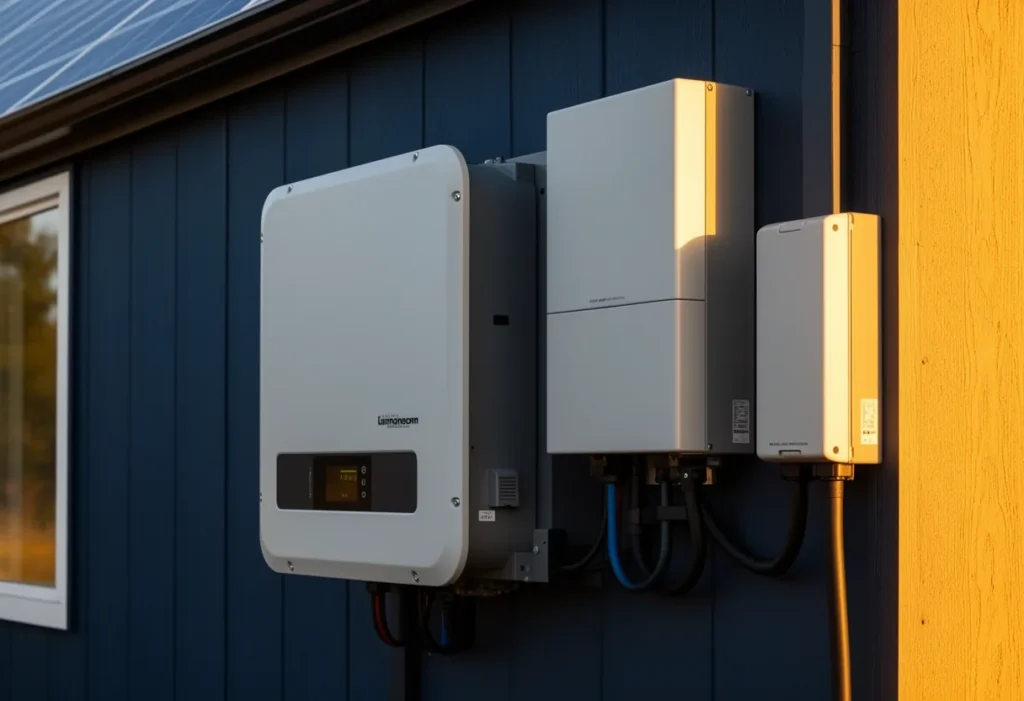
The ny state solar energy system equipment tax credit is the formal name for what most people call the New York solar credit. The wording matters, because each part of that phrase carries a condition: the equipment has to be solar energy system equipment, it has to be installed at a qualifying residence, and the expenditure has to be yours.
Most disputes about this credit come down to one of three questions. Is this property eligible. Is this residence the right kind of residence. And is this payment a qualifying expenditure. The rest is arithmetic.
What the credit is worth and how it is shaped
The credit is a percentage of qualified expenditure, subject to a dollar ceiling — long set at 25% and $5,000 respectively. Whichever bites first is what you get, so above roughly $20,000 of qualifying cost the ceiling is doing the work and a larger system does not produce a larger credit.
It is non-refundable: it reduces New York tax you owe and generates no payment if you owe nothing. Both figures are statutory and have been amended before, so confirm them for your filing year with the Department of Taxation and Finance rather than trusting a number in an old proposal.
What counts as solar energy system equipment
The statute describes equipment that uses solar radiation to produce energy for heating, cooling, hot water or electricity for use at the residence, so solar thermal systems fall within it as well as photovoltaic ones. The equipment must serve the residence rather than exist independently of it: a system sized and installed to supply the home is squarely within scope, while equipment installed principally for another purpose is a different question.
Components that are part of making the system work — mounting, wiring, inverters, the associated electrical labour — travel with the equipment. Components that would exist anyway, most obviously the roof, do not.
Who can claim the NY State solar energy system equipment tax credit
The claimant must be an individual taxpayer, and the installation must be at their principal residence in New York State. Principal residence means the home they actually live in most of the time, not simply a New York property they happen to own.
That excludes a second home used seasonally, and a property held purely as a rental, because the landlord does not live there. It does not exclude a home partly used for something else, though allocation questions arise there.
Condominium and co-operative owners can qualify where the system serves their residence and their share of the cost is properly determined. Co-operatives require particular care, because the shareholder does not own real property in the ordinary sense and the allocation has to be documented by the corporation.
Two homeowners, one system, one cap
The cap is oriented around the residence as well as the taxpayer, limiting how much credit one home can generate across owners and across successive installations. If your property already had a system, or unmarried co-owners each plan to claim, get the allocation confirmed by a tax preparer before filing rather than after.
What your qualifying expenditure actually is
The credit is computed on what you paid, not on the sticker price of the system. That distinction decides more claims than any other.
As of September 2026 NYSERDA has no open NY-Sun block for homes in any utility territory; check NYSERDA’s NY-Sun dashboard for a new one. Where a contract does carry a NY-Sun incentive, it is paid by NYSERDA to a participating contractor and shows on a compliant contract as a deduction, so the price you finance is already net of it. There is nothing further to subtract on the return. A grant or utility payment that reaches you directly behaves differently and is worth raising with your preparer.
Timing follows the expenditure: for a purchase the credit belongs to the tax year the qualifying expenditure was made, and for a lease or PPA it follows the payments made in each year. Keep the contract, the itemised invoice showing the incentive deducted, proof of payment and the interconnection paperwork in one file.
How leases and power purchase agreements qualify
New York deliberately extended qualifying expenditure to cover amounts paid under a written agreement to lease solar energy system equipment, or to purchase power generated by equipment owned by someone else, where the agreement runs for at least ten years.
The ten-year term is a condition of the agreement, not a description of how long you have lived with it. A shorter agreement does not qualify on this basis, and an agreement that can be terminated in a way that defeats the term should be read carefully before it is relied on.
Because payments are made annually, the credit is computed on payments made in each tax year, which produces a series of claims rather than one. The trade-offs between owning and contracting are set out in lease versus buy, and the agreement structure itself in the PPA guide.
| Situation | Eligible for the credit? | The condition that decides it |
|---|---|---|
| Owner-occupied house, purchased system | Yes | Principal residence in New York State |
| Condominium unit, allocated system cost | Generally yes | Documented allocation of qualifying cost |
| Co-operative apartment | Possible | Allocation determined and evidenced by the corporation |
| Seasonal or second home | No | Fails the principal residence test |
| Property you rent out | No, as a residential claim | You do not reside there |
| Lease or PPA of ten years or more | Yes, on payments made | Written agreement meeting the term |
How the claim is actually made
The credit is claimed on Form IT-255, filed with your New York personal income tax return for the year rather than sent in separately. The form asks for the qualifying expenditure, applies the percentage and the ceiling, and carries the result through to the return. The same form is used again in a later year to apply a carried-forward amount, which is why the supporting documents matter for longer than the installation year — the mechanics are in the guide to Form IT-255.
Carry-forward, and why the credit takes years for some households
Where the credit for a year exceeds the liability, the excess is carried forward, within a limit of five taxable years under the long-standing rule. For a household with a substantial state tax bill this is invisible — the credit is absorbed in one return. For a household with modest liability it is real but slow, and its practical value depends on having taxable income in New York for several more years.
Retirees, households with heavily sheltered income and anyone planning to leave the state should weigh that before treating the credit as a fixed part of a payback calculation. It changes the timing of payback even when it does not change the total.
Check liability, not just cost
Before assuming the full credit, look at the New York State tax you actually paid in the last two years. That figure, not the size of the system, is what determines how quickly the credit converts into money you keep.
Reliefs this credit is often confused with
New York also exempts residential solar energy systems equipment from state sales tax, with local jurisdictions electing separately for their own rate — a saving taken at purchase, not on a return. And the Real Property Tax Law exemption removes the assessed-value increase attributable to a qualifying system for a period of years, in municipalities that have not opted out. That reduces a property tax bill rather than an income tax bill, and it is not the New York City abatement, which is a separate city programme.
The credit also follows the taxpayer rather than the property. An unused carry-forward does not transfer with the house and a buyer does not inherit a right to claim it, which is one of the items to settle when selling a house with solar.
The federal position, which is no longer symmetrical
Guidance written before 2026 routinely pairs this state credit with a federal residential credit. That pairing no longer holds. The federal residential clean energy credit terminated for expenditures made after 31 December 2025, so a purchase completed now produces a state credit only. An expenditure counts as made when the original installation is completed, so a system finished in December 2025 but switched on in January 2026 still falls under the old rules. The distinction between the two years is explained in the federal credit article.
Frequently asked questions
How much is the New York solar energy system equipment credit?
It is a percentage of qualified expenditure subject to a dollar ceiling, long set at 25% and $5,000, with whichever limit bites first deciding the amount. It is non-refundable, so it reduces New York tax you owe rather than producing a payment. Both figures are statutory and have been amended before, so confirm the numbers for your filing year with the New York State Department of Taxation and Finance.
Does the NY-Sun incentive reduce the credit I can claim?
Not as a separate subtraction on the return, and as of September 2026 NYSERDA has no open NY-Sun block for homes in any utility territory. Where a contract does carry it, NY-Sun is paid to your participating contractor and appears as a lower contract price, so the amount you pay is already net of it and the credit is calculated on that net figure. A payment that reaches you directly rather than through the contract behaves differently and should be raised with your tax preparer.
Does a ten-year lease really qualify even though I never own the panels?
Yes. New York specifically allows amounts paid under a written lease or power purchase agreement of at least ten years to be qualifying expenditure at a principal residence. The credit is calculated on payments made during each tax year rather than on the value of the equipment. Check the stated term in the contract, because a shorter agreement does not qualify on this basis.
Statutory rules change
Caps, eligibility definitions and carry-forward periods are set in law and have been amended before. Verify the current rules and the figures for your filing year with the New York State Department of Taxation and Finance, and take advice on allocation questions in shared or mixed-use buildings.
This article is general information, not tax, legal or financial advice. Incentive amounts, eligibility rules and deadlines change and depend on your utility, your tax situation and your property. Confirm current terms with NYSERDA, your utility and a qualified tax professional before making a decision.
NY Solar Incentives
Independent New York solar research. We summarise NYSERDA, NY-Sun and federal programme rules from published sources and state plainly when a figure is an estimate. We are not a government agency and do not sell equipment.
Run the arithmetic on your own system
Check the dated program table and your arrangement before counting an incentive. Standard residential NY-Sun blocks are closed; Long Island Affordable Solar has a conditional income-verification route. The NY credit depends on qualified costs and tax liability, while the NYC abatement reduces future property-tax bills. The estimator keeps those timings separate.