Is the NY-Sun Solar Rebate Still Open in New York?
The rebate most "free solar panels" ads are talking about has largely closed for standard-income homeowners in New York. Here's what actually happened and what's left.
On this page 9 sections
- 01What NY-Sun’s megawatt block rebate actually was
- 02Where the standard-income block actually stands
- 03The income-qualified incentive: larger, and now closed too
- 04Why the block closes instead of just running out of money slowly
- 05What’s still available even without a per-watt rebate
- 06Why “free solar panels” ads keep running anyway
- 07What to actually ask an installer in 2026
- 08What this means for your payback math
- 09Frequently Asked Questions
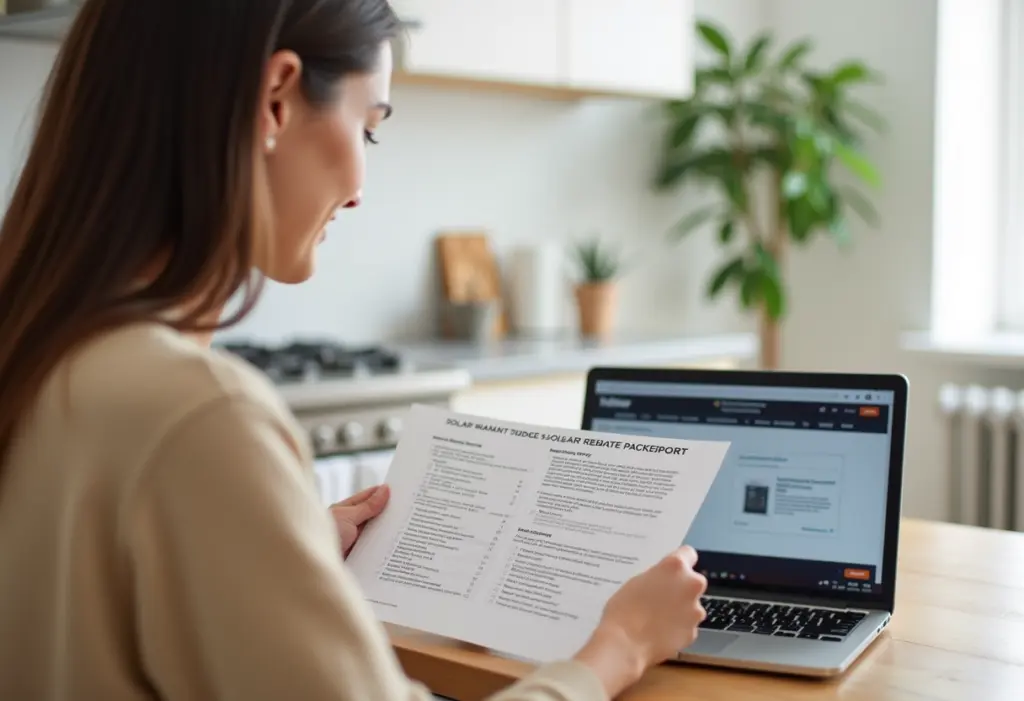
If you’ve seen an ad promising a “free” or “government-funded” solar program in New York, the rebate it’s usually referring to is NY-Sun, run through NYSERDA. The direct answer for homeowners in 2026: every residential version of that rebate has closed, the income-qualified one included, and what’s advertised as a still-open “government program” is more often a 25-year lease or power purchase agreement than a rebate check.
That doesn’t mean nothing is available. It means the specific rebate most of these ads lean on isn’t the reason your neighbor’s system got cheaper, and confusing the two leads to a quote that assumes savings which are no longer on the table.
What NY-Sun’s megawatt block rebate actually was
NY-Sun paid installers a per-watt incentive for each residential system while a residential block was open, funded through New York’s System Benefit Charge on utility bills. It was never unlimited: NYSERDA sets a fixed number of megawatts for each region at a given incentive rate. Once installations in that region use up the block, the rate drops to the next, lower block — and eventually, once all the blocks assigned to a region are used, the standard-income incentive for that region closes.
That’s the mechanism, and it’s why the rebate has never been a flat, permanent dollar figure. It shrinks in steps as more homeowners in a region install solar, and it’s designed to run out.
Where the standard-income block actually stands
Checking NYSERDA’s own regional block charts directly: in the Con Edison territory, the last standard-income residential block (block 10) paid $0.15 per watt and closed on May 29, 2025. Upstate, the last one (block 14, also $0.15 per watt) closed on December 17, 2025, and Long Island’s last residential block closed on April 17, 2016. The practical result is that a homeowner filing a new application today, anywhere in the state, is not getting a NY-Sun check the way an installation in 2022 or 2023 would have. As of September 2026 NYSERDA has no open NY-Sun block for homes in any utility territory; check NYSERDA’s NY-Sun dashboard for a new one.
This is a moving target by design — NYSERDA updates each region’s dashboard as blocks fill — so treat any number here as a snapshot, not a permanent figure, and check the live dashboard for your own utility region before assuming either way.
| Question | What’s actually true in 2026 |
|---|---|
| Is there still a per-watt NY-Sun rebate for a typical homeowner? | No — the standard-income blocks have closed in every region (Con Edison May 29, 2025; Upstate December 17, 2025; Long Island 2016) |
| Is any NY-Sun money still on the table? | Not for homes as of September 2026 — the income-qualified Affordable Solar blocks have closed too (Con Edison October 15, 2025; Upstate March 9, 2026) |
| Does “free solar” in an ad usually mean a rebate? | Rarely — it’s typically a lease or PPA, not a cash incentive |
| Where do I check the current status for my utility? | NYSERDA’s own regional NY-Sun dashboard, not a contractor’s marketing page |
The income-qualified incentive: larger, and now closed too
NY-Sun’s Affordable Solar track, aimed at lower-income households, ran separately from the standard block. On NYSERDA’s own figures, income-qualified projects in the Con Edison and Upstate regions received a total incentive of $0.80 per watt of installed capacity — several times the size of the last standard-income block — but those blocks have closed as well: Con Edison’s ran from May 30 to October 15, 2025, and Upstate’s from December 18, 2025 to March 9, 2026. If your household falls under the area median income threshold NYSERDA sets for this program, this is the rebate worth asking an installer about if NYSERDA opens a new block; as of September 2026 none is open.
Why the block closes instead of just running out of money slowly
The step-down structure is deliberate policy, not a funding shortfall catching NYSERDA off guard. Megawatt blocks are designed to shrink the incentive as solar gets cheaper and more common in a region, on the logic that an incentive large enough to matter in 2018 shouldn’t need to stay that large once installation costs have fallen and more contractors are competing for the same customers. Every region was always going to work through its blocks eventually; the surprise for a lot of homeowners is only that it happened on this particular timeline, and that installer marketing didn’t always catch up with the closure.
That’s also why asking “is the rebate still available” has to be checked region by region. Long Island, upstate New York, and the Con Edison service territory each run their own block schedule, so one region closing its standard-income tier did not by itself close a neighboring utility’s territory — though as of September 2026 all three show no open block for homes.
What’s still available even without a per-watt rebate
Losing the standard NY-Sun rebate doesn’t mean New York’s solar incentives collapsed to nothing. Several programs that don’t depend on the megawatt block are still in place for a typical homeowner:
- The New York State solar tax credit, claimed on your state return, worth a share of system cost up to a fixed dollar cap.
- New York’s sales tax exemption on solar equipment, applied at the point of purchase rather than claimed later.
- A property tax exemption or, in New York City specifically, a property tax abatement, so adding solar doesn’t automatically raise your assessment or your city property tax bill.
- Community solar, for a homeowner who can’t install on their own roof at all.
None of these is the rebate the “still available” ads are gesturing at, but stacked together they’re the real incentive picture for 2026 — worth asking an installer to itemize individually rather than accepting a single bundled “savings” number.
Why “free solar panels” ads keep running anyway
If the per-watt rebate that funded a lot of aggressive marketing has closed in every region, why do “free solar” ads keep showing up? Because most of them were never describing that rebate specifically. A $0-down lease or power purchase agreement can genuinely mean no upfront payment, but it isn’t free — you’re paying for the electricity the system produces, under a contract that usually runs 20 to 25 years, and the marketing rarely draws that distinction. The rebate closing doesn’t require the ad copy to change, since the ad was rarely about the rebate in the first place.
What to actually ask an installer in 2026
Given all this, three questions separate an accurate quote from an outdated one:
- Is any part of this quote’s savings estimate assuming a NY-Sun rebate? If so, ask them to show which open block that money comes from — as of September 2026 there is none for homes — rather than a number carried over from an older pitch deck.
- Has the installer checked NYSERDA’s NY-Sun dashboard for a newly opened block for homes, including an income-qualified one, rather than assumed either way?
- Is this a rebate at all, or a lease/PPA structured to look like one? Ask directly whether you will own the system and whether any credit here is a cash rebate versus financing terms.
A quote that can answer all three specifically, with current numbers instead of a general “there are government incentives” line, is the one worth trusting.
What this means for your payback math
A rebate closing doesn’t erase your system’s value, but it does change the math a savings estimate should be built on. If an older projection assumed a per-watt check that no longer applies to your region, the real upfront cost of your system is higher than that projection shows, and the payback period stretches out to match. That’s a reason to ask for an updated, region-specific number rather than a reason to assume solar stopped making sense — the tax credit, sales tax exemption, and any property tax protection you still qualify for are unaffected by a rebate block closing, and for many homes they remain the larger share of the total savings anyway.
Frequently Asked Questions
Is the NY-Sun solar rebate still available in New York?
No. As of September 2026 NYSERDA has no open NY-Sun block for homes in any utility territory. The standard-income version closed region by region as the megawatt blocks filled — Con Edison's last standard residential block, for example, paid $0.15 per watt and closed in May 2025. The income-qualified Affordable Solar blocks ($0.80 per watt) have closed too: Con Edison's on October 15, 2025 and Upstate's on March 9, 2026.
Does "free solar panels" in New York actually mean a government rebate?
Usually not. Most ads using that phrase are describing a $0-down lease or power purchase agreement, where you pay for the electricity the system produces over a long-term contract rather than receiving a cash rebate.
What New York solar incentives are still available if the rebate has closed?
The state solar tax credit, the state sales tax exemption on solar equipment, a property tax exemption or NYC abatement, and community solar for homeowners who can't install on their own roof are all separate from the per-watt rebate and remain in place.
How do I check if my region's NY-Sun rebate is still open?
Check NYSERDA's own regional NY-Sun dashboard for your utility territory rather than relying on a contractor's marketing page, since the incentive level drops in steps and eventually closes as each region's megawatt block fills.
NY Solar Incentives
Independent New York solar research. We summarise NYSERDA, NY-Sun and federal programme rules from published sources and state plainly when a figure is an estimate. We are not a government agency and do not sell equipment.
Run the arithmetic on your own system
Check the dated program table and your arrangement before counting an incentive. Standard residential NY-Sun blocks are closed; Long Island Affordable Solar has a conditional income-verification route. The NY credit depends on qualified costs and tax liability, while the NYC abatement reduces future property-tax bills. The estimator keeps those timings separate.