Removing Solar Panels Before Selling a New York Home
Removal is a cost, the equipment loses value the moment it comes off the roof, and the interconnection does not travel with it. There are usually better moves.
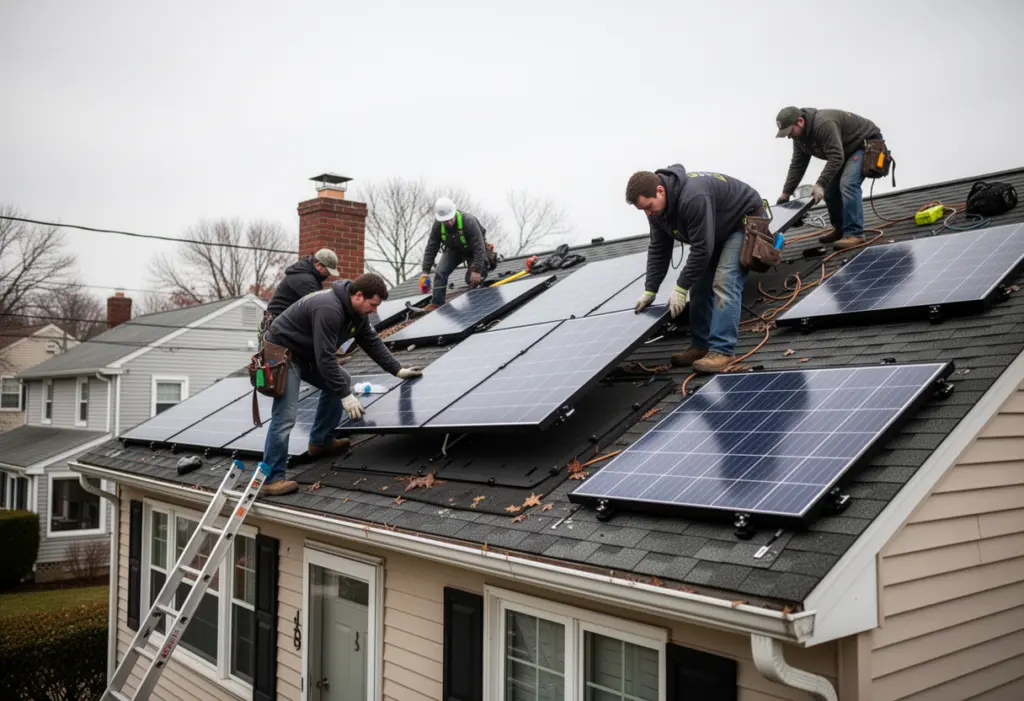
Taking the array down before closing almost never pays. Removal is a cost, the equipment loses most of its value the moment it comes off the roof, and you give up an interconnection agreement that took months to obtain and cannot simply be carried to the next address. Before pricing a removal, be clear about which of three situations you are actually in, because the answer differs completely.
First, do you even own them
If the array is leased or supplied under a power purchase agreement, it is not yours to remove. The equipment belongs to the finance company and the agreement governs what happens at a sale. Your route is transfer or buyout, negotiated with the servicer, and a removal request is a conversation with them rather than with a roofer.
If you own the system outright, or own it subject to a loan, removal is physically possible and the question becomes whether it is sensible. If a lender holds a security interest in the equipment, check that first — taking their collateral off the building is usually a breach of the agreement you signed.
What removal actually involves
Get any removal quote itemised, because the work is not simply unbolting modules:
- De-energising the system and notifying the utility, which ends the interconnection.
- Dismounting modules, rails and attachments, and removing the inverter or optimisers.
- Patching and flashing every roof penetration, then demonstrating the roof is watertight.
- Removing conduit runs and leaving the service panel safe and compliant.
- Transport, storage or disposal, including recycling of anything not being reused.
Then ask the warranty question in writing before anyone touches the roof. A workmanship warranty from the original installer is usually void once another company removes the array, and product warranties frequently depend on the module never having been demounted. A system that arrives at your next house with no warranty is worth considerably less than the one currently producing on your roof.
The interconnection is the part people forget
Phase One net metering credits exports at the full retail rate and holds that structure for 20 years from interconnection. That clock belongs to the system at that address. Remove the array and the arrangement ends; reinstalling somewhere else means a fresh interconnection application under whatever rules apply on that day.
The Customer Benefit Contribution follows the same logic in the other direction. It applies to systems interconnected on or after 1 January 2022, is billed on DC size regardless of production, and is recalculated annually rather than locked in. A 2019 system that you move becomes a new interconnection, and a charge you were never paying starts to apply. On a 7 kW array under NYSEG that is 7 multiplied by $1.19, about $8.33 a month.
If either address is served by a municipal electric utility, none of the Commission rules apply at all — no state interconnection process, no Commission net metering, no Customer Benefit Contribution — and the terms are whatever that municipal utility sets. Check the utility named on the bill for both properties.
Tax and property consequences
The New York credit on Form IT-255 is 25% of qualified expenditure capped at $5,000, and it requires the equipment to be installed and used at your principal residence. There is no line on that form for reinstalling equipment you have already claimed, so do not assume moving an array generates a second credit. Ask a New York tax preparer before planning around it.
The RPTL 487 property tax exemption applies to the added value of the system for 15 years where the municipality, the county and the school district have each not opted out. Remove the system and there is no added value left to exempt, which also means it is not something the buyer is losing.
What to do instead
In most cases the productive move is to make the array easy to accept rather than to remove it. Assemble the documents a cautious buyer will ask for: the interconnection approval, the production history from the monitoring portal, the workmanship and product warranties with their remaining terms, the permit and inspection sign-offs, and, where a loan is involved, a current payoff figure with confirmation that any equipment filing will be terminated at closing.
Be honest about the objection you are actually hearing. A buyer who says they do not want panels very often means they do not want a payment. Clearing the debt at closing and conveying an owned, warrantied, producing array is a completely different proposition from asking someone to assume a balance, and it usually costs less than a removal, a roof repair and a reinstallation somewhere else.
The incentives that still matter here
Nothing in 2026 rewards moving equipment. The 30% federal residential credit ended for expenditures made after 31 December 2025, with the expenditure treated as made when the original installation is completed, so a reinstallation buys no federal benefit at all. What survives sits on the New York side and attaches to new qualified expenditure at a principal residence: the 25% IT-255 credit up to its $5,000 ceiling, the state sales tax exemption and, for a new system constructed before 1 January 2030 whose owner files form RP-487 with the assessor, RPTL 487. The contractor-applied NY-Sun reduction is not among them: as of September 2026 NYSERDA has no open NY-Sun block for homes in any utility territory; check NYSERDA’s NY-Sun dashboard for a new one. Programmes change, so confirm the current position with NYSERDA and the Department of Taxation and Finance rather than with a sales proposal.
Frequently Asked Questions
Should I remove solar panels before selling my house in New York?
Usually not. Removal costs money, the equipment loses most of its value once demounted, warranties often lapse, and you give up an interconnection and net metering arrangement that cannot be carried to another address.
Can I take leased solar panels with me when I move?
No. Leased and PPA equipment belongs to the finance company, and the agreement decides what happens at a sale. The realistic options are transfer to the buyer or a buyout, both negotiated with the servicer.
Does moving an array restart net metering?
Yes. Phase One net metering runs 20 years from interconnection for that system at that address. Reinstalling elsewhere is a new interconnection under the rules in force then, and a system originally interconnected before 2022 would begin paying the Customer Benefit Contribution.
Do I get the New York tax credit again if I reinstall the panels?
Do not assume so. Form IT-255 covers qualified expenditure for equipment at your principal residence and has no provision for reinstalling equipment already claimed. Ask a New York tax preparer before counting on it.
This article is general information, not tax, legal or financial advice. Incentive amounts, eligibility rules and deadlines change and depend on your utility, your tax situation and your property. Confirm current terms with NYSERDA, your utility and a qualified tax professional before making a decision.
NY Solar Incentives
Independent New York solar research. We summarise NYSERDA, NY-Sun and federal programme rules from published sources and state plainly when a figure is an estimate. We are not a government agency and do not sell equipment.
Run the arithmetic on your own system
Check the dated program table and your arrangement before counting an incentive. Standard residential NY-Sun blocks are closed; Long Island Affordable Solar has a conditional income-verification route. The NY credit depends on qualified costs and tax liability, while the NYC abatement reduces future property-tax bills. The estimator keeps those timings separate.