Solar Panel Cost in Smithtown, NY: What Sets the Price
In Smithtown the price gap between two proposals for the same house is usually jurisdiction, roof condition and mounting method rather than the panels themselves.
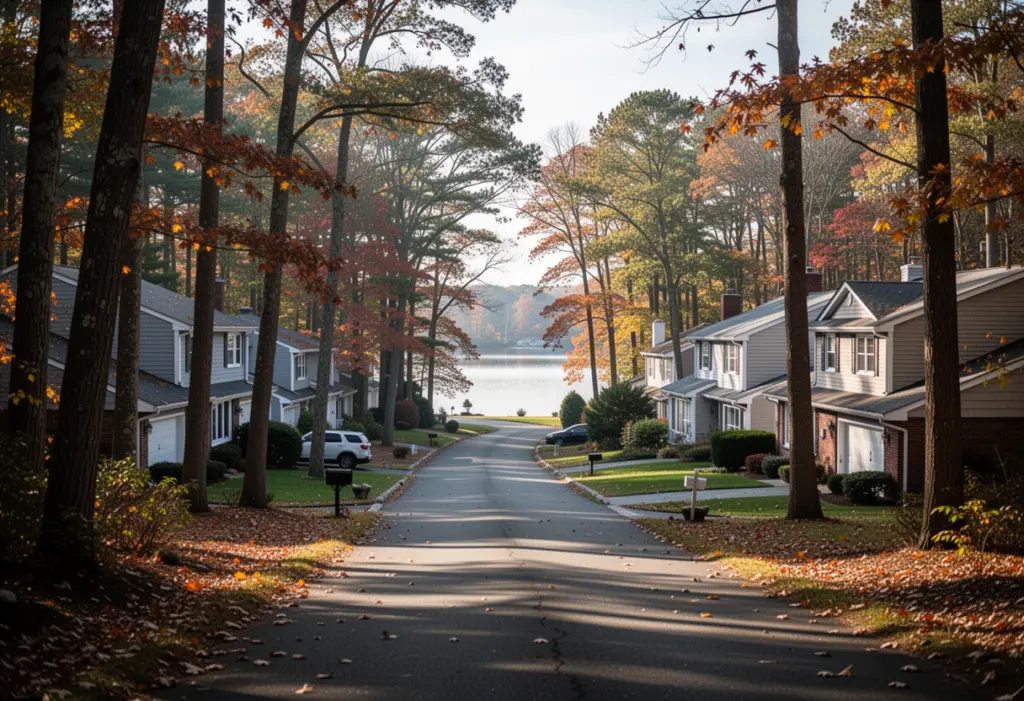
The panels are the part of a Smithtown proposal that varies least. What actually separates two quotes for the same house is which building department reviews the job, what condition the roof is in, whether the array goes on the roof or on the ground, and how the whole thing is financed. Sort those four out and the comparison becomes straightforward.
Start with the town line, because here it moves
The Town of Smithtown building department is the authority having jurisdiction for the hamlets, which covers most households, across postal areas including 11787 Smithtown, 11780 St James, 11767 Nesconset, 11754 Kings Park and part of 11788 Hauppauge. Three incorporated villages sit inside the town, Head of the Harbor, Nissequogue and the Village of the Branch, and each of those permits for itself.
Commack is the case worth naming, because the 11725 area is split between the towns of Smithtown and Huntington. Hauppauge is divided the same way, between Smithtown and Islip. Two houses on the same road can be reviewed by two different town governments, on different forms, at different speeds. If your address is anywhere near either line, make the installer state in writing which town they are filing with before you compare their timeline to anyone else’s.
New York has a Unified Solar Permit for residential systems of 25 kW DC and under, adopted by more than 300 authorities having jurisdiction across the state. Adoption is decided office by office, so ask which form is going in and how long recent reviews at that office have taken.
Ground mount is tempting on a large lot and usually costs more
Lot sizes here make a ground-mounted array a genuine option, and it solves real problems: a shaded or awkward roof, an aging covering you do not want to disturb, a perfect southern exposure across the lawn. It is also normally more expensive per kilowatt than a straightforward roof installation, because it adds footings, a trench, a buried feeder, a separate structural design and a different permitting path. That is not a reason to reject it. It is a reason to insist on seeing both options priced rather than being steered to one.
The site variables that show up as money
- Trees. The northern half of the town is wooded and the trees are tall. Ask whether the shade assessment was made on site or from imagery, and ask what the model assumes for December production specifically.
- Roof age. A covering within a few years of replacement should be replaced first. Taking an array off and putting it back is a separate job with its own labour bill.
- Service capacity. Houses of the 1950s through 1970s vintage inland are frequently on 100 amp service, which may not carry solar plus an EV charger plus a heat pump.
- Structural review. Older north shore framing sometimes needs an engineer letter before a distributed load is added. Ask who pays for it.
The monthly charge, and why a 25 year model that fixes it is guessing
Smithtown is served by PSEG Long Island, which operates the LIPA system, and the name printed on your own electricity bill is the check worth doing before you use any utility-specific figure. The Customer Benefit Contribution is billed on the DC size of the array rather than on generation. At the 2026 residential rate of $1.13 per kW-month, a 7 kW system pays 7 x $1.13 = $7.91 a month, roughly $95 a year. The charge applies to systems interconnected on or after 1 January 2022.
Here is the part that matters for any long-range savings projection you are shown: these rates are recalculated annually and are not locked in at interconnection. A spreadsheet that carries today’s figure forward for 25 years is not a forecast, it is an assumption. Ask for it to be labelled as one.
The credit side is steadier. Phase One net metering credits exports at the full retail rate and that structure holds for 20 years from interconnection, and mass-market projects on the LIPA system do not opt into the Value Stack.
2026, in plain terms
A Smithtown homeowner buying a system in 2026 claims nothing federally. Section 25D was terminated for expenditures made after 31 December 2025, and an expenditure is treated as made when the original installation is completed rather than when the meter is swapped. There is no phase-down and nothing to carry forward, because no credit was earned. A proposal still showing a 30 percent federal line is materially wrong and worth challenging out loud.
What remains is New York’s 25 percent credit capped at $5,000 on Form IT-255 for equipment at a principal residence and the state sales tax exemption on residential solar equipment. NY-Sun, which contractors used to apply as a reduction in the price, is not part of it: Long Island’s last residential block closed on 17 April 2016, and as of September 2026 NYSERDA has no open NY-Sun block for homes in any utility territory; check NYSERDA’s NY-Sun dashboard for a new one. Because programme levels and rules both move, confirm the current position at tax.ny.gov and nyserda.ny.gov on the day you sign rather than relying on a number printed weeks earlier.
Frequently Asked Questions
Which building department permits solar in Smithtown?
The Town of Smithtown covers the hamlets, while Head of the Harbor, Nissequogue and the Village of the Branch permit for themselves. Commack in 11725 is split between the towns of Smithtown and Huntington, and Hauppauge is divided the same way between Smithtown and Islip.
Is a ground mounted array cheaper than a roof array?
Usually not. Footings, a trench, a buried feeder, a separate structural design and a different permitting path make it more expensive per kilowatt, even though it can solve a shading or roof age problem.
What does the capacity charge cost on a 7 kW system?
At the 2026 PSEG Long Island residential rate of $1.13 per kW-month, a 7 kW system pays $7.91 a month, roughly $95 a year, charged on DC size rather than on what it produces.
Can I trust a 25 year savings projection?
Treat it as an assumption. The capacity charge is recalculated annually and is not locked in at interconnection, so any long range model that holds today's rate constant is guessing about the later years.
This article is general information, not tax, legal or financial advice. Incentive amounts, eligibility rules and deadlines change and depend on your utility, your tax situation and your property. Confirm current terms with NYSERDA, your utility and a qualified tax professional before making a decision.
NY Solar Incentives
Independent New York solar research. We summarise NYSERDA, NY-Sun and federal programme rules from published sources and state plainly when a figure is an estimate. We are not a government agency and do not sell equipment.
Run the arithmetic on your own system
Check the dated program table and your arrangement before counting an incentive. Standard residential NY-Sun blocks are closed; Long Island Affordable Solar has a conditional income-verification route. The NY credit depends on qualified costs and tax liability, while the NYC abatement reduces future property-tax bills. The estimator keeps those timings separate.