How Long Does Solar Installation Take in New York?
The roof work is the short part of a New York solar project. The calendar is set by two queues nobody at the installer controls: the building permit and the utility interconnection.
On this page 7 sections
- 01The sequence, and who controls each step
- 02You may not turn it on before permission to operate
- 03Ask for a median, not an average, and ask it locally
- 04The dates that carry legal weight
- 05Municipal electric customers are on a different clock
- 06What the calendar means for your incentives
- 07Frequently Asked Questions
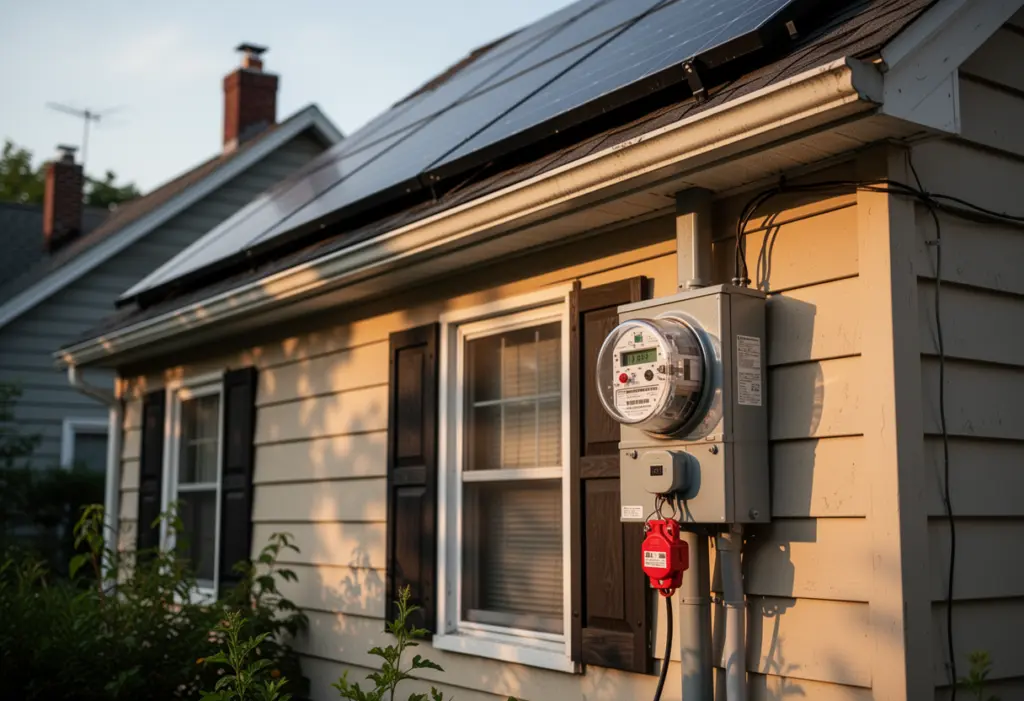
The physical installation of a residential solar array is usually the shortest phase of the project. What sets the calendar are two queues nobody at your installer controls: the building permit from the authority having jurisdiction, and the utility interconnection review and permission to operate. Any estimate that does not separate those from the crew days is describing the easy part.
The sequence, and who controls each step
- Site assessment and design. Installer controlled. Roof measurement, shading analysis, load review.
- Engineering and structural review. Installer controlled, though a reinforcement finding can restart the design.
- Permit application. Authority controlled. Review times differ from town to town and vary with workload.
- Installation. Installer controlled. This is the part measured in days.
- Electrical and building inspection. Authority controlled, and dependent on the inspector calendar.
- Utility interconnection approval and meter exchange. Utility controlled.
- Permission to operate. Utility controlled, and the only step that lets you switch the system on.
Read that list once and the shape of the answer is obvious. Four of the seven steps are outside the installer’s control, and they are the four that vary.
You may not turn it on before permission to operate
This is the part that surprises people. A finished array on a finished roof, wired and inspected, still produces nothing for you until the utility grants permission to operate. Panels on the roof is not a milestone that saves money; it is a milestone that stops costing labour.
Plan for that gap rather than being annoyed by it. It is also worth confirming in your contract what the payment schedule is tied to, because a completion payment triggered by physical installation lands before you have a working system.
Ask for a median, not an average, and ask it locally
Rather than accepting a general figure, ask your installer three specific questions and expect specific answers:
- What is your current median time from signed contract to permission to operate, for jobs in my utility territory and my town specifically?
- Which two steps in that timeline are outside your control, and what is your process when one of them stalls?
- What happens to my price and my equipment if the schedule slips past a certain date?
An installer working in your area every week knows those numbers. One that answers with a national range is telling you they do not.
The dates that carry legal weight
Two dates in this timeline have consequences beyond scheduling, and they are not the same date.
Interconnection is what starts the Customer Benefit Contribution, which applies to systems interconnected on or after 1 January 2022. The charge is set by DC capacity, not production: an 8.4 kW array in NYSEG territory pays 8.4 x $1.19, almost exactly $10.00 a month or about $120 a year. The same array on Orange & Rockland pays about $101 a year, and on Central Hudson about $168. Interconnection date, not installation day, is what starts that meter running.
Completion of the original installation was the operative test for the federal residential credit under section 25D, which was terminated for expenditures made after 31 December 2025. The distinction was not academic: a system whose installation was completed in December 2025 but which was energised in January 2026 still qualified, because the test was completion rather than being placed in service. For solar installed as part of constructing or reconstructing a structure, the test instead runs from when the taxpayer’s original use of the structure begins, so panels fitted in December 2025 to a house first occupied in 2026 did not qualify either. For anyone contracting now, the practical point is simply this: a 2026 proposal showing a 30% federal credit is materially wrong, and a timeline argument built on catching that credit is selling something that no longer exists.
Municipal electric customers are on a different clock
If your electricity comes from a municipal electric utility rather than one of the regulated companies, you are outside Public Service Commission jurisdiction: there is no state interconnection process, no PSC net metering and no Customer Benefit Contribution. Timelines, terms and application forms come from that utility directly, and the only reliable way to know which utility serves you is the name printed on your own bill.
What the calendar means for your incentives
Two New York items interact with timing. NY-Sun, the per-watt incentive a contractor applied as a reduction in the contract price, was structured in megawatt blocks that stepped down as each block filled. As of September 2026 NYSERDA has no open NY-Sun block for homes in any utility territory; check NYSERDA’s NY-Sun dashboard for a new one, and if one opens, ask which block your region is in when you sign. And RPTL 487, the 15-year property tax exemption on added value, requires the system to be constructed before 1 January 2030, with three separate opt-out checks at your municipality, county and school district.
The 25% state credit capped at $5,000 on Form IT-255 remains for a principal residence, and if your project straddles a year end it is worth asking your tax preparer which tax year your expenditure falls into. Incentive terms change, so confirm the current position with NYSERDA and the New York State Department of Taxation and Finance before you sign rather than after the crew arrives.
Frequently Asked Questions
What takes the longest in a New York solar project?
The permit review by the authority having jurisdiction and the utility interconnection and permission to operate. Those are outside the installer's control, while the roof work itself is measured in days.
Can I use the system as soon as it is installed?
No. The array produces nothing for you until the utility grants permission to operate, which comes after inspection and interconnection approval. Check what your contract payment schedule is tied to for that reason.
Which date starts the Customer Benefit Contribution?
Interconnection, not installation day. The charge applies to systems interconnected on or after 1 January 2022 and is set by DC capacity — an 8.4 kW array on NYSEG pays about $10.00 a month regardless of what it produces.
Does a faster install help me catch the federal credit?
There is nothing left to catch. Section 25D was terminated for expenditures made after 31 December 2025, with an expenditure treated as made when the original installation is completed. A 2026 proposal showing a 30% federal line is wrong.
This article is general information, not tax, legal or financial advice. Incentive amounts, eligibility rules and deadlines change and depend on your utility, your tax situation and your property. Confirm current terms with NYSERDA, your utility and a qualified tax professional before making a decision.
NY Solar Incentives
Independent New York solar research. We summarise NYSERDA, NY-Sun and federal programme rules from published sources and state plainly when a figure is an estimate. We are not a government agency and do not sell equipment.
Run the arithmetic on your own system
Check the dated program table and your arrangement before counting an incentive. Standard residential NY-Sun blocks are closed; Long Island Affordable Solar has a conditional income-verification route. The NY credit depends on qualified costs and tax liability, while the NYC abatement reduces future property-tax bills. The estimator keeps those timings separate.