Do I Need an Architect for Solar in New York?
For a typical rooftop retrofit the question is not architect or no architect. It is which licensed design professional your building department requires on the drawings, and that answer is local.
On this page 8 sections
- 01Ask the building department, and ask precisely
- 02The New York State Unified Solar Permit
- 03What the structural review is actually for
- 04Where an extra review really does appear
- 05The uncomfortable part about the fee
- 06Design at the permit ceiling costs money every month
- 07The incentives behind the drawings
- 08Frequently Asked Questions
For a normal residential rooftop retrofit in New York, most homeowners never hire an architect directly. The design professional whose work the permit turns on is usually the one signing off that the roof can carry the array. But the honest answer is that your authority having jurisdiction decides, and authorities differ, so the question has a local answer and it is cheap to get.
Ask the building department, and ask precisely
Call the building department for the city, town or village where the house sits and ask three things: whether stamped drawings by a licensed design professional are required for a residential solar permit, whether they will accept an engineer stamp, and what documents make up a complete application. Write down who told you. Building departments answer this question every week and it costs nothing to ask.
In practice the installer handles the filing on your behalf. That does not make it none of your business — it is your roof, your permit record and your resale file.
The New York State Unified Solar Permit
NYSERDA and the New York Department of State developed the NYS Unified Solar Permit to standardise residential and small commercial solar permitting across the state. Two facts about it are worth carrying into the conversation:
- It applies to systems of 25 kW DC and under, which covers essentially every residential rooftop project.
- It has been adopted by over 300 authorities having jurisdiction, and it does not apply in the five boroughs, where filings go to the New York City Department of Buildings.
Where the unified permit has been adopted, the application package is consistent from town to town, which is exactly why asking what a complete package contains is a short conversation. In New York City the process is its own, so ask your installer who files with the Department of Buildings and under whose licence.
What the structural review is actually for
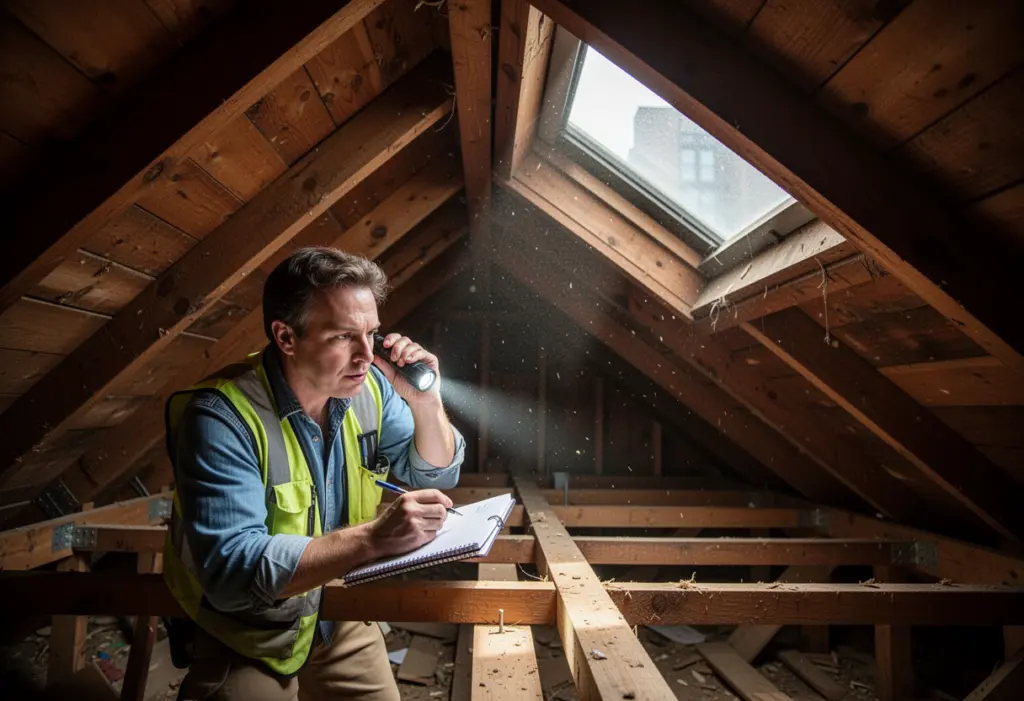
The question being answered is whether the existing roof structure can carry the added dead load of modules and racking, and whether the attachments transfer that load properly, in a place with real snow and real wind. That means rafter dimensions, spacing and span, the condition of the framing, and the attachment detail.
Ask for the structural letter or the stamped plan set as part of your handover documents. It is the piece of paper that answers the question years later when a roofer, a buyer or an insurer asks whether the array was engineered for that roof. A file with the permit, the inspection sign-off and the stamped plans is worth more at resale than any brochure.
Where an extra review really does appear
- Historic districts and landmarked buildings, where a design review body may need to see how the array looks from the street.
- Coastal and high-wind areas, where attachment and uplift detailing gets more scrutiny.
- Ground mounts, which bring in zoning setbacks, lot coverage and sometimes a survey — a different conversation from a rooftop permit.
- Condominiums, cooperatives and homeowner associations, whose own approval is separate from and additional to the municipal permit.
- Roofs already at their limit, where reinforcement is proposed. That is design work with a cost, and it should appear in the proposal rather than as a change order.
The uncomfortable part about the fee
In a turnkey price the design and permit work is a line item you never see priced separately. Ask whether stamped drawings, permit fees and any required structural reinforcement are included, and ask for that in writing. A proposal that cannot say who will stamp the drawings is not a complete proposal, and the gap usually turns into a change order after the contract is signed.
Design at the permit ceiling costs money every month
Because the unified permit tops out at 25 kW DC, it is worth knowing what a system near that ceiling costs to hold. The Customer Benefit Contribution is charged on DC capacity, not on production, for systems interconnected on or after 1 January 2022. On a residential service classification, a 25 kW array in National Grid territory pays 25 x $0.97, which is $24.25 a month or $291 a year. On Con Edison the same array pays 25 x $1.29, about $387 a year. A system at that size may instead be billed on a small commercial classification, which carries its own separate rate, so ask the utility which one applies before you budget for it.
Filling a large roof because the roof is large is therefore a monthly commitment, not a free upgrade. Design to the consumption you actually have.
The incentives behind the drawings
Nothing about permitting changes what is available in 2026. The contractor-applied incentives are not part of it this year: NY-Sun and its income-based Affordable Solar incentive used to arrive as a reduction in the contract price, but as of September 2026 NYSERDA has no open NY-Sun block for homes in any utility territory; check NYSERDA’s NY-Sun dashboard for a new one. What remains is the state sales tax exemption on residential solar equipment, the 25% state credit capped at $5,000 on Form IT-255 for a principal residence, and the RPTL 487 property tax exemption on added value, which runs fifteen years, requires the system to be constructed before 1 January 2030, and applies only where the municipality, county and school district have each not opted out. The 30% federal residential credit is gone, terminated for expenditures made after 31 December 2025. Incentive terms change, so check the current position with NYSERDA before you sign the design.
Frequently Asked Questions
Does a residential solar permit in New York need an architect?
The authority having jurisdiction decides, and most homeowners never engage an architect directly. Call your building department and ask whether stamped drawings are required, whether an engineer stamp is accepted, and what a complete application contains.
What is the NYS Unified Solar Permit?
A standardised permit developed by NYSERDA and the NY Department of State for residential and small commercial solar of 25 kW DC and under. It has been adopted by over 300 authorities having jurisdiction and does not apply in the five boroughs.
What is the structural letter for?
It records that the existing rafters, spans and attachments can carry the added load of modules and racking under local snow and wind conditions. Keep it with the permit and inspection sign-off; it answers the question years later at resale.
Is the design work included in the installer's price?
Ask, and get the answer in writing. Stamped drawings, permit fees and any required roof reinforcement are usually inside a turnkey price, but a proposal that cannot name who will stamp the drawings is incomplete.
This article is general information, not tax, legal or financial advice. Incentive amounts, eligibility rules and deadlines change and depend on your utility, your tax situation and your property. Confirm current terms with NYSERDA, your utility and a qualified tax professional before making a decision.
NY Solar Incentives
Independent New York solar research. We summarise NYSERDA, NY-Sun and federal programme rules from published sources and state plainly when a figure is an estimate. We are not a government agency and do not sell equipment.
Run the arithmetic on your own system
Check the dated program table and your arrangement before counting an incentive. Standard residential NY-Sun blocks are closed; Long Island Affordable Solar has a conditional income-verification route. The NY credit depends on qualified costs and tax liability, while the NYC abatement reduces future property-tax bills. The estimator keeps those timings separate.