Solar Pool Heating in New York: How Long Is the Season?
Solar pool heating extends the ends of a New York swimming season rather than creating a longer one. Four things decide how far it stretches, and one of them costs almost nothing.
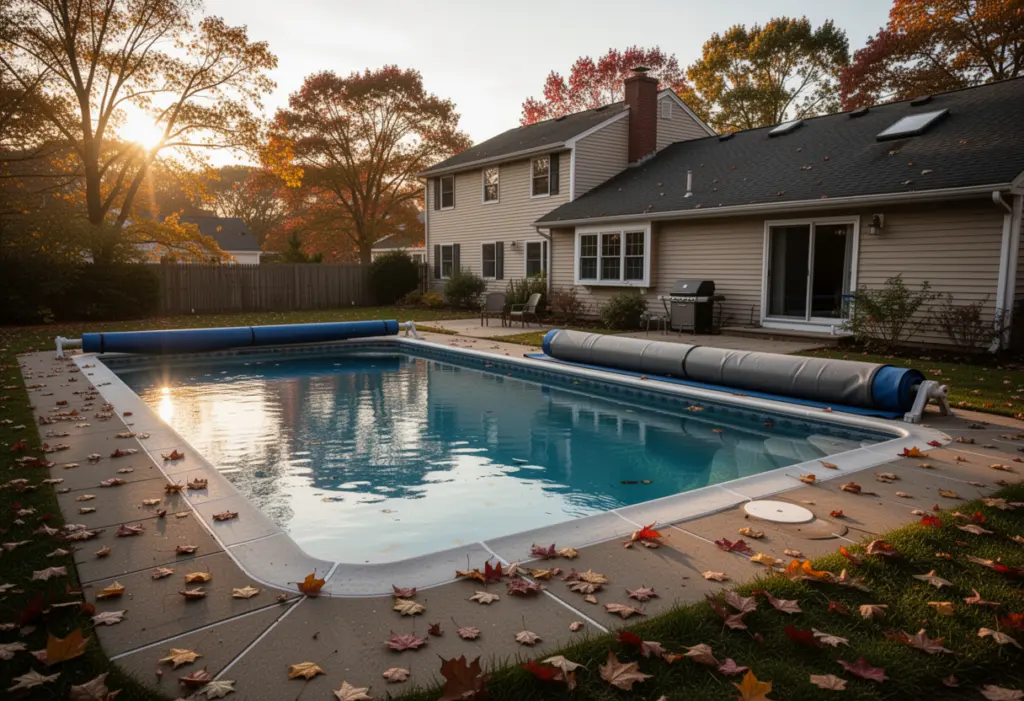
Solar pool heating extends the ends of a New York swimming season rather than creating a longer one. What you can realistically expect is a few extra weeks at each end and warmer water through the middle, and how far it stretches depends on four things you control to different degrees: collector area relative to the pool surface, whether you use a cover, how warm you insist the water is, and where in the state the pool sits.
The four levers
- Collector area against pool surface area. This is the dominant one. A system whose collector area falls well short of the pool surface will warm the water noticeably on good days and lose the argument on cool, breezy ones.
- A cover. The largest heat loss from an outdoor pool is evaporation from the surface, and a cover is the only item here that acts on that loss directly rather than replacing the heat afterwards. A solar heating system used without a cover spends part of every night heating the sky.
- Your target temperature. Every degree you insist on means more collector, more running time and a shorter effective season. A household happy at a swimmable temperature gets far more season than one that wants bath-warm water in October.
- Where you are. A pool on Long Island and a pool in the Adirondacks are not in the same climate. At the shoulders of the season the constraint is nights, not afternoons.
Two completely different products
Solar pool heating and solar electricity are not the same technology and should not be compared on price alone.
Solar thermal pool collectors are unglazed mats or panels plumbed into the existing pool circulation. The pool pump pushes water through them, the sun warms it directly, and the water returns to the pool. There is no electricity involved beyond the pump you already run, and they are normally drained before winter.
A photovoltaic array makes electricity, which can then run an electric pool heat pump. That is a different capital cost, a different amount of roof, a year-round asset rather than a seasonal one, and the only one of the two that also reduces the rest of your electricity bill.
The charge a pool array pays all winter
Take the electric route and the added load is significant, so the array grows to cover it — and one of the costs of that array is billed every month of the year rather than only in swimming season. The Customer Benefit Contribution is charged per kilowatt of DC size regardless of production, on systems interconnected on or after 1 January 2022. A 10 kW system in PSEG Long Island territory pays 10 multiplied by $1.13, which is $11.30 a month and $135.60 a year, in February exactly as in July.
Net metering is what makes the shape work: exports are credited at the full retail rate under Phase One and the structure holds for 20 years from interconnection, so the surplus from months when the pool is shut offsets the pump and heater when it is open. But notice what you are doing — sizing an array for a load that runs a fraction of the year and paying the capacity charge for all of it.
Check the utility name on your own bill. PSEG Long Island does not cover all of Nassau and Suffolk: Freeport, Rockville Centre, Greenport and Fishers Island have municipal electric utilities, which sit outside Public Service Commission jurisdiction — no Customer Benefit Contribution, no state net metering, no state interconnection process, and terms you have to request from your own electric department.
The uncomfortable comparison
Before either purchase, price a good cover and a windbreak. They act on the losses rather than adding heat to replace them, and reducing the losses first makes everything downstream smaller. A heater sized to make October swimmable is a heater used for a handful of weeks a year, and that is a lifestyle purchase rather than an investment — which is entirely fine, so long as it is what you meant to buy.
Where 2026 incentives stand
Be careful here, because assuming that a solar incentive covers anything with the word solar attached to it is where money gets lost. The New York State credit on Form IT-255 is a solar energy system equipment credit for a principal residence, and whether a particular pool installation qualifies is a question for the Form IT-255 instructions and your accountant rather than for the company selling it. Get that answer before signing, not at tax time.
For the photovoltaic route the normal picture applies: the 25% credit capped at $5,000, the state sales tax exemption, and the RPTL 487 property tax exemption for 15 years where the municipality, the county and the school district have each not opted out, which also requires the system to be constructed before 1 January 2030. NY-Sun is no longer part of that picture: as of September 2026 NYSERDA has no open NY-Sun block for homes in any utility territory; check NYSERDA’s NY-Sun dashboard for a new one. Where the roof cannot carry an array big enough for a pool load, community solar is the alternative worth pricing — subscribers pay no Customer Benefit Contribution at all, though they also own nothing at the end of it. The 30% federal residential credit is gone: section 25D ended for expenditures made after 31 December 2025, with the test being completion of the original installation. Check current terms with NYSERDA and the New York State Department of Taxation and Finance before committing.
Frequently Asked Questions
How long is the solar pool heating season in New York?
It extends the ends of the normal season rather than creating a longer one. Expect a few extra weeks at each end, with the exact length set by collector area, cover use, your target temperature and your location in the state.
What makes the biggest difference to season length?
Collector area relative to the pool surface, and a cover. Evaporation from the surface is the largest heat loss an outdoor pool has, so a cover acts directly on the loss instead of replacing the heat afterwards.
Is solar pool heating the same as solar panels?
No. Thermal collectors are plumbed into the pool circulation and heat water directly using the existing pump. A photovoltaic array makes electricity, which can run an electric pool heat pump and also cut the rest of your bill.
Does the New York solar credit cover pool heating?
Do not assume it does. The Form IT-255 credit is a solar energy system equipment credit for a principal residence. Whether a particular pool installation qualifies is a question for the form instructions and your accountant.
This article is general information, not tax, legal or financial advice. Incentive amounts, eligibility rules and deadlines change and depend on your utility, your tax situation and your property. Confirm current terms with NYSERDA, your utility and a qualified tax professional before making a decision.
NY Solar Incentives
Independent New York solar research. We summarise NYSERDA, NY-Sun and federal programme rules from published sources and state plainly when a figure is an estimate. We are not a government agency and do not sell equipment.
Run the arithmetic on your own system
Check the dated program table and your arrangement before counting an incentive. Standard residential NY-Sun blocks are closed; Long Island Affordable Solar has a conditional income-verification route. The NY credit depends on qualified costs and tax liability, while the NYC abatement reduces future property-tax bills. The estimator keeps those timings separate.