Solar Inverter Lifespan and What Replacement Costs
Panels outlive their inverters. What a replacement costs you depends far less on the price of the box than on four questions about who pays for the labour.
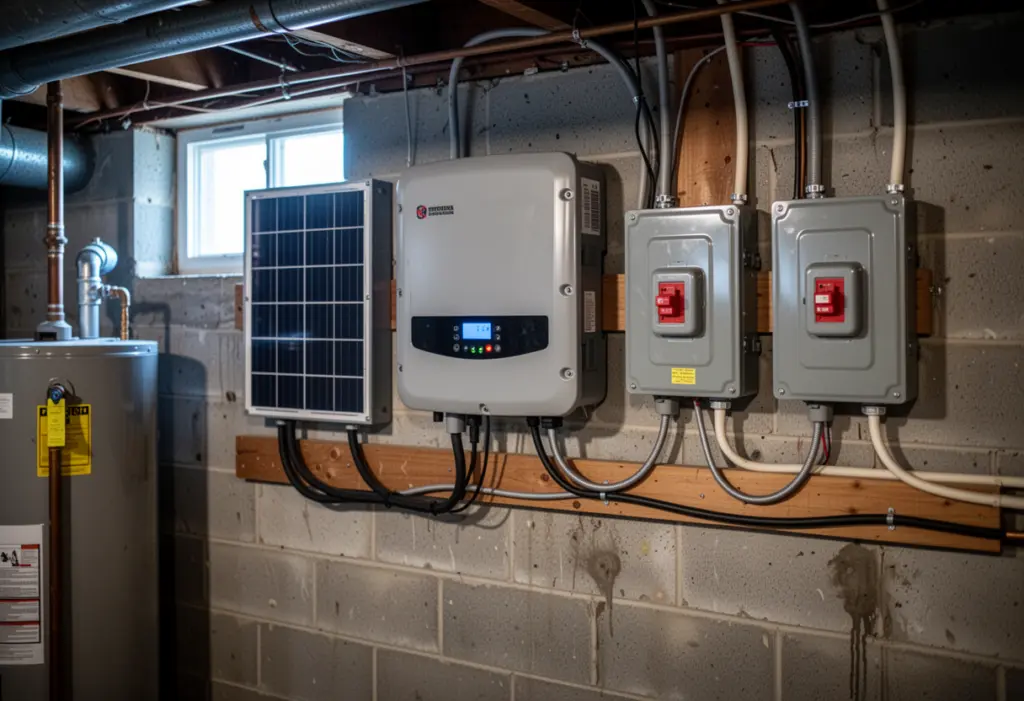
The inverter is the component of a solar system most likely to need replacing while the panels are still working perfectly well. That is not a defect. It is electronics doing an electronic lifespan alongside glass and aluminium doing a much longer one. What decides your actual cost is not the price of the replacement box. It is four questions about who pays for everything around it.
The four questions that set the real number
- How long is the warranty, and can it be extended at purchase? Terms differ substantially between products, and an extension bought at installation is normally far cheaper than one bought later, if it can be bought later at all.
- Does it cover labour and shipping, or the part only? This is the question that changes the answer most. A part-only warranty means the manufacturer sends a replacement and you pay somebody to install it.
- Who performs the work if the installing company no longer exists? A manufacturer’s warranty on a component is not a promise that anybody will arrive at your house. Ask what happens in that case, and whether the product is one that other local firms routinely service.
- Where is the device mounted? A string inverter on a basement or garage wall is a straightforward swap. A module-level device under a panel on a third-storey roof is roof work, possibly with staging, and the labour bill reflects that rather than the part.
Ask for the answers in writing, from the proposal, before you compare two bids. Two systems at the same price can carry very different exposure ten years out, and none of it is visible in the headline number.
String inverter or microinverters changes the shape of the risk
A single string inverter concentrates the risk: one failure and the whole array stops, but the replacement is one accessible box. Microinverters and module-level electronics spread it: one failure costs you one module’s output, so you may not notice at all, but each repair is a trip onto the roof and there are many more devices to fail over the term.
Neither is right in the abstract. A complex, shaded or multi-plane New York roof has other reasons to use module-level equipment. A simple south-facing plane has fewer. What matters is that you know which trade-off you bought and what the labour looks like when it comes due.
The charge that keeps running while the system is down
Here is the part nobody mentions at the kitchen table. The Customer Benefit Contribution is billed on the DC capacity of your system, not on what it generates, and it does not pause because the inverter failed. It applies to systems interconnected on or after 1 January 2022, so a system connected before that date does not carry it at all. At the 2026 Central Hudson residential rate of $1.67 per kW-month, the highest in the state, a 10 kW system pays $16.70 a month, roughly $200 a year. A month spent waiting for a warranty replacement to ship is a month of paying $16.70 for zero production, on top of buying every kilowatt-hour you would otherwise have generated.
That is the strongest practical argument for taking monitoring seriously. A fault you notice in two days costs a fraction of a fault you notice when the bill arrives in spring. Set up whatever alerting the system offers on the day it is commissioned, and check that the alerts actually reach you.
What not to accept
Do not accept a specific future replacement price quoted in a sales proposal as a forecast. Nobody knows what an inverter will cost in twelve years, and a confident number in that column is marketing rather than information. What you can legitimately hold a contractor to is the warranty terms, the labour coverage, and a clear statement of what is and is not included.
Equally, be sceptical of an extended service plan sold as protection when the underlying warranty already covers labour. Read what the plan adds beyond the manufacturer’s obligation before paying for it.
The incentive point that matters for replacements
This is the one people get wrong. NY-Sun, when a block for homes is open, is applied by the contractor as a reduction in the price of the original installation. As of September 2026 NYSERDA has no open NY-Sun block for homes in any utility territory; check NYSERDA’s NY-Sun dashboard for a new one. Either way, it is not a fund you draw on later. A replacement inverter years afterwards is therefore an unsubsidised purchase at whatever the market charges then, which is exactly why the warranty and labour questions above are worth pressing hard at the point of sale, when you still have leverage.
Do not assume a future replacement earns a tax credit either. New York’s 25% credit capped at $5,000 on Form IT-255 is defined around qualified solar energy system equipment expenditures at your principal residence in New York, and how a later component replacement is treated is a question for the current Form IT-255 instructions and a tax preparer, not for a contractor. Take it to somebody qualified before assuming either answer.
And for completeness on the federal side: there is nothing there for a residential buyer. Section 25D was terminated for expenditures made after 31 December 2025, with an expenditure treated as made when the original installation is completed. Business and farm projects sit under a different provision entirely and should go to an accountant rather than being read across from residential rules. Check the Department of Taxation and Finance and NYSERDA pages directly when the time comes, because the position moves.
Frequently Asked Questions
How long does a solar inverter last?
Shorter than the panels, which is why it is the component most likely to be replaced within the system's life. Terms vary by product, so read the warranty length on the specific model quoted rather than a general figure.
What does replacing a solar inverter cost?
It depends far more on labour than on the part. Ask whether the warranty covers labour and shipping or the part only, who performs the work if the installer is gone, and whether the device is on a wall or under a panel on the roof.
Are microinverters safer than a string inverter?
They spread the risk rather than removing it. One failure costs one module's output instead of the whole array, but there are many more devices over the term and each repair means going onto the roof.
Do I still pay charges while the inverter is dead?
Yes. The Customer Benefit Contribution bills on DC capacity, so a 10 kW system on Central Hudson pays 16.70 dollars a month at the 2026 rate of 1.67 dollars per kW-month even while producing nothing. Good monitoring shortens that window.
This article is general information, not tax, legal or financial advice. Incentive amounts, eligibility rules and deadlines change and depend on your utility, your tax situation and your property. Confirm current terms with NYSERDA, your utility and a qualified tax professional before making a decision.
NY Solar Incentives
Independent New York solar research. We summarise NYSERDA, NY-Sun and federal programme rules from published sources and state plainly when a figure is an estimate. We are not a government agency and do not sell equipment.
Run the arithmetic on your own system
Check the dated program table and your arrangement before counting an incentive. Standard residential NY-Sun blocks are closed; Long Island Affordable Solar has a conditional income-verification route. The NY credit depends on qualified costs and tax liability, while the NYC abatement reduces future property-tax bills. The estimator keeps those timings separate.