How Community Solar Credits Appear on Your Bill
Community solar credits arrive as dollar amounts posted to your utility account, usually a month or so behind the production that earned them — and the bill never reaches zero, by design.
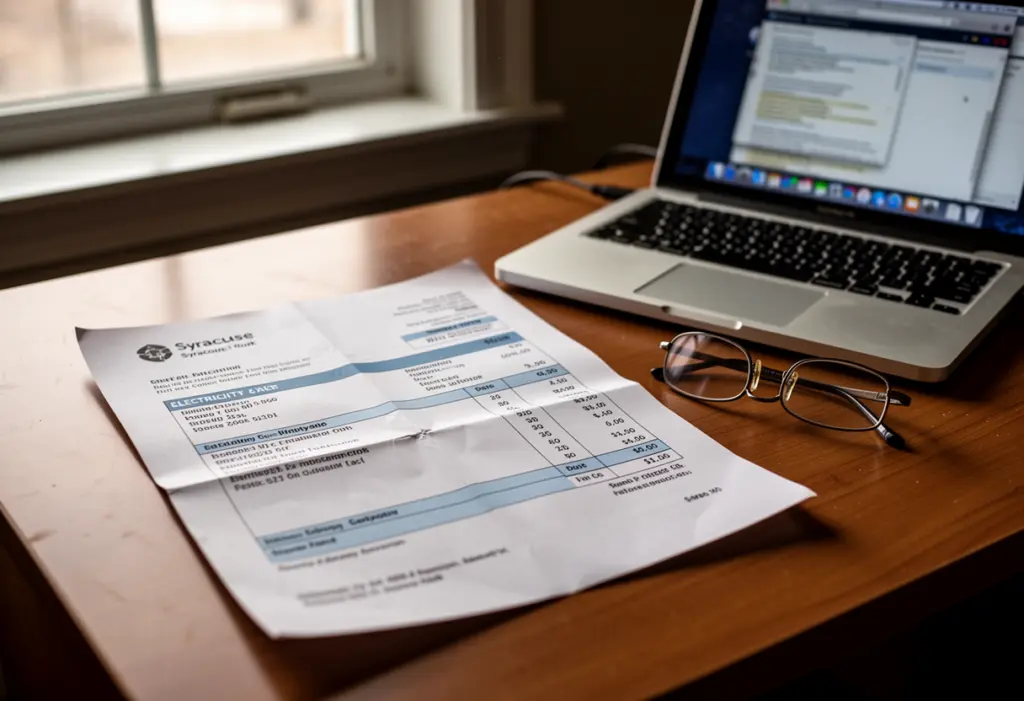
The mechanics of a community solar subscription confuse people for one reason: two organisations are involved and they do not act on the same day. The utility posts credits to your account. The project sponsor charges you for those credits. Understanding the order and the lag between them explains almost every question a new subscriber has in the first six months.
The sequence, in order
The project generates. Your allocated share of that generation is valued and sent to your utility. The utility posts it to your account as a credit, in dollars, against the charges on that account. The sponsor then invoices you for those credits at the agreed discount. Your saving is the gap between the two figures, and it exists only once both have happened.
That is why the first statement often looks wrong. Credits follow production, and production has to be measured, allocated and transmitted before it appears — so there is usually a lag of a billing cycle or more between a sunny month and the credit for it. A subscription that starts in April may show nothing until June, and that is the process working rather than failing.
One bill or two
Which arrangement you are in decides what your mailbox looks like.
- Consolidated billing puts the credit and the subscription charge together, so you deal with one document and one payment.
- Dual billing means the utility bill shows the credit and the sponsor invoices you separately. Two documents, two payments, and two customer service numbers.
Neither is wrong, but you should know which one you signed up for before the first month, because a subscriber who is not expecting a second invoice tends to assume it is a mistake and lets it sit.
Why the bill never reaches zero
Credits offset charges. They do not remove the account. Basic service and delivery charges remain, meters are still read, and the fixed elements of your bill are still billed. A subscription sized to your annual usage reduces the supply side of the bill substantially and leaves the rest intact.
This is the single most common disappointment, and it is entirely avoidable by asking one question before signing: which lines on my current bill does this credit actually offset? Take a recent bill to that conversation and get the answer against the real numbers.
Banking, seasons and the annual shape
Generation is highest in summer and consumption for most households is highest in winter, so credits typically accumulate faster than you use them for part of the year and are drawn down later. Unused credit generally carries forward on the account rather than expiring at the end of each month, which is what makes an annual view the correct one.
Judge the subscription over twelve months, not over one. A single statement in July says very little, and a single statement in January says something different and equally partial. Keep the statements, or download them, so the comparison is possible when you make it.
What to check each month, briefly
Two figures and one date. The credit value posted to your utility account. The amount the sponsor charged for that same period. And the period itself, because a mismatch is usually a timing artefact rather than an error — you are being invoiced for a month whose credit has not landed yet.
If the gap between the two numbers is not the discount you agreed, ask for the allocation statement showing the kilowatt hours attributed to you and the rate at which the utility valued them. A sponsor that cannot produce that on request is a sponsor to be more careful with.
Over allocation is the other thing to watch. If your usage falls — a mild season, a household change, an efficiency upgrade — you can end up buying more credits than the account can absorb. Ask how the sponsor handles resizing and how often they review it.
If you also own rooftop solar
Net metering credits from your own array and community solar credits are different arrangements landing on the same account, and stacking them without thought can leave you buying credits you were already going to generate. Look at what your own system leaves unoffset across a full year before subscribing to anything for the remainder.
Where the 2026 incentives sit for a subscriber
Subscribers are outside most of the incentive machinery, and that is not a defect — there is no equipment, no installation and no capital at risk. It does mean the discount is your whole benefit, so it deserves the scrutiny.
One charge you avoid entirely is the Customer Benefit Contribution, the monthly charge levied on the DC size of a rooftop system interconnected on or after 1 January 2022, regardless of what it produces. A rooftop owner with a 9 kW array in NYSEG territory pays 9 × $1.19, about $10.71 a month or $129 a year, before any comparison of what the two arrangements deliver. Community solar subscribers pay none of it.
Nothing federal applies: section 25D was terminated for expenditures made after 31 December 2025, on the test of when the original installation is completed, so no residential buyer is claiming it in 2026 either. The New York State credit on Form IT-255 — 25% capped at $5,000 — is written around qualified equipment installed and used at your principal residence, which a subscription to an off-site project is not; ask a tax preparer rather than assuming from a marketing page. And confirm the utility on your own bill before anything else, because a municipal electric customer sits outside the Public Service Commission framework these programmes run in.
Frequently Asked Questions
Why has no community solar credit appeared on my bill yet?
Credits follow production and have to be measured, allocated and sent to the utility before they post, so a lag of a billing cycle or more is normal at the start. A subscription beginning in April may show nothing until June.
Will community solar make my electric bill zero?
No. Credits offset charges but the account remains, so basic service and delivery charges are still billed. Ask which lines on your current bill the credit actually offsets, using a recent bill as the reference.
Do I get one bill or two?
It depends on the arrangement. Consolidated billing combines the credit and the subscription charge into one document. Dual billing means the utility shows the credit and the sponsor invoices you separately. Confirm which before you start.
What happens to credits I do not use in a month?
They generally carry forward on the account rather than expiring, which is why the arrangement should be judged over twelve months. Generation peaks in summer while household use often peaks in winter.
This article is general information, not tax, legal or financial advice. Incentive amounts, eligibility rules and deadlines change and depend on your utility, your tax situation and your property. Confirm current terms with NYSERDA, your utility and a qualified tax professional before making a decision.
NY Solar Incentives
Independent New York solar research. We summarise NYSERDA, NY-Sun and federal programme rules from published sources and state plainly when a figure is an estimate. We are not a government agency and do not sell equipment.
Run the arithmetic on your own system
Check the dated program table and your arrangement before counting an incentive. Standard residential NY-Sun blocks are closed; Long Island Affordable Solar has a conditional income-verification route. The NY credit depends on qualified costs and tax liability, while the NYC abatement reduces future property-tax bills. The estimator keeps those timings separate.