Window Condensation in Winter: Causes and Fixes
Fog on the inside of the glass is a message about indoor humidity and a cold surface. How to read which one is driving it in a New York home, and what actually fixes it.
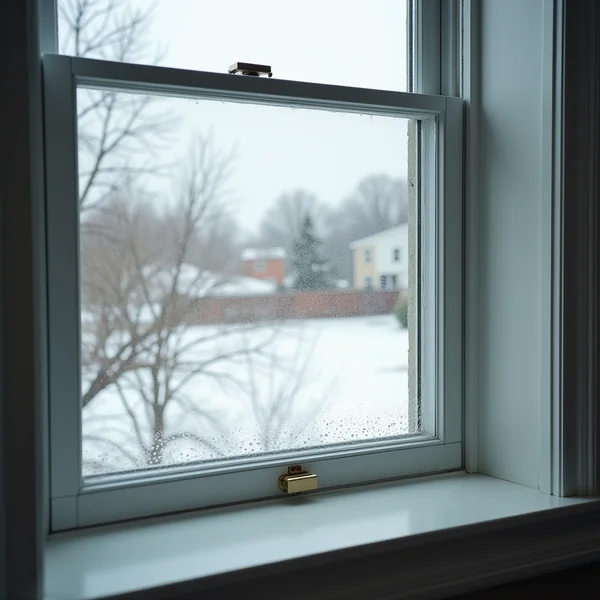
Why the inside of a New York window fogs and drips in January, what the pattern of the fog is telling you, and which fixes address the cause rather than the symptom.
The first properly cold week in a New York winter produces the same phone calls every year. The inside of the glass is streaming. There is a puddle on the sill by morning. A dark mark is spreading along the bottom of the frame. The window is usually blamed, and the window is usually not the problem.
Condensation is not a defect. It is physics doing exactly what it always does, on the coldest surface in the room, and it is the most honest diagnostic instrument a house has. Reading it correctly tells you whether you have a humidity problem, an insulation problem, a ventilation problem, or a window that has genuinely failed.
Window Condensation in Winter: Reading What the Glass Is Telling You
Air holds water vapour, and how much it can hold depends on its temperature. Warm air holds a great deal; cold air holds very little. When indoor air touches a surface cold enough to chill it below its dew point, the vapour it can no longer hold turns back into liquid on that surface. In a heated New York house in January, the coldest interior surface is nearly always the glass.
So the fog is the product of two things at once: how much moisture is in the indoor air, and how cold the inside face of the window is. Change either one and the condensation changes. That is the entire mechanism, and every real fix works on one side or the other.
Which side of the glass is wet
Before anything else, establish where the water is. The answer points at three completely different situations.
- Inside face, room side. Indoor humidity meeting cold glass. This is the common case and the one this article is mostly about.
- Between the panes. The seal on an insulated glass unit has failed and moist air has entered the sealed cavity. No amount of dehumidifying will touch it, because the water is not in your room. The glass unit needs replacing.
- Outside face. Usually a sign the window is performing well. The outer pane has stayed cold relative to the night sky while outdoor humidity condensed on it. It clears with the morning sun and needs no action.
What the pattern says
A band along the bottom of the pane
The bottom edge of a sealed glass unit runs colder than the centre because the spacer bridging the two panes conducts heat around the gas gap. A narrow strip of fog at the bottom in a cold snap, clearing by mid-morning, is ordinary. A band that never clears is telling you the indoor humidity is high enough to condense at a temperature the whole lower pane holds all day.
Only certain rooms
Bathrooms, kitchens and bedrooms fog first because that is where moisture is generated. Showers, cooking, laundry and simply breathing overnight all add water to the air. If one bedroom fogs and the rest of the house does not, look at the door being closed, the vent being blocked, and how many people sleep in there.
Every window, all winter
Whole-house fogging is a humidity balance problem, not a window problem. Something is adding water faster than the house is removing it. Common sources are an unvented dryer, a damp basement or crawl space, a humidifier left on a setting chosen in October, and a bathroom fan that runs but does not actually move air outdoors.
Only after a change
Air sealing and insulation work reduce how much outside air leaks through the building, and leaked air was doing unglamorous drying work for free. Homes often start to see condensation for the first time after a weatherization project, a new roof or new siding. The house did not get worse. It got tighter, and the ventilation was never adjusted to match.
Cause and fix, side by side
| What you see | Most likely cause | Where the fix belongs |
|---|---|---|
| Brief fog on cold mornings, clears by noon | Normal edge-of-glass cooling | No action needed |
| Persistent fog on most windows | Indoor humidity too high for the season | Reduce moisture sources, increase ventilation |
| Fog in one bathroom or kitchen only | Local moisture, weak or ducted-nowhere exhaust | Fix the exhaust fan and its duct run |
| Fog behind curtains or on covered windows | Warm room air blocked from reaching the glass | Open coverings, allow air movement |
| Water trapped between two panes | Failed insulated glass seal | Replace the glass unit |
| Frost on the frame, not just the glass | Thermal bridge or air leak through the frame | Seal and insulate the rough opening |
| New since a weatherization job | Tighter envelope, unchanged ventilation | Add controlled mechanical ventilation |
Lowering the moisture
Start with the sources, because removing water is easier than removing water that has already spread through the house. Vent the clothes dryer outdoors and check that the duct actually terminates outside rather than in an attic or crawl space. Run the bathroom fan during a shower and for a stretch afterwards, and confirm it moves air by holding a tissue to the grille. Cover pots while cooking. Turn a whole-house humidifier down or off for the coldest weeks, and if the house has one on the furnace, check whether it is still running against a setting nobody has revisited.
A basement or crawl space with an earth floor or damp walls can feed moisture upward all winter. Sealing and covering that ground is often the single largest change available in an older New York house, and it usually shows up on the windows two floors above.
Raising the glass temperature
The other lever is making the cold surface less cold. Interior storm panels, insulating window film and honeycomb cellular shades all add a resistance layer that keeps the room-side surface warmer. Note the trap: a tight covering that blocks warm air from reaching the glass can make condensation worse on the pane behind it, even while the room feels better. Coverings need to breathe at the edges or be opened during the day.
Replacement windows raise the glass temperature substantially, which is why condensation often disappears after a window job even though the underlying humidity has not changed. That is worth knowing before spending on windows to solve fogging: the fog goes, but the moisture is still in the house and will find the next coldest surface, which may be inside a wall where nobody sees it.
Ventilation is the missing half
A tight house needs deliberate air exchange. Balanced mechanical ventilation with heat recovery brings in outdoor air and exhausts indoor air through a core that transfers heat between the two streams, so the house gets dry winter air without discarding the heat that was paid for. In a home moving toward a heat pump, this matters more than it sounds: heat pump sizing assumes a known ventilation load, and an unplanned one distorts the calculation. The relationship between envelope, ventilation and equipment size is covered in heat pumps and solar in New York: sizing the system.
Why this belongs in an electrification plan
Condensation is an envelope symptom, and the envelope is the first item in any sensible electrification sequence. Sealing, insulating and ventilating a house before sizing heating equipment produces a smaller heat pump, a smaller electrical load, and often a smaller panel job behind it. Doing it in the other order buys equipment sized for a house that no longer exists. The ordering argument is set out in electrifying a New York home around solar.
New York State supports envelope work through NYSERDA residential programs and through utility-administered efficiency offerings, and a home energy assessment is the usual entry point. What each program covers and requires shifts between funding cycles, so check the current program pages for your utility and for NYSERDA rather than relying on a figure quoted anywhere else, and ask any contractor to name on the proposal which program the job is being enrolled under.
What to do this week
Wipe the sills daily until the cause is found, because standing water on a painted wooden frame becomes rot and then mould, and that repair costs far more than the fix. Put a hygrometer in the room that fogs worst. Check where the dryer duct ends. Test the bathroom fan with a tissue. Open the curtains on the worst window during the day. Then decide whether what remains is a moisture problem to ventilate or a cold surface to insulate, and spend accordingly.
Frequently Asked Questions
Is condensation on the inside of my windows a sign the windows are bad?
Usually not. Fog on the room side means indoor air is meeting a surface colder than its dew point, which is normally the glass. It is a humidity and surface-temperature problem. The exception is moisture trapped between the panes, which does mean the sealed glass unit has failed.
What indoor humidity should a New York home hold in winter?
Lower than in summer, and lower as it gets colder outside, because the glass gets colder too. Rather than chasing one number, use a hygrometer and lower the level until the persistent condensation stops while the air still feels comfortable. Set it by what the windows do.
Why did condensation start only after we insulated and air sealed?
Air leaking through an untightened house removes moisture continuously without anyone noticing. Sealing removes that unintentional drying. The house is performing better and now needs controlled ventilation to do deliberately what the leaks were doing accidentally.
Will a dehumidifier fix window condensation?
It can reduce it, and it is a reasonable stopgap in a damp basement. But it treats the symptom while the source keeps producing moisture. Venting the dryer outdoors, fixing the bathroom exhaust and covering an earth floor address the cause and usually cost less to run.
There is water between the two panes. Can that be dried out?
No. The seal around the insulated glass unit has failed and moist air is entering the cavity. Drying attempts do not restore the seal or the insulating gas fill. The glass unit is replaced, which is often possible without replacing the whole window frame.
Why do my windows fog worse behind closed curtains?
A heavy curtain or a tight blind stops warm room air from washing over the glass, so the pane behind it runs colder than the rest of the room. Moisture still reaches it around the edges and condenses on the colder surface. Open the coverings during the day.
Does condensation actually cause damage?
Standing water on a painted wooden sill causes paint failure, then rot, and repeated wetting supports mould growth on the frame and adjacent drywall. The glass itself is unharmed. Wiping sills daily is a holding action while the underlying cause is identified.
Will replacing my windows solve it permanently?
It usually stops the visible fogging, because a warmer inner pane no longer reaches the dew point. The moisture is still in the house, though, and will condense on the next coldest surface, which can be inside a wall cavity where the damage is invisible until it is serious.
NY Solar Incentives
Independent New York solar research. We summarise NYSERDA, NY-Sun and federal programme rules from published sources and state plainly when a figure is an estimate. We are not a government agency and do not sell equipment.
Run the arithmetic on your own system
Check the dated program table and your arrangement before counting an incentive. Standard residential NY-Sun blocks are closed; Long Island Affordable Solar has a conditional income-verification route. The NY credit depends on qualified costs and tax liability, while the NYC abatement reduces future property-tax bills. The estimator keeps those timings separate.