What Stalls a Solar Permit in New York?
Almost nothing stalls a residential solar permit for interesting reasons. It is usually an incomplete submission, a structural question nobody anticipated, or an open permit from a job you had done years ago.
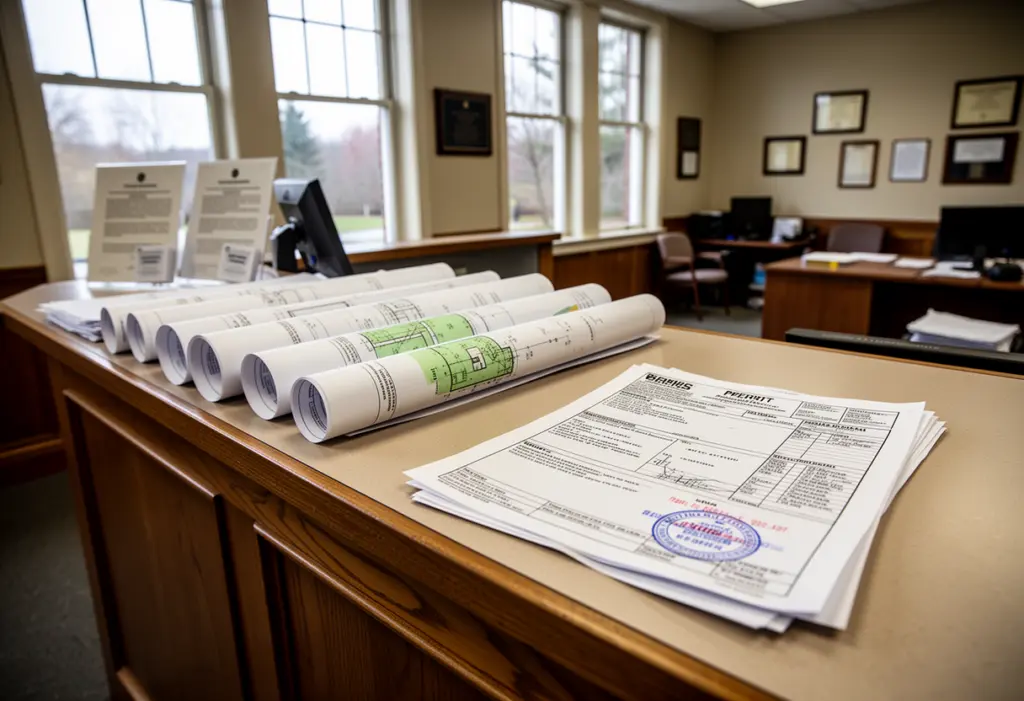
Permit delays feel arbitrary from the outside and are usually not. The great majority of stalls fall into three groups: a submission missing something the reviewer needs, a structural or electrical question nobody anticipated, and a problem with the property that predates the solar project entirely. All three are visible before you sign, if you ask.
Know which process you are in
The New York State Unified Solar Permit standardises residential and small commercial solar permitting for systems of 25 kW DC and under, and it has been adopted by over 300 authorities having jurisdiction. It does not apply in the five boroughs, which work through the New York City Department of Buildings.
So the first question for your installer is simply which process applies to your address: the unified permit, your municipality’s own application, or the city process. If your town has not adopted the unified permit, the requirements are whatever that building department publishes, and a checklist downloaded from somewhere else is a source of exactly the omissions that cause a resubmission.
What reviewers send back
- An incomplete package. Site plan, roof plan with the array layout, an electrical one-line diagram, equipment specification sheets and their certification listings, and the signed contractor declarations. One missing sheet parks the application until it arrives.
- A structural question. If the reviewer wants an engineer’s assessment of the existing framing, that is a separate professional engagement on someone else’s calendar. Ask before submission whether one is expected for your roof, and who is arranging it.
- An electrical service issue. If the existing service and panel cannot take the solar connection as drawn, the design changes, and a changed design is an amended application that goes back into the queue rather than to the front of it.
- Roof layout and access. Setbacks and access pathways required by the reviewing authority can move modules and shrink the array, and a redrawn layout is another revision cycle.
- Zoning and land use. Historic or landmark review, ground mount setbacks, or a special approval requirement add a separate body with its own meeting calendar, which is the difference between days and months.
The stall that is nobody’s fault but yours
An open permit from earlier work on the property — a deck, a finished basement, a furnace replacement, a previous owner’s addition — can hold up a new application because the building department is looking at the same property file. So can a discrepancy between the recorded description of the house and what is actually there.
This is worth checking before the solar contract is signed, because it is the one category the installer cannot fix and did not cause. Ask the building department what is open on your address, and start closing it in parallel rather than discovering it in a review comment.
Two tracks run at once, and both must finish
The building permit is one track. Utility interconnection is a separate track with its own application, its own review and its own approval to energise after inspection. A completed building permit does not mean you can turn the system on, and progress on one track says nothing about the other. Ask your installer for the status of both, by name, rather than accepting a single word about the project.
If your electricity comes from a municipal electric utility, the interconnection track is different again: those utilities sit outside Public Service Commission jurisdiction, so there is no state interconnection process, no state net metering rule and no Customer Benefit Contribution. Terms are set by the utility and must be asked for directly. Confirm the utility name from your own bill before assuming which rules apply.
How to keep a stall short
- Ask for the reviewer’s comment list in writing, not a summary of it. The comments tell you what is actually required and how long it will plausibly take.
- Ask to be copied on every submission and resubmission, with dates.
- Ask who at the company handles permitting, since it is often a different person from the salesperson who promised the schedule.
- Ask what happens to your deposit and your price if the permit is refused or the design must shrink materially.
And treat an installation date offered before a permit is issued as a sales date rather than a schedule. Nothing about a signed contract obliges a plan reviewer.
What a delay actually costs
Three things move with the calendar, and only one of them is obvious.
NY-Sun has no block open for homes. NY-Sun has paid its per-watt incentive in regional capacity blocks that step down as each block fills. As of September 2026 NYSERDA has no open NY-Sun block for homes in any utility territory; check NYSERDA’s NY-Sun dashboard for a new one. If a block for homes reopens, ask whether your proposal names a block and what happens to the price if it changes before the incentive is claimed by the contractor.
Phase One net metering runs 20 years from interconnection, crediting exports at the full retail rate, so a later interconnection shifts the whole term later rather than shortening it. And RPTL 487, the 15-year property tax exemption on added value, requires construction before 1 January 2030, which sets an outer limit on a project that keeps being deferred. That exemption also depends on your municipality, your county and your school district each not having opted out — three separate checks with your assessor.
What a delay does not change is the monthly charge once you are running. The Customer Benefit Contribution applies to systems interconnected on or after 1 January 2022, billed on DC capacity regardless of production and recalculated annually. On NYSEG the 2026 residential rate is $1.19 per kW-month, so a 9 kW array pays 9 x $1.19, about $10.71 a month or roughly $128 a year, whenever the permit finally clears.
The incentive position while you wait
New York’s income tax credit of 25% capped at $5,000 on Form IT-255 remains available for a principal residence in the state, along with the state sales tax exemption on residential solar equipment. The Affordable Solar incentive for households under 80% of area median income is not: it was part of NY-Sun, and its tracks for homes have closed with the rest of the residential blocks. The 30% federal residential credit is gone: section 25D was terminated for expenditures made after 31 December 2025, with an expenditure treated as made when the original installation is completed, so a proposal still showing a federal line is materially wrong regardless of how long the permit takes. Confirm the current position with NYSERDA and the New York State Department of Taxation and Finance before the work is scheduled.
Frequently Asked Questions
Why is my solar permit taking so long in New York?
Most stalls are an incomplete submission, a structural or electrical question that was not anticipated, or something already open on the property file. Ask for the reviewer's written comment list to see which one applies.
Does the Unified Solar Permit apply to my town?
It covers systems of 25 kW DC and under and has been adopted by over 300 authorities having jurisdiction, but not everywhere, and not in the five boroughs, which use the New York City Department of Buildings. Ask which process applies to your address.
Can an old permit on my house hold up solar?
Yes. An open permit from earlier work, or a discrepancy between the recorded description and the house as built, can stall a new application. Ask the building department what is open on your address before you sign a solar contract.
Does a building permit mean I can switch the system on?
No. Utility interconnection is a separate track with its own application, review and approval to energise after inspection. Ask for the status of both tracks by name rather than accepting one word about the project.
This article is general information, not tax, legal or financial advice. Incentive amounts, eligibility rules and deadlines change and depend on your utility, your tax situation and your property. Confirm current terms with NYSERDA, your utility and a qualified tax professional before making a decision.
NY Solar Incentives
Independent New York solar research. We summarise NYSERDA, NY-Sun and federal programme rules from published sources and state plainly when a figure is an estimate. We are not a government agency and do not sell equipment.
Run the arithmetic on your own system
Check the dated program table and your arrangement before counting an incentive. Standard residential NY-Sun blocks are closed; Long Island Affordable Solar has a conditional income-verification route. The NY credit depends on qualified costs and tax liability, while the NYC abatement reduces future property-tax bills. The estimator keeps those timings separate.