Water Pipe Bonding Jumper: What It Does and Why It Is There
A short conductor clamped across a water meter is easy to overlook and easy to lose during a renovation. Here is what bonding actually accomplishes, how it differs from grounding, the six things that routinely break it in an older New York house, and why the fix is not a homeowner job.
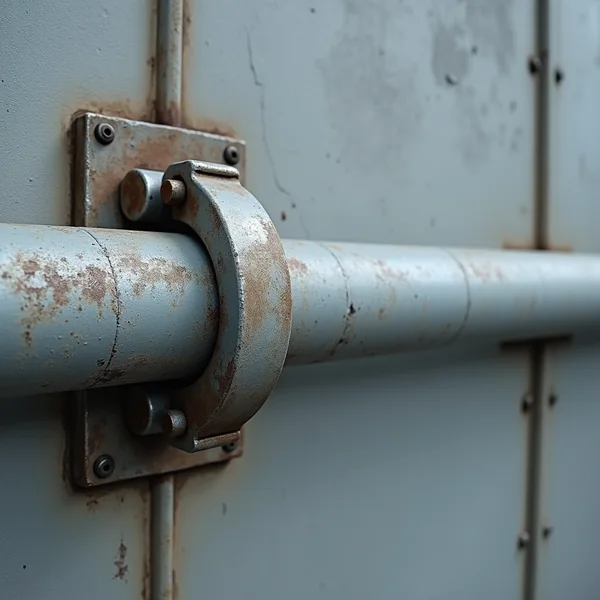
Two clamps and a short conductor, and one of the few things in a house whose absence stays invisible until something has already gone wrong.
It is a short piece of bare or green-jacketed conductor with a clamp at each
end, usually arcing across a water meter or a section of pipe near where the
water enters the building. It looks like an afterthought and it costs almost
nothing, which is exactly why it goes missing during renovations and gets
noticed only when an inspector asks about it.
Water Pipe Bonding Jumper: What It Does and Why It Is There
Bonding means deliberately connecting the metal parts of a building together
and to the electrical system’s grounded conductor, so that everything metal a
person can touch sits at the same electrical potential. The point is not to
carry normal current. It is that if a fault ever energises something metal, the
metal is already tied into a low-resistance path back to the source, so the
protective device operates instead of the situation persisting quietly.
Metal water piping running through a house is a large, continuous, very
conductive network that people touch constantly, often while wet and barefoot.
That is the reason it gets bonded rather than left to whatever incidental
contact it happens to have.
Grounding and bonding are not the same word
These get used interchangeably and they describe different jobs. Grounding
connects the electrical system to the earth, through rods or another electrode,
which is what
the two ground rods question
is about, and the conductor that does it is sized by its own rules, covered in
what sets the grounding electrode conductor size.
Bonding connects metal things to each other and to the system, so that no two of
them can sit at meaningfully different potentials.
The confusion is understandable, because a metal underground water service
has historically served both purposes at once — as an electrode connecting the
system to earth, and as metal that needs bonding. Those are two distinct
functions that happen to involve the same pipe, and treating them as one thing
is where most homeowner misunderstandings start.
Why it jumps across the meter
A water meter is a removable device with dielectric or non-conductive
sections, so the pipe on the street side and the pipe on the house side are not
reliably connected to each other through it. The jumper restores that continuity
around the meter, so removing the meter for service does not break the
connection. The same reasoning applies anywhere a run of metal pipe is
interrupted: a dielectric union, a filter housing, a water softener, or a
plastic repair section.
What routinely breaks it
| What happened | Why it matters | What it looks like |
|---|---|---|
| A plumber replaced a section of metal pipe with plastic | The metal run is now in two electrically separate pieces | New white or grey pipe spliced into old copper or galvanised |
| The meter was swapped and the jumper not reattached | Continuity around the meter is gone | A dangling conductor, or two empty clamps |
| A water softener or filter was installed | It can interrupt the run the same way a meter does | New equipment mid-run with no jumper across it |
| The clamp corroded or was never tightened | A connection that looks intact but is not | Green or white corrosion at the clamp, a loose screw |
| The service was replaced with plastic from the street | The pipe is no longer an electrode at all, though it may still need bonding | Usually only visible where the service enters |
| A panel was replaced and connections not carried over | Bonding is part of the service work, not an accessory to it | New panel, old and unreconnected conductors nearby |
Where the electrification work comes in
Most homeowners on this site meet this subject because something larger is
happening: a service upgrade, a new subpanel, a heat pump, a car charger. Any
work that touches the service is work where bonding gets inspected, and a
missing jumper found at that moment is a small correction. Found later, it is a
second visit. This is one of several reasons a panel replacement is rarely the
simple swap people expect, as
when a panel upgrade is required
sets out, and it is the sort of item that turns up at
an electrical inspection.
It is also worth separating in your head from the protective devices on
branch circuits. Bonding is about the metal in the building; ground-fault and
arc-fault devices are about what is happening on a particular circuit, which is
a different mechanism entirely — see
what each of those devices watches for.
A house can have modern protective devices throughout and still have a broken
bond at the water service.
The code question, honestly stated
Where a jumper is required, how it is sized, what it must connect to and
which parts of a piping system are covered are all written into the electrical
standard — and the edition of that standard in force is a local question in New
York. Most of the state works under the state Uniform Code, which adopts an
edition on its own schedule, while New York City runs a separate Electrical Code
with its own amendment cycle. The two do not move together.
So nothing here establishes that any particular installation is correct, and
no article can. What it can tell you is that the requirement is real, that it is
inspected, and that the authority to ask is the building department issuing the
permit for your work. A licensed electrician determines what your installation
needs; the point of knowing the subject is to recognise when the question has
not been asked.
Why this is not a DIY item
The conductor is ordinary and the clamps are sold in any supply house, which
makes this look like a Saturday job. It is not, for two reasons. The
connection is made at or near the service, where conductors are live and are not
protected by anything you can switch off inside the house. And sizing is not
guesswork — the required size depends on the service and on what the conductor
is connecting, so a piece of wire that looks substantial can be wrong.
The useful homeowner action is inspection by eye, not installation: look at
where the water enters, see whether a conductor bridges the meter, see whether
both clamps are tight and free of corrosion, and see whether any plastic has
appeared in a metal run since the house was wired. Then report what you found to
the electrician doing your work.
What to ask when work is being planned
- Is the existing bonding at the water service intact, and was it checked?
- Has any section of metal pipe been replaced with plastic since the house
was wired? - Is there anything mid-run — a softener, a filter, a dielectric union — that
interrupts continuity? - Is the water service still metal from the street, and does that change what
is required here? - Will bonding be verified as part of this permit, or does it fall outside
the scope of the work?
None of this changes your bill or your equipment. The parts cost very little,
and the absence of them stays invisible until it matters — which is why it is
worth a look the next time anyone opens the panel.
While they are there, the wider question of what new circuits do and do not cost
is covered in
what adding a circuit actually changes.
Frequently Asked Questions
What is a bonding jumper?
A short conductor with a clamp at each end that deliberately connects metal parts so they cannot sit at different electrical potentials. On a water service it usually bridges the meter, restoring continuity that the meter itself does not reliably provide. It is not there to carry normal current; it is there so a fault has a low-resistance path and the protective device operates.
What is the difference between bonding and grounding?
Grounding connects the electrical system to the earth through an electrode. Bonding connects metal objects to each other and to the system so no two of them differ in potential. The confusion comes from metal underground water piping, which has historically done both jobs at once — serving as an electrode while also being metal that needs bonding.
Why does the jumper go around the water meter?
Because a meter is a removable device with non-conductive sections, so the street side and house side of the pipe are not dependably connected through it. The jumper keeps the two sides continuous whether the meter is in place or not, which is why the same approach is used across anything else that interrupts a metal run.
Do I still need bonding if my water pipe is plastic?
A plastic service means the pipe is no longer serving as an electrode, but that does not by itself settle what bonding the interior metal piping requires, since interior metal that could become energised is a separate question. It is exactly the situation to put to the electrician and the building department rather than to reason about from the pipe material alone.
Can I install one myself?
This is not a homeowner job. The connection is made at or near the service where conductors are live and are not protected by anything you can switch off inside the house, and the required size depends on the service and on what is being connected, so a conductor that looks substantial can be the wrong one. Inspecting by eye and reporting what you find is the useful homeowner action.
How do I tell whether mine is intact?
Look at where the water enters the building. You are looking for a conductor bridging the meter with a clamp at each end, both tight and free of corrosion, and for any plastic section spliced into what was originally a continuous metal run. A dangling conductor or an empty clamp is the obvious failure; a corroded clamp is the one that still looks fine.
Is a missing jumper a code violation?
Whether a particular installation meets code is not something an article can determine. Requirements are written into the electrical standard, and the edition in force differs across the state: most of New York works under the state Uniform Code while New York City runs a separate Electrical Code on its own cycle. The building department issuing your permit is the authority that answers this.
NY Solar Incentives
Independent New York solar research. We summarise NYSERDA, NY-Sun and federal programme rules from published sources and state plainly when a figure is an estimate. We are not a government agency and do not sell equipment.
Run the arithmetic on your own system
Check the dated program table and your arrangement before counting an incentive. Standard residential NY-Sun blocks are closed; Long Island Affordable Solar has a conditional income-verification route. The NY credit depends on qualified costs and tax liability, while the NYC abatement reduces future property-tax bills. The estimator keeps those timings separate.