Solar Panels on a Metal Roof in New York
A standing seam metal roof is the single best surface for solar in New York, and the reason is that nothing has to be drilled.
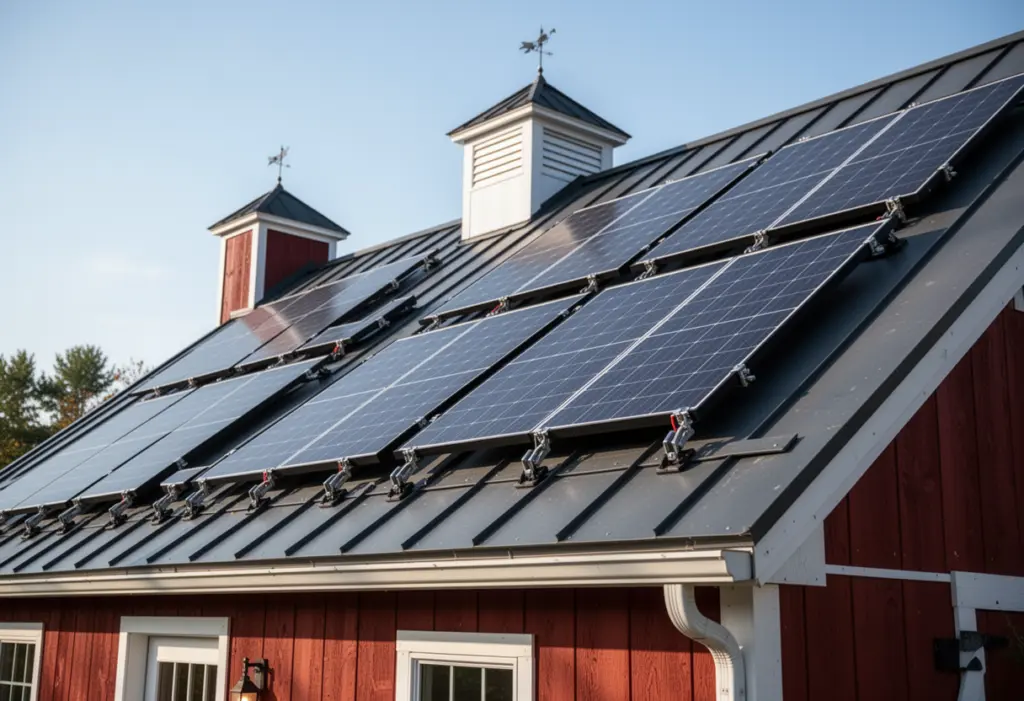
If you have a standing seam metal roof, you have the best surface for solar there is, and most homeowners do not know it. If you have a different kind of metal roof, the job is quite different. The distinction is worth understanding before you take quotes.
Standing seam: no penetrations at all
A standing seam roof has raised vertical seams where the panels of metal join. Solar racking clamps onto those seams. Nothing is drilled. No holes, no sealant, no flashing, and nothing to fail in twenty New York winters of freeze and thaw.
That matters more than it sounds. Roof penetration is where rooftop solar leaks, and it is the single most common workmanship dispute in the industry. A clamped installation removes the failure mode entirely.
Two further advantages in this state specifically:
- Metal sheds snow better than asphalt, and a solar array on metal sheds better still. Upstate, that is real winter production recovered.
- The roof outlives the panels. A metal roof commonly has decades of life ahead of an asphalt one, which removes the re-roofing question that dominates most New York solar decisions — no removing and reinstalling an array halfway through its life.
Installation is also faster, which sometimes shows up as a lower labour figure.
Corrugated and exposed-fastener metal
This is the other common metal roof: flat sheets with visible screws, frequently on barns, outbuildings and rural houses.
There are no seams to clamp to, so mounting is through the roof, into the structure below, sealed at each penetration. That is an ordinary and perfectly sound installation — it simply does not carry the no-holes advantage, and it means the sealing detail matters as much as it would on asphalt.
Ask what mounting hardware is proposed and how each penetration is sealed. On an exposed-fastener roof, the answer should be specific.
Stone-coated steel and metal tile
Increasingly common on New York houses and the most demanding of the three. The profile is shaped, so mounting requires hardware made for that specific product, and improvising is how a roof gets damaged.
The question to ask an installer is not whether they can do it. It is what they have installed on this roof type before, and what the roof manufacturer’s own guidance says about mounting.
What to establish before signing
- Which metal roof is it? Standing seam, exposed fastener, or stone-coated. The answer changes everything below.
- Clamped or penetrating? On standing seam it should be clamped. If someone proposes drilling a standing seam roof, ask why.
- Does it affect the roof warranty? Metal roof warranties are long, and a penetrating installation can affect one. Get the answer in writing before anything is fixed down.
- What snow load is the racking specified for? Metal sheds well, but the racking still carries load, and upstate design loads are high.
- Where does the snow go? Metal roofs shed in sheets. If the array discharges over a doorway, a driveway or a walkway, snow guards are a safety item rather than an option.
The one genuine drawback
Fewer installers are set up for metal, particularly stone-coated. The pool of firms quoting you will be smaller, and that is worth knowing when a quote looks high — it may be the only firm in your area who does the work properly, which is not the same as being overpriced.
Ask for photographs of their previous work on your roof type. A firm that has done it will have them.
The rest of the position in 2026
Unchanged by your roof material: the 30% federal residential credit is gone — section 25D was terminated for expenditures made after 31 December 2025, with an expenditure treated as made when the original installation is completed. New York’s 25% credit capped at $5,000 on Form IT-255 remains, along with the state sales tax exemption and RPTL 487’s property tax exemption where your municipality has not opted out. The RPTL 487 exemption is not automatic: file form RP-487 with your assessor by the taxable status date (March 1 in most towns; January 2 in Nassau towns; May 1 or June 1 in Westchester towns; set by charter in cities; usually January 1 in villages), and the system must be built before January 1, 2030 (RP-487 instructions). NY-Sun is not among them: as of September 2026 NYSERDA has no open NY-Sun block for homes in any utility territory; check NYSERDA’s NY-Sun dashboard for a new one.
Frequently Asked Questions
Can solar panels be installed on a metal roof without drilling?
On a standing seam metal roof, yes. Racking clamps onto the raised seams, so nothing is drilled — no holes, no sealant, and no penetration to fail over twenty New York winters. Exposed-fastener and stone-coated metal roofs are mounted through the roof instead.
Is a metal roof good for solar in New York?
Standing seam is the best surface there is. It needs no penetrations, it sheds snow better than asphalt, and it commonly outlives the panels — which removes the re-roofing question that dominates most New York solar decisions.
Does solar void a metal roof warranty?
A clamped standing seam installation generally does not create the issue at all, since nothing is penetrated. A penetrating installation on exposed-fastener or stone-coated metal can affect the warranty, so get the answer in writing before anything is fixed down.
Why are there fewer quotes for a metal roof installation?
Fewer installers are equipped for metal, especially stone-coated steel and metal tile, which need hardware made for that specific profile. A higher quote may reflect the only firm in your area doing the work properly rather than overpricing.
This article is general information, not tax, legal or financial advice. Incentive amounts, eligibility rules and deadlines change and depend on your utility, your tax situation and your property. Confirm current terms with NYSERDA, your utility and a qualified tax professional before making a decision.
NY Solar Incentives
Independent New York solar research. We summarise NYSERDA, NY-Sun and federal programme rules from published sources and state plainly when a figure is an estimate. We are not a government agency and do not sell equipment.
Run the arithmetic on your own system
Check the dated program table and your arrangement before counting an incentive. Standard residential NY-Sun blocks are closed; Long Island Affordable Solar has a conditional income-verification route. The NY credit depends on qualified costs and tax liability, while the NYC abatement reduces future property-tax bills. The estimator keeps those timings separate.