Solar Panel Cost in White Plains and Westchester
Westchester's high electricity rates make solar economics strong, and its tree cover makes shading the constraint. Here is what moves a White Plains quote.
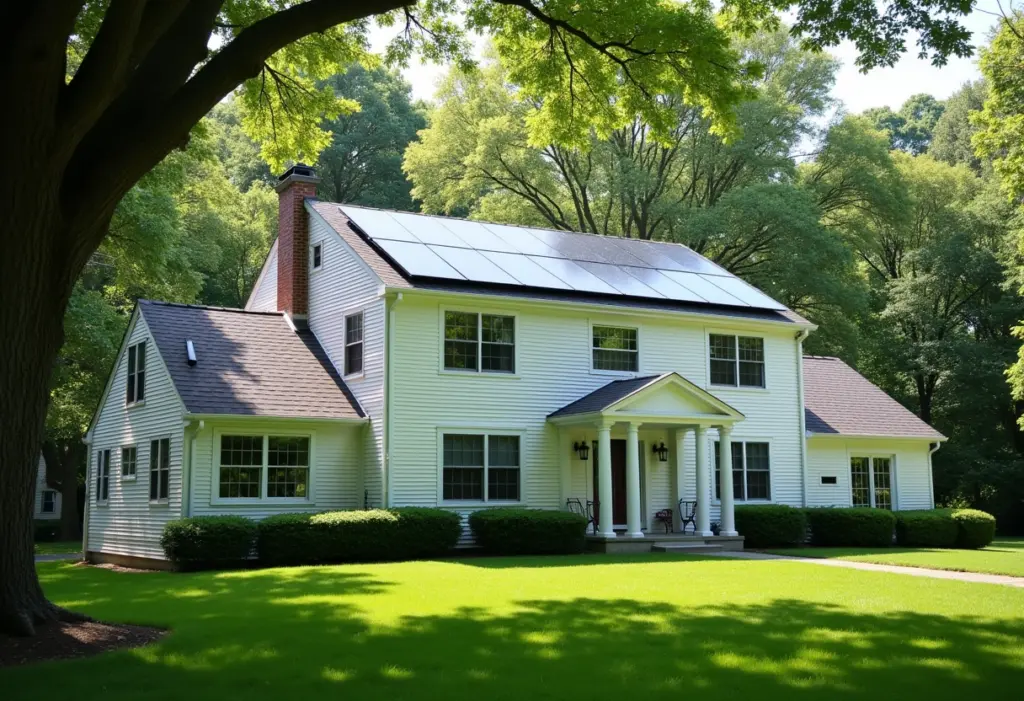
White Plains sits in the strongest part of New York for residential solar economics and one of its more constrained ones physically. High retail electricity rates make every exported kilowatt-hour valuable; mature tree cover decides whether you can export many of them.
Why Westchester economics are strong
Under Phase One net metering each exported kilowatt-hour earns a credit at the full retail rate, and Con Edison’s retail rate in Westchester is high by national standards. The higher the rate, the more each unit is worth. A system interconnected today holds that treatment for 20 years.
That is the entire reason a Westchester quote can look expensive in absolute terms and still pay back faster than a cheaper system in a low-rate territory upstate.
Shading is the constraint
Westchester’s residential neighbourhoods are heavily wooded, with mature oaks and maples that were there long before the house. The low winter sun angle means a tree that is irrelevant in July removes hours of production in December.
Require an on-site shading assessment, not a satellite estimate. Ask what the model assumes about winter. Where shading is severe, the honest options are a smaller system, a different roof plane, or community solar — and an installer who says so is being straight with you.
Tree removal is sometimes proposed. It is a genuine trade-off with real cost, real permitting in some municipalities, and real effect on the property, and it should be presented as a decision rather than assumed into the production estimate.
The Con Edison charge
Residential customers who interconnected on or after 1 January 2022 pay a monthly Customer Benefit Contribution based on the DC size of the system. Con Edison’s 2026 residential rate is $1.29 per kW-month.
Westchester systems tend to be larger than the state average because the houses are larger, so this matters more here than the headline rate suggests:
- An 8 kW system: $10.32 a month, about $124 a year.
- A 12 kW system: $15.48 a month, about $186 a year.
- A 16 kW system: $20.64 a month, about $248 a year.
It is recalculated annually rather than fixed at interconnection, and it will not appear in most sales proposals.
Permitting and local rules
The City of White Plains issues its own permits; surrounding municipalities — Scarsdale, Greenburgh, Harrison, Rye, Mamaroneck and the rest — each run their own, and turnarounds differ. Two further Westchester-specific items:
- Homeowners associations. Common in parts of the county. New York law limits how far an association can obstruct solar, but it does not eliminate review, and a process still takes time.
- Historic and architectural review applies in several municipalities and can restrict street-visible placement.
Raise both at the quoting stage. They are municipal or private steps that occur before Con Edison is involved at all.
Property tax in Westchester
RPTL 487 exempts the added value of the system from property tax for 15 years unless the municipality has opted out. The RPTL 487 exemption is not automatic: file form RP-487 with your assessor by the taxable status date (March 1 in most towns; January 2 in Nassau towns; May 1 or June 1 in Westchester towns; set by charter in cities; usually January 1 in villages), and the system must be built before January 1, 2030 (RP-487 instructions). In Westchester the city or town, the county and the school district each decide for their own levy — and Westchester school taxes are a large share of the bill, so the school district’s position is the one worth checking first.
2026 incentives
The 30% federal residential credit under section 25D is gone, terminated for expenditures made after 31 December 2025, with an expenditure treated as made when the original installation is completed. New York’s 25% credit capped at $5,000 on Form IT-255 remains — and because Westchester sees a lot of lease and PPA offers, it is worth knowing that New York’s credit reaches leases and PPAs of ten years or more as well as purchases, which the federal one never did. The state sales tax exemption also remains. As of September 2026 NYSERDA has no open NY-Sun block for homes in any utility territory; check NYSERDA’s NY-Sun dashboard for a new one.
Frequently Asked Questions
Why is solar worth more in Westchester than upstate?
Net metering credits exports at the full retail rate, and Con Edison's Westchester retail rate is high by national standards. Each exported kilowatt-hour is therefore worth more than the same unit in a cheaper upstate territory.
How much does the Con Edison CBC cost on a large Westchester system?
At the 2026 residential rate of $1.29 per kW-month, a 12 kW system pays about $186 a year and a 16 kW system about $248. Westchester systems are often larger than the state average, so the charge is more noticeable here.
Can a homeowners association block solar in Westchester?
New York law limits how far an association can obstruct a solar installation, but it does not remove review altogether and the process still takes time. Raise it at the quoting stage rather than after signing.
Should I cut down trees for solar in Westchester?
It is a genuine trade-off with real cost, sometimes municipal permitting, and a permanent effect on the property. It should be presented as a decision for you to make, not quietly assumed into an installer's production estimate.
This article is general information, not tax, legal or financial advice. Incentive amounts, eligibility rules and deadlines change and depend on your utility, your tax situation and your property. Confirm current terms with NYSERDA, your utility and a qualified tax professional before making a decision.
NY Solar Incentives
Independent New York solar research. We summarise NYSERDA, NY-Sun and federal programme rules from published sources and state plainly when a figure is an estimate. We are not a government agency and do not sell equipment.
Run the arithmetic on your own system
Check the dated program table and your arrangement before counting an incentive. Standard residential NY-Sun blocks are closed; Long Island Affordable Solar has a conditional income-verification route. The NY credit depends on qualified costs and tax liability, while the NYC abatement reduces future property-tax bills. The estimator keeps those timings separate.