Solar Panel Cost in North Hempstead, NY: What to Check
The Town of North Hempstead is dense with incorporated villages, so the town permits only part of it. Establish the jurisdiction, then size from twelve months of meter data.
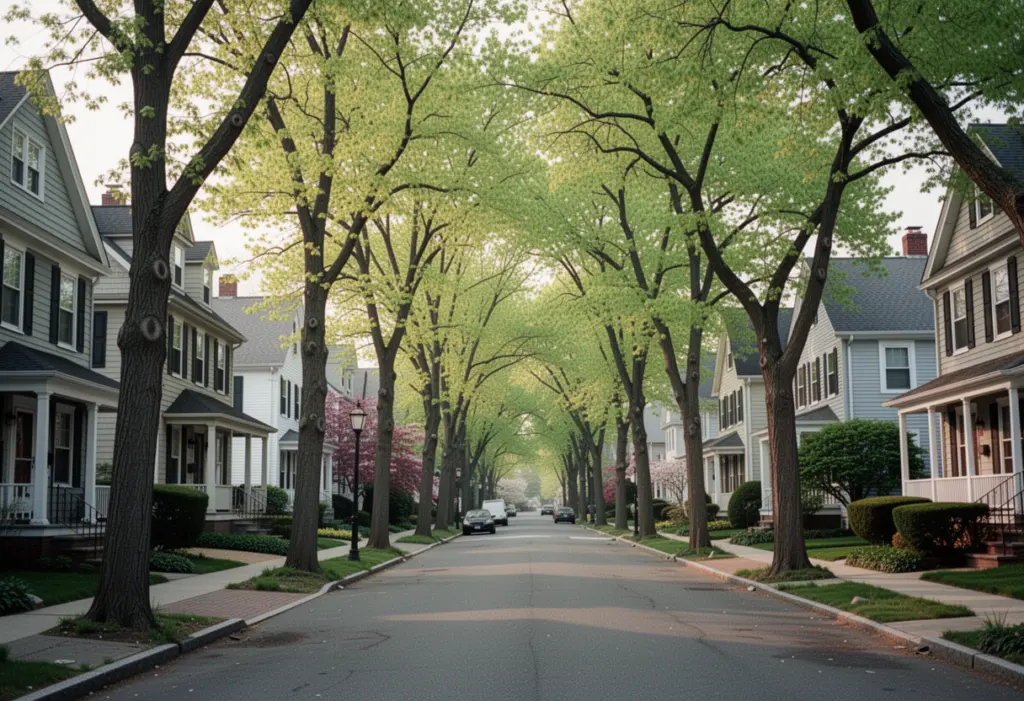
The Town of North Hempstead reaches from the Great Neck peninsula east through Manhasset, Port Washington, Roslyn, Albertson, Westbury, Mineola and New Hyde Park, across postal areas including 11030, 11040, 11050, 11501, 11576 and 11590. It is also one of the most village-dense towns in New York, and that is where a solar conversation should start.
The town does not permit the whole town
Dozens of incorporated villages sit inside North Hempstead, and each of them runs its own building department. The town building department handles the unincorporated areas. So the single most useful question to open with is not what a kilowatt costs, it is: which authority having jurisdiction covers my exact address, and has that office adopted the state Unified Solar Permit for systems of 25 kW DC and under? Over 300 authorities across New York have adopted it, but adoption is decided office by office.
Where a village also runs architectural review, ask whether rooftop equipment is within its scope. A review that pushes an array off a street-facing plane costs production without changing a single line on the quote.
Size from meter data, not from a season
The most expensive mistake in this part of Nassau is sizing an array from a summer bill. Houses here often run pool pumps, central air and increasingly a heat pump or an EV, and each of those loads has a different shape across the year. An array sized from July looks generous in July and wrong in February, and one sized from a pool season is simply too large.
Ask for twelve months of interval or billing data to be the basis of the design, and ask to see the monthly production estimate rather than only the annual total. Then ask what the model assumes for December and January specifically, because that is where a satellite-derived shading estimate diverges most from an on-site assessment under mature trees.
Older housing, specific costs
- Roof covering and structure. Older colonials and centre-hall houses carry steeper pitches and sometimes slate or tile. Attachment method, not panel choice, drives the labour.
- Historic character. Parts of Roslyn and other village centres carry historic character controls. Ask early rather than after the design is drawn.
- Panel and subpanel condition. Multiple additions over decades leave a mixed electrical picture, and the interconnection point has to be identified before an honest price exists.
What the monthly charge does to a larger design
PSEG Long Island, operating the LIPA system, serves this territory; confirm it from the name printed on your own bill rather than assuming it. The Customer Benefit Contribution is billed on the DC size of the array and is unrelated to output, at a 2026 residential rate of $1.13 per kW-month. A 10 kW array pays 10 x $1.13 = $11.30 a month, about $136 a year. It applies to systems interconnected on or after 1 January 2022 and is recalculated annually rather than locked at interconnection, which is the second reason not to oversize: the extra kilowatts bill you every month whether or not you ever consume the credits they build.
Exports themselves are credited at the full retail rate under Phase One net metering, held for 20 years from interconnection.
Incentives, and two that are closed
NY-Sun used to come off the price through the contractor, sized by system size and region and stepped down as each megawatt block filled. On Long Island the last residential block closed on 17 April 2016. As of September 2026 NYSERDA has no open NY-Sun block for homes in any utility territory; check NYSERDA’s NY-Sun dashboard for a new one. NYSERDA’s Affordable Solar incentive for lower-income households is not open either: its last residential blocks closed on 15 October 2025 in Con Edison territory and on 9 March 2026 Upstate. If a proposal still shows either one, ask which open block it comes from.
NYSERDA also backs financing through Energy Finance Solutions, including an On-Bill Recovery Loan repaid through the utility bill and a Smart Energy Loan. On the tax side, New York’s 25 percent credit capped at $5,000 on Form IT-255 applies to a principal residence, while the federal 30 percent residential credit has ended for expenditures made after 31 December 2025, measured by completion of the original installation. Check the current position at nyserda.ny.gov and tax.ny.gov yourself, because block levels and programme rules both move.
Frequently Asked Questions
Does the Town of North Hempstead issue all solar permits?
No. The town permits unincorporated areas only. Dozens of incorporated villages inside the town run their own building departments, so identify the authority for your exact address first.
How should an array here be sized?
From twelve months of billing or interval data, not from a summer bill or a pool season. Ask for a monthly production estimate and for what the model assumes for December and January.
What does the capacity charge cost on a 10 kW system?
At the 2026 PSEG Long Island residential rate of $1.13 per kW-month, a 10 kW array pays $11.30 a month, roughly $136 a year, billed on DC size regardless of output.
What is the Affordable Solar incentive?
A higher NY-Sun rate for lower-income households, paid through the contractor rather than claimed by you, and it is closed: its last residential blocks closed on 15 October 2025 in Con Edison territory and on 9 March 2026 Upstate. As of September 2026 NYSERDA has no open NY-Sun block for homes in any utility territory; check NYSERDA’s NY-Sun dashboard for a new one.
This article is general information, not tax, legal or financial advice. Incentive amounts, eligibility rules and deadlines change and depend on your utility, your tax situation and your property. Confirm current terms with NYSERDA, your utility and a qualified tax professional before making a decision.
NY Solar Incentives
Independent New York solar research. We summarise NYSERDA, NY-Sun and federal programme rules from published sources and state plainly when a figure is an estimate. We are not a government agency and do not sell equipment.
Run the arithmetic on your own system
Check the dated program table and your arrangement before counting an incentive. Standard residential NY-Sun blocks are closed; Long Island Affordable Solar has a conditional income-verification route. The NY credit depends on qualified costs and tax liability, while the NYC abatement reduces future property-tax bills. The estimator keeps those timings separate.