What Solar Costs in Brewster, NY: Village, Town and Utility
In Brewster the two questions that move a quote most are not about panels at all. They are which authority issues the permit and which utility bills the meter, and neither answer is obvious from the address.
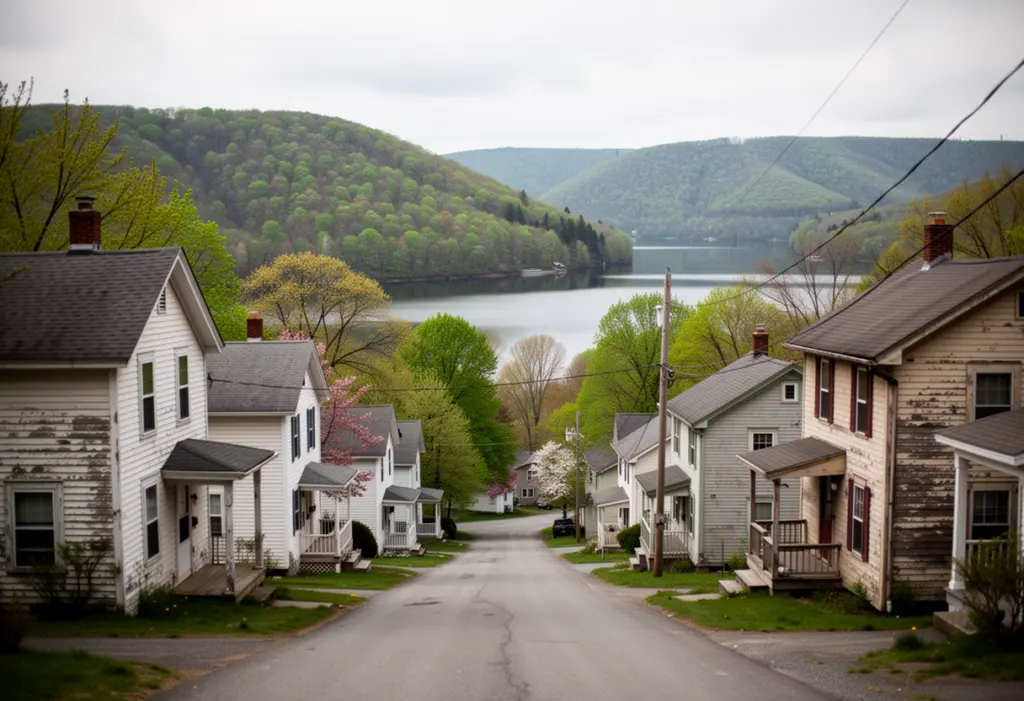
In Brewster the two questions that move a solar quote most are not about panels. They are which authority issues your permit and which utility bills your meter, and in this corner of Putnam County neither answer follows from the mailing address.
Village or town decides the permit
The Village of Brewster sits inside the Town of Southeast. Inside the village boundary the village handles the building permit and its inspections; outside it, the Town of Southeast does. A 10509 postal address covers both, so the postal address does not settle it. Establish which authority applies before the array is designed, and ask whether that office works to the New York State Unified Solar Permit, which standardises residential permitting for systems of 25 kW DC and under.
The utility decides a charge you pay every month
Putnam is boundary country. Central Hudson serves much of the mid-Hudson Valley including Putnam, and NYSEG also serves parts of the Hudson Valley, so the only reliable answer is the utility name printed on your own bill. It is worth the two minutes, because the Customer Benefit Contribution is charged on the DC size of the array every month for systems interconnected on or after 1 January 2022.
- A 9 kW array at Central Hudson’s 2026 residential rate of $1.67 per kW-month is $15.03 a month, about $180 a year.
- The same 9 kW array at NYSEG’s $1.19 is $10.71 a month, about $129 a year.
That is roughly $52 a year of difference for an identical system, decided by nothing the installer controls. The rates are recalculated annually and are not fixed at interconnection, so treat any twenty-year saving projection that ignores the charge as incomplete.
What the site itself does to the number
- Canopy. Brewster sits in a valley on the East Branch of the Croton, ringed by wooded ridges, and mature hardwood is the production constraint far more often than roof orientation is. Ask directly whether the production estimate assumes trees that are still standing, and price any removal as its own line rather than letting it hide inside the system price.
- Lot size in the village. Village lots are small and close together, so a ground mount is rarely available and roof geometry sets the ceiling on system size. Out in the town, ground mounts become realistic and bring their own costs: trenching, a longer DC run and a foundation.
- Watershed review. The reservoirs around Brewster are part of New York City’s water supply, and land disturbance for a ground mount can bring stormwater review into a project that would otherwise be a two-day job. Ask the permitting office about thresholds before committing to that design.
- Older village housing. Service size and roof age are the two costs most often discovered late. Both can be checked in an afternoon.
Property tax: up to four separate checks here
RPTL 487 exempts the added value of a solar system from property tax for fifteen years, but only where each taxing body has not opted out. A property inside the village is taxed by Putnam County, the Town of Southeast, the Village of Brewster and its school district, and each of those can opt out independently. That is up to four calls rather than the three a generic New York guide describes. The system must also be constructed before 1 January 2030 to qualify.
The rest of the 2026 position
New York’s solar energy system equipment credit remains: 25 percent of qualified expenditure, capped at $5,000, on Form IT-255, for equipment installed and used at your principal residence in the state. It reaches leases and power purchase agreements of ten years or more, with that minimum applying to the lease as much as to the agreement to buy power. It is not refundable, so it is limited by your New York liability and carries forward up to five years.
As of September 2026 NYSERDA has no open NY-Sun block for homes in any utility territory; check NYSERDA’s NY-Sun dashboard for a new one. The income-qualified Affordable Solar incentive has closed as well: outside Con Edison and Long Island it ran from 18 December 2025 to 9 March 2026. If a block for homes reopens, NY-Sun is applied by the contractor against the price, so ask to see it on the contract rather than expecting a payment. The state sales tax exemption covers residential solar equipment, with local shares elected separately.
The 30 percent federal residential credit is gone — section 25D was terminated for expenditures made after 31 December 2025, with an expenditure treated as made when the original installation is completed. Any Brewster proposal that still shows it is wrong on the largest number on the page. What does survive is Phase One net metering at the full retail rate for twenty years from interconnection, which rewards sizing to your real consumption rather than to the roof. Check the current position at tax.ny.gov and nyserda.ny.gov before signing anything.
Frequently Asked Questions
Who issues a solar permit in Brewster?
It depends on whether the property is inside the Village of Brewster or in the surrounding Town of Southeast. A 10509 address covers both, so confirm the jurisdiction before the system is designed.
Which utility serves Brewster?
Putnam County sits where Hudson Valley service territories overlap, so read the utility name on your own bill. The difference between Central Hudson and NYSEG rates is roughly $52 a year on a 9 kW array.
Do trees make solar unworkable in Brewster?
Not necessarily, but mature canopy is the most common production constraint here. Ask whether the estimate assumes trees still standing, and get any removal priced separately rather than bundled.
How many opt-out checks does RPTL 487 need in Brewster village?
Up to four: Putnam County, the Town of Southeast, the Village of Brewster and the school district can each opt out independently. Outside the village boundary the village check drops away.
This article is general information, not tax, legal or financial advice. Incentive amounts, eligibility rules and deadlines change and depend on your utility, your tax situation and your property. Confirm current terms with NYSERDA, your utility and a qualified tax professional before making a decision.
NY Solar Incentives
Independent New York solar research. We summarise NYSERDA, NY-Sun and federal programme rules from published sources and state plainly when a figure is an estimate. We are not a government agency and do not sell equipment.
Run the arithmetic on your own system
Check the dated program table and your arrangement before counting an incentive. Standard residential NY-Sun blocks are closed; Long Island Affordable Solar has a conditional income-verification route. The NY credit depends on qualified costs and tax liability, while the NYC abatement reduces future property-tax bills. The estimator keeps those timings separate.