Solar Loan Prepayment Penalties in New York: What to Ask
Most solar loans sold in New York have no explicit prepayment penalty. The money that punishes an early payoff is somewhere else in the paperwork, and in 2026 it moved.
On this page 8 sections
- 01The step-up date, and why it broke in 2026
- 02Three questions that settle it in writing
- 03The dealer fee is the real cost of paying early
- 04Simple interest, precomputed interest, and the security instrument
- 05NYSERDA financing behaves differently
- 06What paying it off early does not change
- 07The incentives that actually reach a 2026 buyer
- 08Frequently Asked Questions
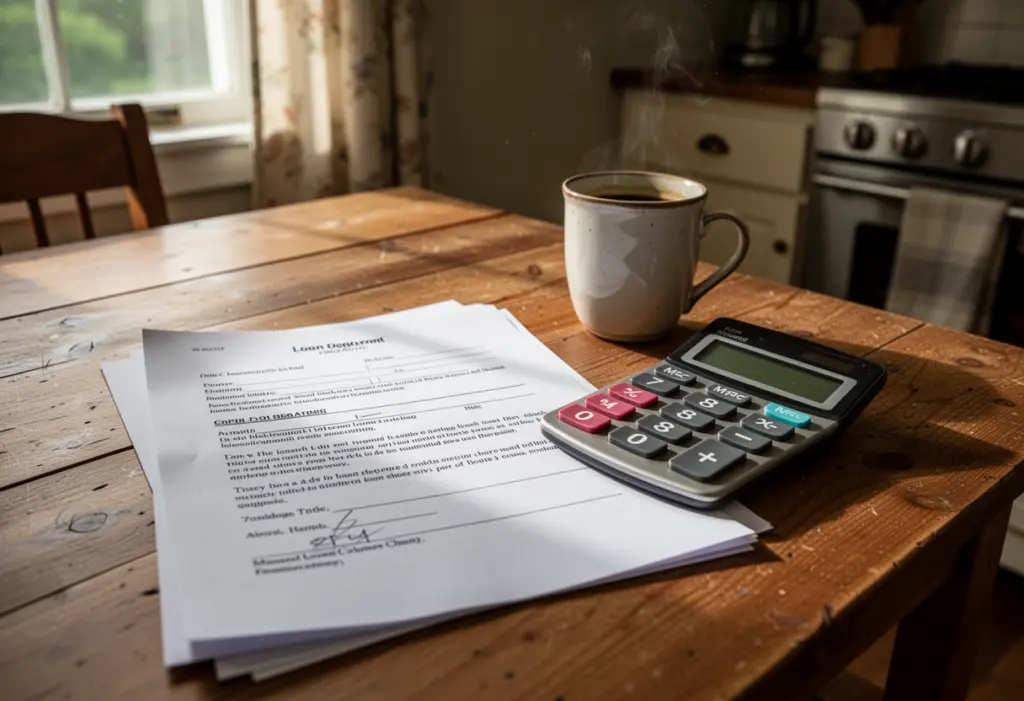
Most solar loans sold in New York do not carry an explicit prepayment penalty, and if you ask an installer that question the answer is usually a truthful no. It is also the wrong place to stop. The money that punishes an early payoff sits elsewhere in the paperwork: in a fee added to the system price to buy the interest rate down, and in a re-amortisation date that was designed around a federal tax credit that no longer exists.
The step-up date, and why it broke in 2026
A large share of residential solar loans are written with two payment schedules. There is a low payment for roughly the first twelve to eighteen months, and a higher payment afterwards, and the low one only survives if the borrower makes a substantial voluntary prepayment by a stated date. That prepayment was sized around the 30 percent federal residential credit, on the assumption the borrower would receive it in the spring and hand it straight to the lender.
That credit is gone. Section 25D was terminated for expenditures made after 31 December 2025, and the operative test is when the original installation is completed, not when the utility switches the system on. A homeowner whose installation finishes in 2026 claims nothing federally: no phase-down, no transition, no carryover of a credit never earned. If a loan on that system still contains a step-up date built around a 30 percent payment, the money to make that payment has to come from somewhere else.
New York’s own credit does not fill the hole cleanly. Form IT-255 gives 25 percent of qualified expenditure capped at $5,000, it is not refundable, and it is limited by your actual New York State tax liability, with unused amounts carrying forward for up to five years. A household that owes less state tax than the credit is worth receives it in instalments over several filing seasons, which is not the shape of a single lump sum arriving in April.
Three questions that settle it in writing
- What is my payment before the re-amortisation date, and what is it after, if I pay nothing extra? Both figures should be in the loan documents in dollars. If the salesperson can only show you the first one, the disclosure is incomplete.
- What exact amount must be paid by what exact date to keep the lower payment? Get the date, not a description of the date.
- Is there any charge for paying the balance in full at any time? Ask for the clause, not the summary.
The dealer fee is the real cost of paying early
A headline interest rate well below what an unsecured personal loan costs is generally bought with a fee, and that fee is added into the amount financed rather than billed separately. Pay the loan off in month three and you do not get it back — you have simply borrowed less time on a principal that already includes it.
The way to see it is to ask one installer for two prices on the same system on the same day: the cash price, and the financed price with the product being offered. The difference is the fee, expressed in dollars rather than in a percentage nobody quotes. Then compare cost per watt of DC capacity both ways. This is a fair question and a competent installer will answer it; a refusal is information.
Simple interest, precomputed interest, and the security instrument
Ask whether interest accrues on the outstanding balance day by day, or whether the finance charge was computed at the start. On the first, early payoff genuinely reduces what you pay. On the second, it may not. Ask separately what secures the loan and what has to be filed to release it, because a lien or fixture filing left in place surfaces later as a title problem when the house is sold or refinanced.
NYSERDA financing behaves differently
Financing arranged through Energy Finance Solutions is a different animal from a dealer loan. The On-Bill Recovery Loan is repaid through the utility bill and the Smart Energy Loan is repaid conventionally, and the payoff and transfer mechanics of an on-bill obligation are not the same as a bank loan you can simply clear. If you are choosing that route, ask about early payoff and about what happens at sale before you sign, and ask the programme rather than the contractor.
What paying it off early does not change
Two things run on their own clocks regardless of how the system was paid for. The Customer Benefit Contribution is billed on the DC size of the array, not on production and not on your loan balance: an 8 kW system on NYSEG pays 8 × $1.19, about $9.52 a month or roughly $114 a year at the 2026 residential rate. And Phase One net metering credits exports at the full retail rate for 20 years from interconnection, which is a property of the interconnection date rather than of the financing.
The incentives that actually reach a 2026 buyer
Foreground the one that interacts with the loan: IT-255, at 25 percent capped at $5,000, requires the system to be at your principal residence in New York, and it reaches leases and power purchase agreements only where the term is ten years or more. Alongside it sit the state sales tax exemption on residential solar equipment and the 15-year RPTL 487 property tax exemption, which you claim by filing form RP-487 with your assessor and which applies where the municipality, the county and the school district have each declined to opt out. The contractor-applied NY-Sun reduction is not available to homes at present: as of September 2026 NYSERDA has no open NY-Sun block for homes in any utility territory; check NYSERDA’s NY-Sun dashboard for a new one. Programme terms change; confirm the current position with NYSERDA and the Department of Taxation and Finance before you rely on a number in a proposal.
Frequently Asked Questions
Do New York solar loans have prepayment penalties?
Usually there is no stated penalty, which is why asking only that question is misleading. The cost of an early payoff is the dealer fee already added into the amount financed, which is not refunded when you pay the balance.
What is the 18-month payment on my solar loan?
Many solar loans keep a low payment for the first twelve to eighteen months and then step up unless a large voluntary prepayment is made by a set date. That prepayment was sized around the 30% federal credit, which ended for installations completed after 31 December 2025.
Can the New York state credit make that prepayment?
Not reliably. The IT-255 credit is 25% capped at $5,000, is not refundable, and is limited by your actual New York State tax liability. Unused credit carries forward up to five years, so it can arrive in instalments rather than as one lump sum.
How do I see the dealer fee?
Ask the same installer for a cash price and a financed price for the same system on the same day. The difference is the fee in dollars. Compare cost per watt of DC capacity both ways before choosing.
This article is general information, not tax, legal or financial advice. Incentive amounts, eligibility rules and deadlines change and depend on your utility, your tax situation and your property. Confirm current terms with NYSERDA, your utility and a qualified tax professional before making a decision.
NY Solar Incentives
Independent New York solar research. We summarise NYSERDA, NY-Sun and federal programme rules from published sources and state plainly when a figure is an estimate. We are not a government agency and do not sell equipment.
Run the arithmetic on your own system
Check the dated program table and your arrangement before counting an incentive. Standard residential NY-Sun blocks are closed; Long Island Affordable Solar has a conditional income-verification route. The NY credit depends on qualified costs and tax liability, while the NYC abatement reduces future property-tax bills. The estimator keeps those timings separate.