Buying Out a Solar Lease in New York
A buyout converts a payment stream into ownership. What decides whether it is worth doing is the contract clause you probably have not read yet.
On this page 7 sections
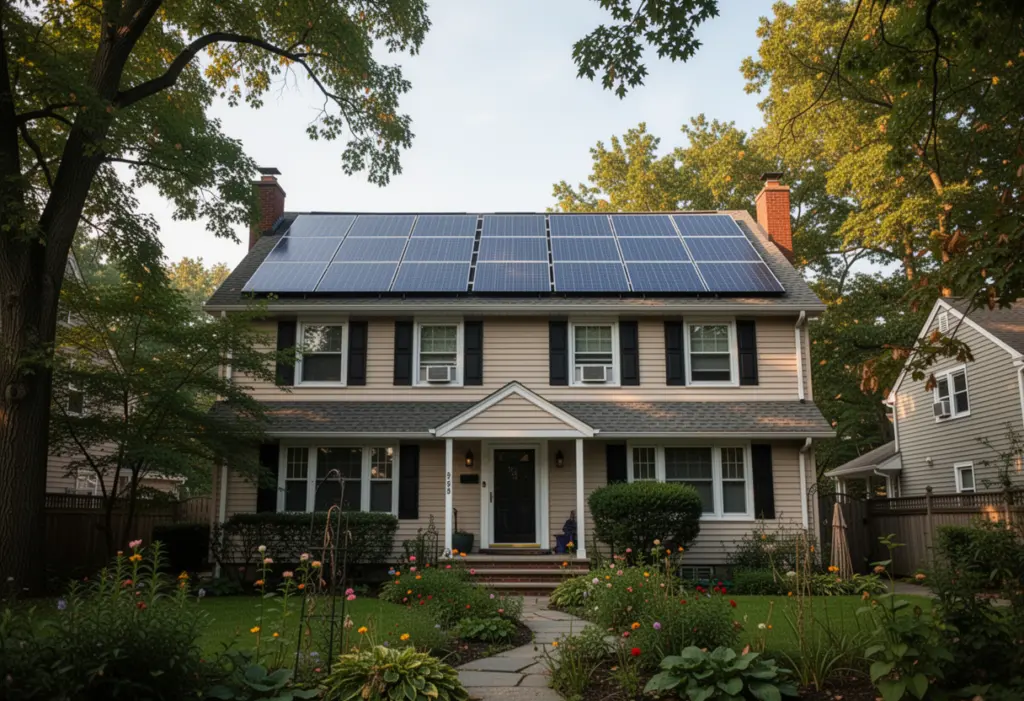
A solar lease buyout replaces a stream of monthly payments with ownership of the equipment on your roof. Whether that is a good trade depends on three things you can establish this week: what the contract says the buyout price is, what the remaining payments would total, and what you take on when the equipment becomes yours.
Start with the clause, not with a phone call
Buyout terms are written into the agreement, and they are not all the same shape. Some set a fixed schedule by year. Others set the price by a fair market value determination, sometimes with a valuation process attached. Some do not permit a buyout until a stated year at all. Reading the clause first changes the conversation with the provider from a negotiation you are improvising into a check on whether the figure quoted matches the contract you signed.
While you are in the document, find the escalator. Many leases raise the payment by a fixed percentage every year, which is what makes the remaining stream on a long agreement much larger than the current monthly payment suggests. Total the remaining payments with the escalator applied before comparing them to any buyout price.
What you inherit along with the panels
- Maintenance and repair. Under most leases the provider carries these. After a buyout they are yours, including the inverter, which is the component most likely to need replacing within the system’s life.
- Monitoring. Ask whether the monitoring platform continues, whether it costs anything, and whether the account transfers to you.
- Roof work. Removal and reinstallation for a re-roof is a real cost, and after a buyout it is your cost. If the roof is towards the end of its life, price that job before the buyout rather than after.
- Any production guarantee. It generally goes with the lease. Ask explicitly what survives.
The buyout and the tax questions
Two separate things get confused here. New York’s credit reaches leases and power purchase agreements of at least ten years on the taxpayer’s principal residence in New York — the ten-year minimum applies to the lease as well as to the PPA — where the $5,000 is a lifetime ceiling for that agreement rather than an annual amount, with no credit allowed after the fifteenth year. A second home, a seasonal property or a rental does not qualify however the system was paid for. That is the credit position while the agreement runs.
Whether a buyout payment is itself a qualifying expenditure for Form IT-255 is a different question, it depends on the facts of your agreement, and it is one for a tax preparer with the contract in front of them. Do not assume the answer in either direction from what you claimed while leasing, and do not accept a sales answer to a tax question.
What is certain is the federal position. Section 25D was terminated for expenditures made after 31 December 2025, with an expenditure treated as made when the original installation is completed, so nothing federal is available to you as a residential buyer in 2026. The federal benefit on a third-party-owned system belonged to the company that owned it, which is part of why the offer was priced the way it was — and it is not something a buyout transfers to you.
Selling the house is the other reason people ask
At a sale you have two routes: the buyer assumes the agreement, or you buy it out and convey the equipment with the house. The first depends on the buyer meeting the provider’s requirements, and it becomes a negotiation at the moment you have least leverage. The second has to clear a filing: a lessor or lender typically records a security interest in the equipment, and a title search will find it. It must be released or otherwise resolved before closing. Ask the provider for the payoff and release process in writing early, because the timeline is theirs, not yours.
The charge that does not change either way
The Customer Benefit Contribution is billed on the DC size of the array on systems interconnected on or after 1 January 2022, and it sits on the utility account rather than on the equipment’s owner. A 6.5 kW array in Central Hudson territory is 6.5 x $1.67 = $10.86 a month, roughly $130 a year, and it will read the same on your bill the month after a buyout as the month before. Rates are recalculated annually and are not locked in at interconnection.
What is still on the table in 2026
If the buyout goes ahead you own the system, so the property tax question becomes yours: RPTL 487 exempts the added value for 15 years, subject to the municipality, the county and the school district each not having opted out, and it requires construction before 1 January 2030 — for an existing array the exemption position was set when it was built, so ask your assessor what is already on the roll. Any NY-Sun incentive and the state sales tax exemption applied at installation rather than at buyout. Incentive levels and tax rules both move, so confirm the current position with NYSERDA and your assessor rather than with the provider selling you the buyout.
Frequently Asked Questions
How is a solar lease buyout price set?
By the contract. Some agreements set a fixed schedule by year, others use a fair market value determination, and some bar a buyout until a stated year. Read the clause before asking the provider for a figure.
What do I take on when I buy out the lease?
Maintenance and repair, including the inverter, monitoring arrangements, and removal and reinstallation costs if the roof is replaced. Any production guarantee usually ends with the lease, so ask what survives in writing.
Can I claim a tax credit on the buyout payment?
That depends on the facts of your agreement and is a question for a tax preparer with the contract in hand. Nothing federal is available to a residential buyer in 2026, because section 25D was terminated for expenditures made after 31 December 2025.
Do I have to buy out the lease to sell the house?
Not necessarily. A buyer can assume the agreement if they meet the provider's requirements. Otherwise you buy it out and clear the security interest recorded against the equipment, which a title search will find, before closing.
This article is general information, not tax, legal or financial advice. Incentive amounts, eligibility rules and deadlines change and depend on your utility, your tax situation and your property. Confirm current terms with NYSERDA, your utility and a qualified tax professional before making a decision.
NY Solar Incentives
Independent New York solar research. We summarise NYSERDA, NY-Sun and federal programme rules from published sources and state plainly when a figure is an estimate. We are not a government agency and do not sell equipment.
Run the arithmetic on your own system
Check the dated program table and your arrangement before counting an incentive. Standard residential NY-Sun blocks are closed; Long Island Affordable Solar has a conditional income-verification route. The NY credit depends on qualified costs and tax liability, while the NYC abatement reduces future property-tax bills. The estimator keeps those timings separate.