Battery Storage on Orange & Rockland: Is It Worth It
Under full retail-rate net metering, a home battery in Orange and Rockland territory is a resilience purchase rather than an economic one. That is not an argument against it.
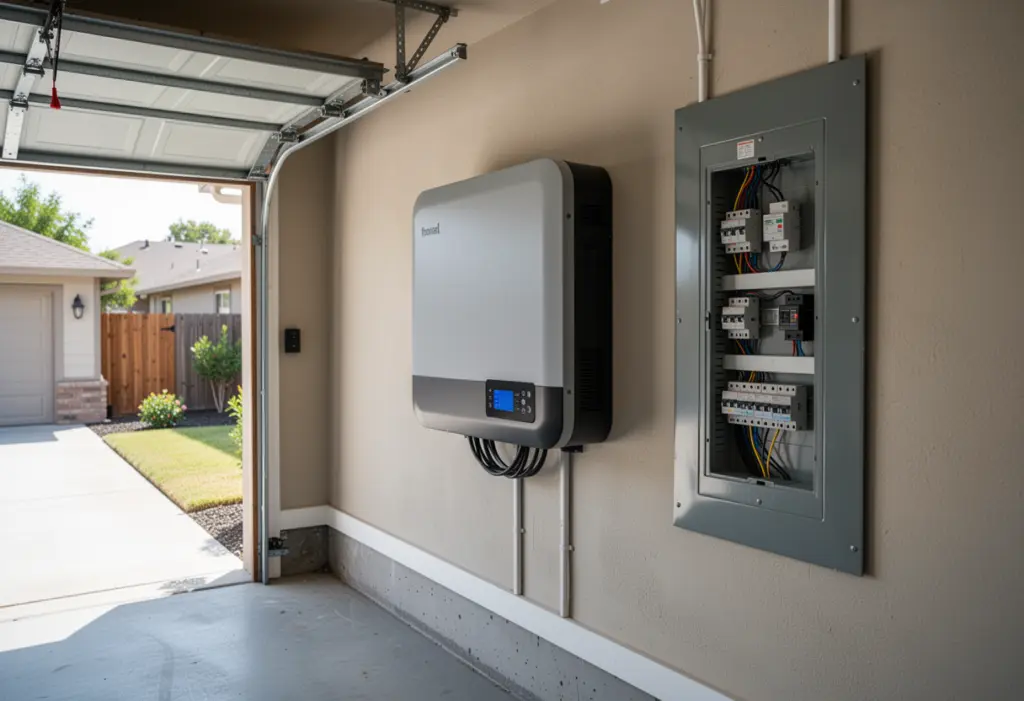
Here is the uncomfortable answer first. In Orange & Rockland territory, on Phase One net metering, a home battery does not pay for itself. It is a resilience purchase. That is a perfectly good reason to buy one — it is just a different reason from the one most proposals lead with.
Why the economics do not work here
The usual argument for storage is arbitrage: store cheap energy, use it when energy is expensive, or store your own production instead of exporting it for less than you would pay to buy it back.
New York’s Phase One net metering removes that gap. Exports are credited at the full retail rate, and the arrangement holds for 20 years from interconnection. The grid is already acting as a battery for you, at no capital cost, with no round-trip losses and no degradation. A physical battery competes against something it cannot beat on price.
If a proposal shows a battery paying for itself through savings on an O&R residential account, ask what rate it assumes for exports. That is where the assumption will be hiding.
What a battery does buy
Outage ride-through, and only for the circuits you wire to it.
This matters more in some places than others, and Rockland County is a reasonable place to want it. Heavy tree cover over distribution lines, storms coming up the Hudson corridor, and long single-feed runs in the hillier towns all produce the kind of multi-hour outage that a battery is genuinely good at. A grid-tied array without storage shuts down in an outage for the safety of line crews, which surprises many owners the first time it happens.
So the honest question is not whether a battery pays back. It is: how many hours of which loads do I want to keep running, and what is that worth to me? Answer it as a household, in loads — the well pump, the sump pump, the fridge, the boiler controls, one circuit of lights, the router — and then get it priced. A backup loads panel is part of that scope and is often quoted vaguely.
Four things to establish before you sign
- Which circuits are backed up, listed by name. Not the whole house. Whole-house backup is a much larger and more expensive design.
- Where the unit will sit. Garage and basement placements have different temperature, clearance and code implications, and the location affects both installation cost and battery life.
- Whether the sump pump is on the list. In a county with a river and a lot of basement mechanicals, an outage that takes out the sump pump is the failure people actually regret.
- Permit and inspection scope. Storage is a separate item for your village or town building department, and the same authority-having-jurisdiction question applies as for the array.
What the battery does not change on your bill
The Customer Benefit Contribution is charged on the DC size of the PV array, not on battery capacity. Adding storage to an existing 7.5 kW array does not raise the $7.50 a month, $90 a year, that array already pays on O&R at the 2026 residential rate of $1.00 per kW-month. That is one genuinely good piece of news in this article.
The 2026 tax position, stated carefully
The federal residential credit is gone. Section 25D was terminated for expenditures made after 31 December 2025, with an expenditure treated as made when the original installation is completed. Battery storage sat under that same section. Any 2026 quote showing 30 percent off a battery is wrong, and it is wrong by enough to change whether the purchase makes sense at all.
On the state side, New York’s credit on Form IT-255 is a solar energy system equipment credit — 25 percent capped at $5,000, for a principal residence. Whether, and to what extent, storage costs count as qualifying equipment is a question for the IT-255 instructions and your accountant, not for a salesperson with a spreadsheet. Ask for the battery to be priced as a separate line so that whatever the answer is, you can apply it.
2026 incentives, foregrounded for a storage decision
Nothing on the solar side changes the conclusion at the top of this page, and that is the point of putting it there. NY-Sun no longer reduces the solar price: as of September 2026 NYSERDA has no open NY-Sun block for homes in any utility territory; check NYSERDA’s NY-Sun dashboard for a new one. The state sales tax exemption applies to residential solar energy systems equipment, with localities separately electing on their own share. RPTL 487 exempts the added value for fifteen years where the municipality, county and school district have each not opted out, for systems constructed before 1 January 2030. None of those turn a resilience purchase into an investment. For the battery itself, NYSERDA runs a Residential Energy Storage incentive for a home battery of 25 kWh or less installed by a participating contractor; if yours offers it, have it shown as its own line and rerun the arithmetic. Buy the battery because you want the lights on, price it separately, and confirm the current incentive position with NYSERDA and the state tax department before you commit.
Frequently Asked Questions
Does a home battery pay for itself in Orange & Rockland territory?
Generally no. Phase One net metering credits exports at the full retail rate for 20 years, so the grid already banks your production at no capital cost. A battery is a resilience purchase.
Will my solar panels work in a power cut without a battery?
No. A grid-tied array shuts down during an outage for the safety of line crews. Backup power requires storage and a backup loads panel wired to specific circuits.
Does adding a battery increase my CBC charge?
No. The Customer Benefit Contribution is billed on the DC size of the PV array, not on battery capacity. A 7.5 kW array stays at $7.50 a month on O&R for 2026.
Is there still a 30% federal credit on battery storage?
No. Section 25D was terminated for expenditures made after 31 December 2025 and storage fell under it. A 2026 quote showing 30% off a battery is materially wrong.
This article is general information, not tax, legal or financial advice. Incentive amounts, eligibility rules and deadlines change and depend on your utility, your tax situation and your property. Confirm current terms with NYSERDA, your utility and a qualified tax professional before making a decision.
NY Solar Incentives
Independent New York solar research. We summarise NYSERDA, NY-Sun and federal programme rules from published sources and state plainly when a figure is an estimate. We are not a government agency and do not sell equipment.
Run the arithmetic on your own system
Check the dated program table and your arrangement before counting an incentive. Standard residential NY-Sun blocks are closed; Long Island Affordable Solar has a conditional income-verification route. The NY credit depends on qualified costs and tax liability, while the NYC abatement reduces future property-tax bills. The estimator keeps those timings separate.