Central Hudson Battery Storage: What Actually Changes
Central Hudson treats a home battery differently from solar panels on one specific line item -- the monthly CBC charge does not apply to storage. Here is what that means and what still has to go through the same interconnection process.
On this page 8 sections
- 01Why backup power matters more in this territory
- 02The one line item that does not apply to storage
- 03Interconnection: the same process, extended
- 04Net metering does not change because there is a battery
- 05Adding a battery to a system you already have
- 06Paying for the battery: a separate incentive, not a Central Hudson rebate
- 07What to check before you sign
- 08Frequently Asked Questions
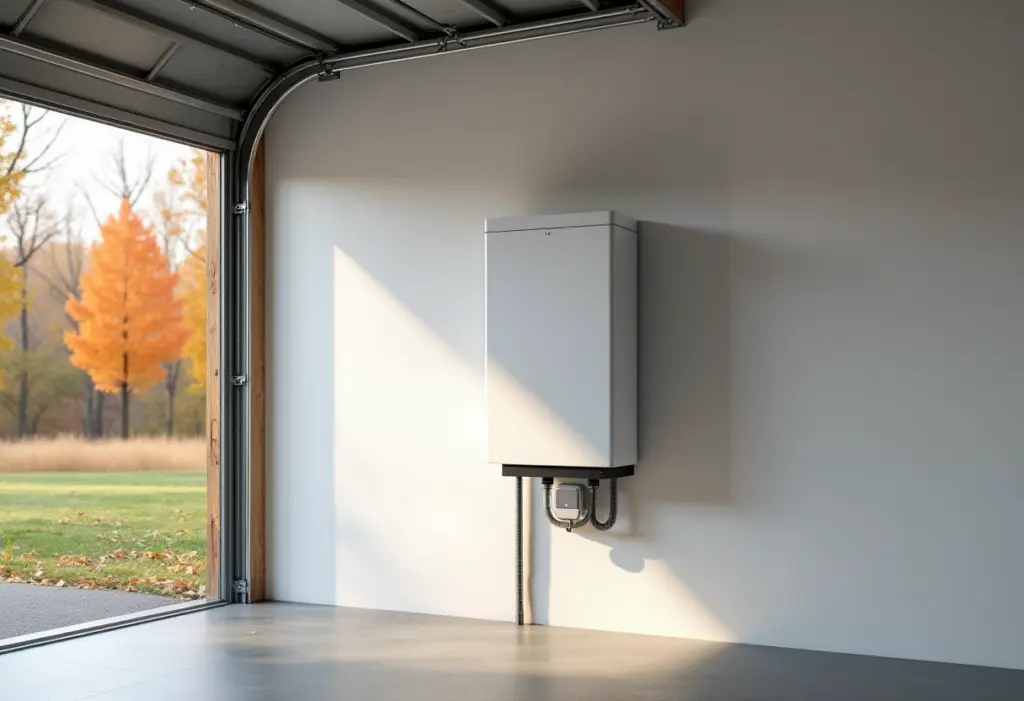
Adding battery storage to a Central Hudson account does not change how the utility treats your solar net metering, and it does not require a separate incentive application from Central Hudson itself. It does change one specific charge: the Customer Benefit Contribution that applies to solar generation does not apply to battery storage. That distinction is the part homeowners in Central Hudson’s territory most often get wrong when budgeting for a battery.
Central Hudson serves a service territory organized into five operating districts — Kingston, Catskill, Poughkeepsie, Fishkill, and Newburgh — covering roughly 315,000 electric customers across Dutchess, Orange, Ulster, Greene, and Columbia counties, plus parts of Albany, Sullivan, and northern Rockland. Everything below applies to that territory specifically, not to New York State generally.
Why backup power matters more in this territory
Much of Central Hudson’s territory is wooded and hilly rather than dense urban grid, running from the Hudson Valley up toward the Catskills and the edge of the Capital Region. That kind of terrain is more exposed to tree-related outages during storms than a tightly built-out city grid, which is part of why a battery’s backup function — keeping specific circuits powered through an outage — tends to carry more weight for households here than the export-credit side of the math. That is a reason to think through backup design carefully, not a promise about how often any individual home will lose power; outage frequency varies by exact location and grid segment, and Central Hudson does not publish a household-level number to plan around.
The one line item that does not apply to storage
Central Hudson’s own guidance for distributed generation customers is direct on this point: the CBC “is not applicable to commercial demand-metered customers with projects under 750 kW, battery storage, or projects compensated under Community Distributed Generation.” Solar panels installed on or after January 1, 2022 carry the CBC as a monthly per-kW-DC charge. A battery installed alongside that system, or added later, does not add to it.
That matters for anyone comparing quotes: a battery does not make the CBC bigger, because the CBC is calculated off the solar system’s capacity, not the household’s total behind-the-meter equipment. If an installer’s estimate shows the CBC increasing because a battery was added, that is worth asking about directly before signing.
Why the exemption exists
The CBC funds public benefit programs, and Central Hudson applies it specifically to behind-the-meter generation technologies — solar, wind, small micro-hydroelectric, fuel cells, micro-CHP, and anaerobic digesters. A battery does not generate electricity; it stores power that was either pulled from the grid or produced by a paired system that already carries its own CBC where one applies. Charging storage a second public-benefit contribution on top of that would tax the same underlying generation twice, which is consistent with the utility carving storage out explicitly rather than leaving the point ambiguous.
Interconnection: the same process, extended
Central Hudson follows the New York State Standardized Interconnection Requirements for systems up to 5 MW, and residential solar-plus-storage applications go through the same PowerClerk portal as solar alone. The broad sequence: review your usage history, understand the CBC as it applies to the solar portion, use a NYSERDA-approved contractor, secure local permits, submit the interconnection application, request the net meter installation once the system passes inspection, and receive Permission to Operate once final documents are accepted.
A standalone battery with no paired solar generation still goes through Central Hudson’s interconnection review if it can export power back to the grid, because the utility needs to know what is connected to its system regardless of whether that equipment ever earns a net metering credit.
Net metering does not change because there is a battery
Central Hudson’s residential net metering is a 20-year compensation arrangement: exported solar power offsets your usage in the same period, and any surplus banks forward to a future billing period. Adding a battery does not create a second, separate credit stream. The battery stores power behind the meter for the household’s own later use or for backup; only power that actually crosses the meter and goes onto Central Hudson’s grid earns a net metering credit. A well-managed battery can change how much a system exports in a given month simply by using more of what it generates on site — which can mean fewer banked credits, not more, if the household is drawing down stored power instead of pulling from the grid at night.
Paired versus standalone
A battery paired with an existing or new solar system rides on that system’s net metering agreement. A standalone battery with no solar has nothing to net meter in the first place — its value is entirely in shifting when the household draws from the grid and in backup power during an outage, not in exported credits.
Adding a battery to a system you already have
A household that installed solar first and adds a battery later is not starting from a blank interconnection file, but the battery is still new equipment that changes what is connected behind the meter, and Central Hudson’s interconnection review is built around what is actually connected, not only what was originally approved. Expect the contractor to handle an updated submission through the same PowerClerk process rather than treating the addition as invisible to the utility. The existing net metering agreement and its 20-year term are tied to the original solar interconnection and are not restarted by adding storage, but Central Hudson still needs an accurate record of the equipment on the account.
Paying for the battery: a separate incentive, not a Central Hudson rebate
Central Hudson does not run its own cash rebate for home batteries. The incentive path for a residential storage system in New York, including Central Hudson’s territory, runs through NYSERDA’s Residential Energy Storage Program, a declining-block incentive paid per kWh of installed capacity through the household’s contractor, with a materially higher rate for households at or below 80% of area median income. This site covers the mechanics and current block pricing of that program on its own; nothing about it is unique to Central Hudson beyond the fact that Central Hudson customers are eligible the same as anywhere else in the state outside Long Island, where storage incentives run through PSEG Long Island.
Because that incentive is structured in declining blocks — a set amount of funding released per block, at a rate that steps down once a block is claimed — the per-kWh rate a household qualifies for depends on when the application goes in relative to that block, not on anything Central Hudson controls. A contractor who has already worked NYSERDA storage applications in this territory will know which block is currently open; that is worth confirming directly rather than assuming the rate quoted six months ago still applies.
| Solar only | Solar plus battery | |
|---|---|---|
| CBC charge | Applies, based on system kW-DC | Same CBC on the solar portion; storage adds nothing to it |
| Interconnection | NYSSIR application via PowerClerk | Same application, extended to cover the storage equipment |
| Net metering credit | Earned on every exported kWh | Earned only on kWh that still reach the grid after the battery is charged |
| Incentive source | State solar incentives (NY-Sun has no open block for homes as of September 2026) | Separately, NYSERDA’s residential storage incentive |
What to check before you sign
- Whether the quoted CBC is based only on the solar system’s kW-DC, not inflated by the battery
- Whether the installer is submitting one combined interconnection application or two
- Whether the battery is being sized to reduce grid exports (lowering banked net metering credits) or primarily for backup power, since those are different design goals with different payback logic
- Whether the household’s income qualifies for the higher NYSERDA storage incentive tier before assuming the standard rate
- Whether adding storage to an existing solar system is being filed with Central Hudson as an interconnection update, not handled informally by the installer
- Whether the battery is sized against real backup needs — which circuits stay powered in an outage — rather than against a generic capacity number
None of this changes the core arithmetic of whether a battery is worth it for a given household — it changes which of the numbers on a quote are Central Hudson’s charges, which are the state incentive, and which are simply the cost of the equipment.
Frequently Asked Questions
Does adding a battery increase my Central Hudson CBC charge?
No. Central Hudson's own guidance states the CBC does not apply to battery storage. The CBC on a solar-plus-storage system is calculated from the solar system's capacity alone.
Does Central Hudson offer its own rebate for home batteries?
Not directly. The incentive for residential battery storage in Central Hudson's territory comes from NYSERDA's Residential Energy Storage Program, not from Central Hudson itself.
Does a battery earn its own net metering credits?
No. Only electricity that actually crosses the meter and goes onto Central Hudson's grid earns a net metering credit. A battery that stores power for later on-site use, instead of exporting it, does not generate a separate credit.
Does a standalone battery with no solar need to go through interconnection?
If the battery can export power back to the grid, yes — Central Hudson still needs to review and approve the interconnection, even though a battery with no paired solar has no net metering credits to earn.
Does adding a battery restart my 20-year net metering term?
No. The net metering agreement and its 20-year compensation term are tied to the original solar interconnection. Adding storage afterward does not reset that term, though Central Hudson still needs an accurate interconnection record of the added equipment.
NY Solar Incentives
Independent New York solar research. We summarise NYSERDA, NY-Sun and federal programme rules from published sources and state plainly when a figure is an estimate. We are not a government agency and do not sell equipment.
Run the arithmetic on your own system
Check the dated program table and your arrangement before counting an incentive. Standard residential NY-Sun blocks are closed; Long Island Affordable Solar has a conditional income-verification route. The NY credit depends on qualified costs and tax liability, while the NYC abatement reduces future property-tax bills. The estimator keeps those timings separate.