Battery Storage on a Time of Use Rate in New York
On a time of use rate, a home battery earns exactly one thing: the difference between the peak price and the off-peak price, on the kilowatt-hours it actually moves. Everything else is detail.
On this page 7 sections
- 01The arithmetic, and how to put your own figures into it
- 02The competition is net metering, and it pays full retail
- 03Questions that decide the outcome
- 04Shifting the load first costs nothing
- 05One monthly cost that time of use does not touch
- 06Incentives, and what they will and will not follow
- 07Frequently Asked Questions
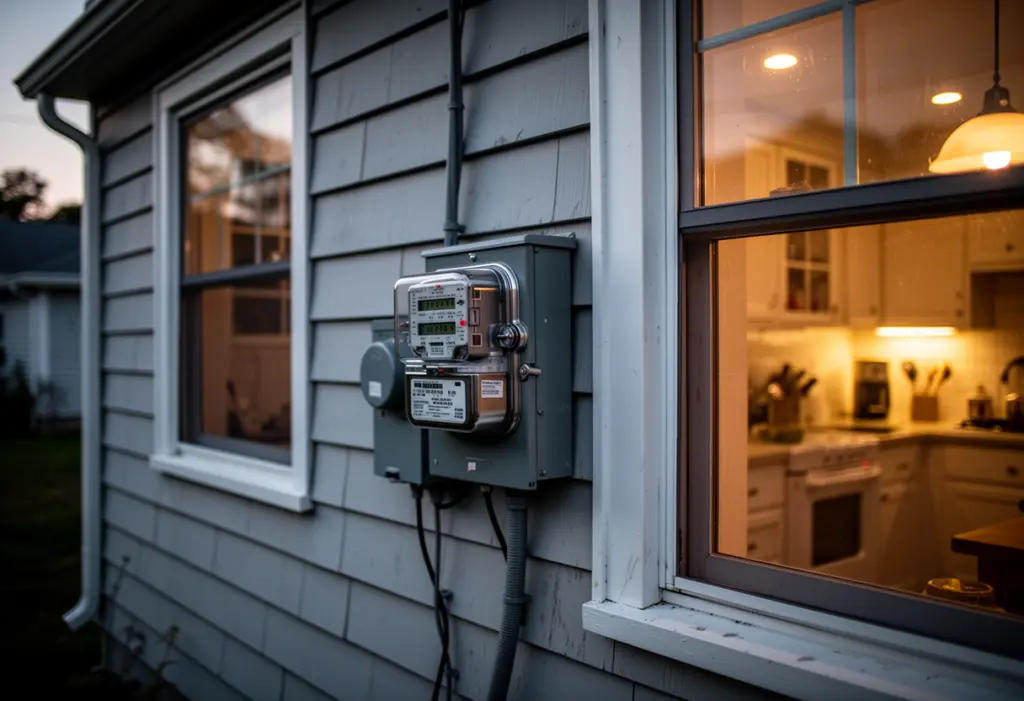
On a time of use rate a home battery earns exactly one thing: the gap between what a kilowatt-hour costs at peak and what it costs off peak, applied to the kilowatt-hours the battery actually moves. Everything else in a storage proposal is detail hanging off that number, and the number comes from your own tariff, not from a brochure.
The arithmetic, and how to put your own figures into it
Daily value is the spread, times the usable kilowatt-hours cycled, times round-trip efficiency. Take a usable capacity of 10 kWh and a round-trip efficiency of 90%, and suppose the spread on your rate schedule is 10 cents per kWh. That is 10 times 0.10 times 0.9, or about 90 cents a day, roughly $328 a year on those three invented inputs, and only if the battery is cycled every single day and the peak window is long enough to absorb the whole discharge.
Those are illustrative figures chosen to show the shape of the sum. They are not New York rates and should not be treated as any. Replace all three with numbers from your own rate schedule and your own equipment specification, and the answer will move a long way. If the honest spread on your tariff is small, no amount of storage capacity rescues it, because the spread is a multiplier on everything else.
The competition is net metering, and it pays full retail
Most residential rooftop customers in New York are on Phase One net metering, which credits exports at the full retail rate and holds that structure for 20 years from interconnection. That is a hard benchmark for a battery to beat. Shifting when you export earns nothing extra if every exported kilowatt-hour is already credited at retail.
So the question is not whether a battery helps under time of use pricing in the abstract. It is whether you are on a time of use tariff at all, and how that tariff values your exported energy at each hour. Ask your utility, in writing and against the rate schedule number printed on your bill, how export credits are valued under the specific time of use option you are considering. An installer’s summary of a tariff is not a tariff.
Questions that decide the outcome
- What are the exact peak hours, and do they differ by season? Winter and summer peaks in New York are not in the same place on the clock.
- How many hours does the peak window run? A battery that empties in two hours cannot serve a six-hour window, however large its capacity.
- Is there a separate demand component on the residential rate you are being moved onto?
- Can you leave the time of use rate if it turns out worse, and after how long?
- What does the system reserve for outage backup? Energy held back for resilience is energy that never earns a cent of spread.
Shifting the load first costs nothing
Before buying storage to shift load, shift the load. A dishwasher timer, a delayed laundry cycle and an EV charger scheduled to start after the peak window closes move real kilowatt-hours out of the expensive hours for the price of setting a clock. A battery does the same job for the loads you cannot reschedule, which in most houses is a much smaller list than people expect. Work out which loads those actually are before sizing anything.
One monthly cost that time of use does not touch
The Customer Benefit Contribution is charged on the DC size of the array, every month, regardless of production or of when you consume, on systems interconnected on or after 1 January 2022. A system interconnected before that date does not pay it at all. A 9 kW array on Con Edison at $1.29 per kW-month is $11.61 a month, about $139 a year. The same array on National Grid at $0.97 is $8.73 a month. Moving to a time of use rate does not change that line, and neither does the battery. Community solar subscribers pay no Customer Benefit Contribution at all, which is worth knowing if the reason you are looking at storage is a bill you cannot get down any other way.
Incentives, and what they will and will not follow
Nothing federal follows a battery bought in 2026. The 30% residential credit under section 25D was terminated for expenditures made after 31 December 2025, with the expenditure treated as made when the original installation is completed, so there is no federal line to put on this purchase and no phase-down behind it.
What remains in New York attaches to the equipment rather than to the tariff strategy. The 25% state credit on Form IT-255 is capped at $5,000, applies to solar energy system equipment at your principal residence, and is limited by your New York State tax liability in the year you claim it, though unused credit carries forward for up to five years. The state sales tax exemption on residential solar equipment and its installation means no state sales tax is added to the invoice, and localities may separately elect to exempt their local share, so the total differs by county and city. NY-Sun, which used to come off the price through the contractor, is not available. As of September 2026 NYSERDA has no open NY-Sun block for homes in any utility territory; check NYSERDA’s NY-Sun dashboard for a new one. For the battery itself, NYSERDA offers incentives through its Residential Energy Storage Program for home batteries installed by approved contractors, and on Long Island through PSEG Long Island; check its current terms before sizing anything. Time of use tariffs are revised, and the Customer Benefit Contribution is recalculated annually, so whatever spread makes this work today should be re-checked against your rate schedule each year rather than assumed to hold.
Frequently Asked Questions
How do I work out what a battery earns on a time of use rate?
Multiply the peak to off-peak spread by the usable kilowatt-hours cycled and by round-trip efficiency. Take the spread from your own rate schedule. If the spread is small, no amount of capacity fixes it, because it multiplies everything else.
Does time of use pricing beat net metering?
Phase One net metering already credits exports at the full retail rate for 20 years from interconnection, so shifting export timing earns nothing extra by itself. Ask the utility in writing how exports are valued under the specific time of use option.
Is there a cheaper way to avoid peak pricing?
Yes, for anything you can reschedule. A dishwasher timer, delayed laundry and an EV charger set to start after the peak window move real kilowatt-hours for the price of setting a clock. Storage is for the loads you cannot move.
Does a time of use rate change my monthly solar charges?
No. The Customer Benefit Contribution is billed on DC array size regardless of when you use power, and only on systems interconnected on or after 1 January 2022. A 9 kW array on Con Edison at $1.29 per kW-month is $11.61 monthly, about $139 a year, on any rate.
This article is general information, not tax, legal or financial advice. Incentive amounts, eligibility rules and deadlines change and depend on your utility, your tax situation and your property. Confirm current terms with NYSERDA, your utility and a qualified tax professional before making a decision.
NY Solar Incentives
Independent New York solar research. We summarise NYSERDA, NY-Sun and federal programme rules from published sources and state plainly when a figure is an estimate. We are not a government agency and do not sell equipment.
Run the arithmetic on your own system
Check the dated program table and your arrangement before counting an incentive. Standard residential NY-Sun blocks are closed; Long Island Affordable Solar has a conditional income-verification route. The NY credit depends on qualified costs and tax liability, while the NYC abatement reduces future property-tax bills. The estimator keeps those timings separate.