When Solar Needs an Electrical Panel Upgrade in New York
Whether solar needs a panel upgrade comes down to one code rule and a handful of amp ratings, not a guess. Here is how to know before a quote surprises you.
On this page 9 sections
- 01Why solar interacts with the panel at all
- 02The rule that actually decides it: NEC 705.12(D)
- 03The other way in: a supply-side, or line-side, tap
- 04What the 120% math actually looks like
- 05What actually pushes a system over the line
- 06Warning signs before you even get a quote
- 07What an upgrade adds to the project, beyond cost
- 08What to ask before you sign
- 09Frequently Asked Questions
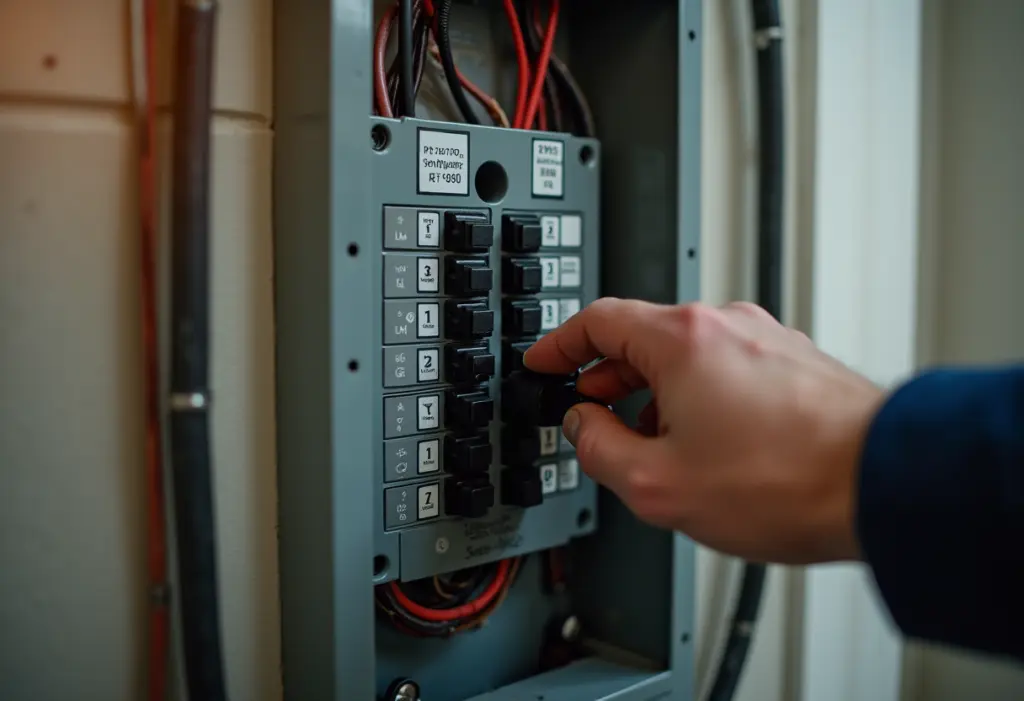
Not every solar installation needs a new electrical panel. Whether yours does comes down to one specific rule in the National Electrical Code, plus how much room is actually left on the panel already on the wall — not a guess, and not something that should surprise a homeowner for the first time when a quote arrives.
The short version: a panel upgrade becomes necessary when adding solar would push the total current the panel could see past what its busbar is rated to carry safely, and it becomes far more likely once a battery, an EV charger or a heat pump is added into the same electrical picture.
Why solar interacts with the panel at all
A grid-tied solar system with battery backup, or one connected through a standard backfeed breaker, adds its own source of current onto the same busbar the main breaker already feeds from the utility. The panel was sized, when it was installed, around what the main breaker alone would ever push through it. Adding a second source of current onto that same busbar is the reason code has a specific rule governing how much can be added before the busbar itself is considered overloaded, regardless of whether any individual breaker ever trips.
The rule that actually decides it: NEC 705.12(D)
For a solar system connected through a breaker on the load side of the panel — the common, lower-cost method — the National Electrical Code’s 705.12(D) sets what installers call the 120% rule: the main breaker’s rating plus the solar breaker’s rating cannot exceed 120% of the busbar’s own rating. A 200-amp busbar, for example, has headroom under that formula for a meaningfully sized solar breaker on top of its 200-amp main breaker; a 100-amp busbar with a 100-amp main breaker has very little room left before the same math is exceeded.
This is a busbar limit, not a question of how much power the panel’s individual breaker slots can physically hold. A panel can look like it has open slots and still fail the 120% calculation, and an installer who is following code will not backfeed past that limit regardless of how the panel looks.
The other way in: a supply-side, or line-side, tap
The 120% rule applies specifically to a load-side connection. A supply-side (also called line-side) tap connects the solar system’s conductors ahead of the main breaker instead of behind it, which puts the connection outside the busbar-loading calculation the 120% rule governs. It is a recognized, code-compliant alternative precisely for panels that would otherwise fail the busbar math, and on some homes it avoids a panel upgrade that a load-side connection would have required. It is not automatically available on every service — the physical layout of the meter and service equipment has to allow it, and it is a decision for a licensed electrician evaluating the specific panel, not a default assumption to bring to a quote conversation.
| Method | Where it connects | Subject to the 120% rule |
|---|---|---|
| Load-side breaker | Behind the main breaker, on the existing busbar | Yes |
| Supply-side (line-side) tap | Ahead of the main breaker | No — different code section applies |
What the 120% math actually looks like
The rule is arithmetic, not a judgment call, so it is worth seeing worked once. On a 200-amp panel with a 200-amp main breaker, 120% of the busbar rating is 240 amps — subtract the 200-amp main breaker and there is 40 amps of headroom left on the busbar for a solar breaker. On a 100-amp panel with a 100-amp main breaker, 120% of the busbar is only 120 amps, and subtracting the 100-amp main breaker leaves just 20 amps of headroom. The smaller the original service, the less room the same rule leaves, which is exactly why older, lower-amperage services run out of headroom so much faster than a modern 200-amp panel does — the percentage is the same, but it is a percentage of a much smaller number.
| Panel and main breaker | 120% of busbar rating | Headroom left for a solar breaker |
|---|---|---|
| 100 A panel, 100 A main breaker | 120 A | 20 A |
| 150 A panel, 150 A main breaker | 180 A | 30 A |
| 200 A panel, 200 A main breaker | 240 A | 40 A |
An installer still has to convert that amp headroom into an actual allowable solar breaker size and inverter output using the code’s own continuous-current factors, so treat this table as showing why the room shrinks on smaller services, not as a substitute for the installer’s own calculation on your specific panel.
What actually pushes a system over the line
Solar alone, on a modern 150-amp or 200-amp panel with open breaker capacity, frequently fits within the 120% rule without any upgrade at all. The homes that end up needing one usually have one of these on top of the panel’s existing load:
- An older service rated at 100 amps or less, especially a fuse box or a panel installed before the home’s electrical demand grew to include central air, an electric range, or other large modern loads.
- A home battery added alongside solar, which brings its own charge and discharge current into the same calculation.
- An EV charger, particularly a Level 2 unit, added at the same time as solar or planned for the near future.
- A heat pump replacing a fossil-fuel furnace or boiler, which is one of the more common reasons a panel that was fine for solar alone stops being fine once electrification is added to the same project.
Each of these adds its own current draw to the same busbar the solar breaker would also be on, so a homeowner planning more than solar alone should have the installer run the 120% calculation against the full combination, not against solar in isolation.
Warning signs before you even get a quote
A few things are worth checking, or asking an electrician to check, before assuming solar will be a simple add-on: a main service rated at 100 amps or below, a panel with no open breaker slots at all, a fuse-based system rather than circuit breakers, and a panel brand that has a known history of failing to trip properly under fault conditions — a licensed electrician or a home inspector can identify this on sight, and it is worth flagging regardless of solar, since it is a safety issue in its own right rather than only an obstacle to installation.
What an upgrade adds to the project, beyond cost
A panel upgrade is not only a materials-and-labor line item. It typically requires its own permit and inspection, separate from the solar permit, and depending on the utility it can require a formal service change application before the utility will schedule the meter work the upgrade depends on. That coordination step is where most of the added time sits — the physical panel swap itself is usually a single day’s work, but the utility’s own scheduling queue for the meter portion is not something the installer controls, in the same way permission-to-operate scheduling for the solar system itself is not.
Practically, that means a project that needs a panel upgrade should be planned with real slack in the timeline between signing a contract and expecting the system to be energized — folding a panel upgrade into an already-tight schedule is one of the more common reasons an installation date slips.
What to ask before you sign
Ask the installer directly whether their proposal includes the panel’s existing busbar rating and the specific 120% calculation for the exact system size being proposed — not a general statement that the panel is fine. If a battery, an EV charger or a heat pump is even a near-term possibility, say so before the design is finalized, since a panel that passes the calculation for solar alone can fail it the moment a second source or a large new load is added later, and it is far cheaper to size the panel correctly once than to revisit it in two years.
Frequently Asked Questions
Does every solar installation in New York need a panel upgrade?
No. Whether a panel upgrade is needed depends on the panel's own busbar rating compared against the main breaker and the proposed solar breaker under the National Electrical Code's 705.12(D), the '120% rule.' Many homes with a modern 150-amp or 200-amp panel and open capacity do not need one for solar alone.
What is the 120% rule for solar panels?
It is the National Electrical Code's limit, under section 705.12(D), on how much current a busbar-connected breaker can add to a panel: the main breaker's rating plus the solar breaker's rating cannot exceed 120% of the busbar's own rating. It applies to a load-side solar connection, which is the common, lower-cost way to interconnect.
Is there a way to add solar without a panel upgrade even if the 120% rule fails?
Sometimes. A supply-side, or line-side, tap connects the solar system's conductors ahead of the main breaker instead of behind it, which is not subject to the 120% busbar calculation. Whether it is physically possible depends on the layout of the meter and service equipment, and it is a determination for a licensed electrician evaluating the specific home.
What commonly pushes a home over the 120% limit even when solar alone would have fit?
Adding a home battery, an EV charger, or a heat pump alongside solar. Each adds its own current draw to the same busbar the solar breaker sits on, so a project planning more than solar alone should have the installer run the calculation against the full combination, not solar in isolation.
NY Solar Incentives
Independent New York solar research. We summarise NYSERDA, NY-Sun and federal programme rules from published sources and state plainly when a figure is an estimate. We are not a government agency and do not sell equipment.
Run the arithmetic on your own system
Check the dated program table and your arrangement before counting an incentive. Standard residential NY-Sun blocks are closed; Long Island Affordable Solar has a conditional income-verification route. The NY credit depends on qualified costs and tax liability, while the NYC abatement reduces future property-tax bills. The estimator keeps those timings separate.