Central Hudson Solar Rebate: What New York Homeowners Get
Central Hudson does not cut a rebate cheque for solar. The real savings on a Hudson Valley system come from NY-Sun, a state tax credit, and two property-tax breaks — here is how to verify each one on your own quote.
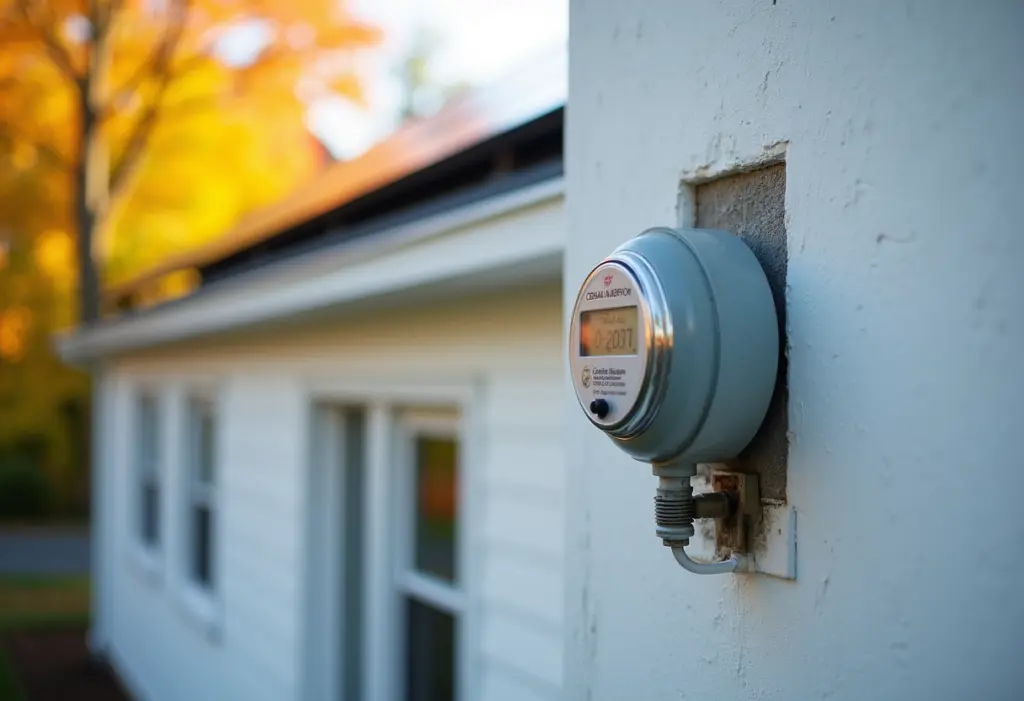
Start with the answer, because it saves a phone call: Central Hudson does not pay a residential solar rebate. There is no utility cheque, no bill credit for installing, and no Central Hudson form to fill in. What the utility does is process your interconnection application, apply net metering to your exports, and bill you a monthly capacity charge afterward. If a Hudson Valley proposal shows a line labelled a “Central Hudson rebate,” ask the installer to name the actual programme and the body that administers it. That single question tells you whether you are looking at a real incentive or a sales label stitched onto someone else’s money.
It also matters what is not on that list anymore. The 30% federal residential clean energy credit was terminated for expenditures made after 31 December 2025, so a Central Hudson-area homeowner buying a system in 2026 claims nothing federally. What is left is entirely state and local, and it stacks in a specific order rather than as one lump sum.
Where the reduction actually comes from
NY-Sun is the state programme, administered by NYSERDA; when a block for homes is open, it is applied through your installer as a reduction on the contract price before you ever see a number. You do not apply for it directly and you never receive it as a payment. Its size depends on your system size and on your region’s incentive block: NY-Sun is structured as a megawatt block programme, and the per-watt amount steps down as each regional block fills. That is deliberate design, meant to shrink the incentive as the market matures, so a figure a neighbour quoted a year or two ago is not one you can rely on today. As of September 2026 NYSERDA has no open NY-Sun block for homes in any utility territory; check NYSERDA’s NY-Sun dashboard for a new one. If a proposal shows a NY-Sun figure anyway, ask your installer to name the block and the exact per-watt figure it produces, in writing, rather than accepting a remembered number from an earlier job.
If a NY-Sun reduction appears at all, ask for two numbers, not one: the contract price before any incentive, and the NY-Sun reduction shown as its own line. A quote that only shows the net price after the incentive is already applied hides whether the reduction reached you in full, or was quietly absorbed into a higher price ahead of it.
Households below 80% of area median income could also qualify for NY-Sun’s Affordable Solar incentive, a total of $0.80 per watt in NYSERDA’s Upstate (“Rest of State”) region, which includes Central Hudson’s territory. That block ran from December 18, 2025 to March 9, 2026 and has closed, so it is not available on a contract signed now unless NYSERDA opens a new one. It was contractor-applied, which in practice meant the customer usually had to raise it and ask to be screened; if a new block opens, a salesperson who never asks about household income will not apply it on their own — it is not automatic, and it does not appear on a standard proposal template.
The credit you claim yourself
New York’s solar energy system equipment credit is 25% of qualified expenditures, capped at $5,000, claimed on Form IT-255. The cap is the number worth doing arithmetic on: 25% of $20,000 is exactly $5,000, so every dollar of system price above roughly that point earns nothing further from this specific credit.
- It is not refundable, but unused amounts carry forward for up to five years.
- It is limited by your actual New York State tax liability for the year you claim it.
- The equipment must be installed and used at your principal residence in New York — a weekend house in the Catskills or a rental property does not qualify.
- It does reach leases and power purchase agreements, but only where the agreement runs ten years or more. A shorter lease does not qualify no matter how the salesperson describes it.
Keep the closing statement, the executed contract and the installer’s certification of completion together. Nothing on this list arrives automatically — each one is claimed on paper, and the paper is what a preparer or an auditor will ask for later.
The two property-tax breaks
Two more incentives reduce cost without ever appearing as cash in hand, and both depend on exactly where in Central Hudson’s territory the home sits:
| Incentive | What it does | The catch |
|---|---|---|
| State sales tax exemption | Removes the 4% New York State sales tax (and the MCTD tax) on residential solar equipment and installation | The local share is exempt only where the county or city has enacted the exemption (Publication 718-S lists which have; Putnam and Sullivan counties, for example, still charge their 4% local rate), so the total exemption is not identical in every Hudson Valley town |
| RPTL 487 | A 15-year exemption on the added property-tax value the system creates | Requires the city, town or village, the county, and the school district to each not have opted out — three separate checks, not one — and the system must be constructed before 1 January 2030 |
A contractor rarely checks RPTL 487 for you. Look up your specific municipality and school district against the New York State Department of Taxation and Finance’s published list of local opt-outs before you sign, not after. A town that participates does not guarantee its school district does, and Central Hudson’s territory spans dozens of small municipalities in Dutchess, Ulster, Orange and several neighbouring counties, each with its own answer.
Reading a proposal that shows a rebate line
Three questions do most of the work when a Central Hudson-area quote claims a rebate:
- Is the NY-Sun figure already deducted from the price, or presented as something arriving later? As of September 2026 there should be no NY-Sun figure on a home proposal at all, because no block for homes is open. When a block is open, it is a price reduction applied before the contract is signed, so a proposal that shows it as a future payment to you does not have an accurate net cost.
- Is a federal credit folded into the same line as a state incentive? The federal residential credit no longer exists for 2026 purchases, so any proposal that still nets one in against your price is using a figure that is not available to you. The remaining programmes are separate, with separate rules, and combining them into one number makes it impossible to check any of them individually.
- Does the installer name the exact programme, in writing? “Solar rebate” is not a programme name. “NY-Sun megawatt block incentive” or “New York State solar energy system equipment credit” are, and each has its own paperwork trail you can verify independently against a state or NYSERDA source rather than the installer’s own summary sheet.
What Central Hudson itself actually handles
The utility’s own role is narrower than the incentive stack above, and it runs on a separate timeline. Central Hudson processes the interconnection application that lets your system connect to the grid, applies net metering credits to your monthly export once the system is live, and adds a capacity-related charge to your bill afterward.
Before any of that, the system has to clear permission to operate — Central Hudson’s own authorisation to energise and export, separate from the municipal electrical inspection that comes before it. The sequence runs: installation completed, municipal electrical inspection (and any re-inspection after a correction), the completion certificate filed with Central Hudson, a meter exchange or reprogramming, and only then PTO. Exporting before that authorisation risks the interconnection agreement itself, and any production generated during the wait is simply lost, not banked. In parts of the mid-Hudson service area — Kingston, Rhinebeck, New Paltz, Hyde Park and a number of surrounding villages — historic-district review can add a step before installation even begins, so a homeowner in one of those places should ask about that review specifically, before assuming the delay is on Central Hudson’s side of the process.
None of this is a rebate. It is the mechanics of being allowed to generate and export power at all, and confusing it with an incentive is how a homeowner ends up expecting money that was never coming from the utility in the first place.
How the pieces actually stack, in order
Take a hypothetical $24,000 system, just to see how the pieces interact rather than to predict your own price. NY-Sun would apply first, at the contract, as a per-watt reduction your installer subtracts before you sign — but with no block for homes open as of September 2026, it is $0 on a contract signed now. The sales tax exemption applies at purchase: no state sales tax is added to the contract price, and no local tax either where the county has enacted the exemption. Form IT-255 comes last, filed on your state return the following spring, calculated as 25% of what you actually paid, capped at $5,000. RPTL 487, if your municipality, county and school district all qualify, does not reduce the purchase price at all — it only prevents the system from raising your assessed value for 15 years. Stack them out of order, or treat any two as the same pot, and the arithmetic stops matching what actually lands on your bank statement.
Frequently Asked Questions
Does Central Hudson pay homeowners a solar rebate?
No. Central Hudson does not issue a rebate cheque or bill credit for installing solar. A NY-Sun reduction on a quote comes from NYSERDA, applied through the installer, not from the utility itself — and as of September 2026 NYSERDA has no open NY-Sun block for homes in any utility territory.
What is the largest solar incentive available to a Central Hudson customer?
For most 2026 purchases it is the New York State solar energy system equipment credit: 25% of qualified cost, up to $5,000, claimed on Form IT-255 — not refundable, though unused credit carries forward up to five years. NY-Sun, which installers applied directly to the contract price, has no open block for homes as of September 2026; check NYSERDA's NY-Sun dashboard for a new one.
Can I claim the New York State solar tax credit on a second home in the Hudson Valley?
No. Form IT-255's 25% credit, capped at $5,000, applies only to equipment installed and used at your principal residence in New York. A second home or rental property does not qualify.
Does RPTL 487 automatically apply to every Central Hudson-area home with solar?
No. It requires the city, town or village, the county, and the school district to each not have opted out, and the system must be constructed before January 1, 2030. Check your specific municipality and school district before assuming it applies, and file form RP-487 with your assessor by the taxable status date (March 1 in most towns) — the exemption is not granted without the application.
NY Solar Incentives
Independent New York solar research. We summarise NYSERDA, NY-Sun and federal programme rules from published sources and state plainly when a figure is an estimate. We are not a government agency and do not sell equipment.
Run the arithmetic on your own system
Check the dated program table and your arrangement before counting an incentive. Standard residential NY-Sun blocks are closed; Long Island Affordable Solar has a conditional income-verification route. The NY credit depends on qualified costs and tax liability, while the NYC abatement reduces future property-tax bills. The estimator keeps those timings separate.