Solar Price Increases After Tariffs in New York
When a salesperson says tariffs are about to push your solar price up, the honest response is to ask which line moves and by how much. The far larger 2026 price change already happened, and it happened in the tax code.
On this page 7 sections
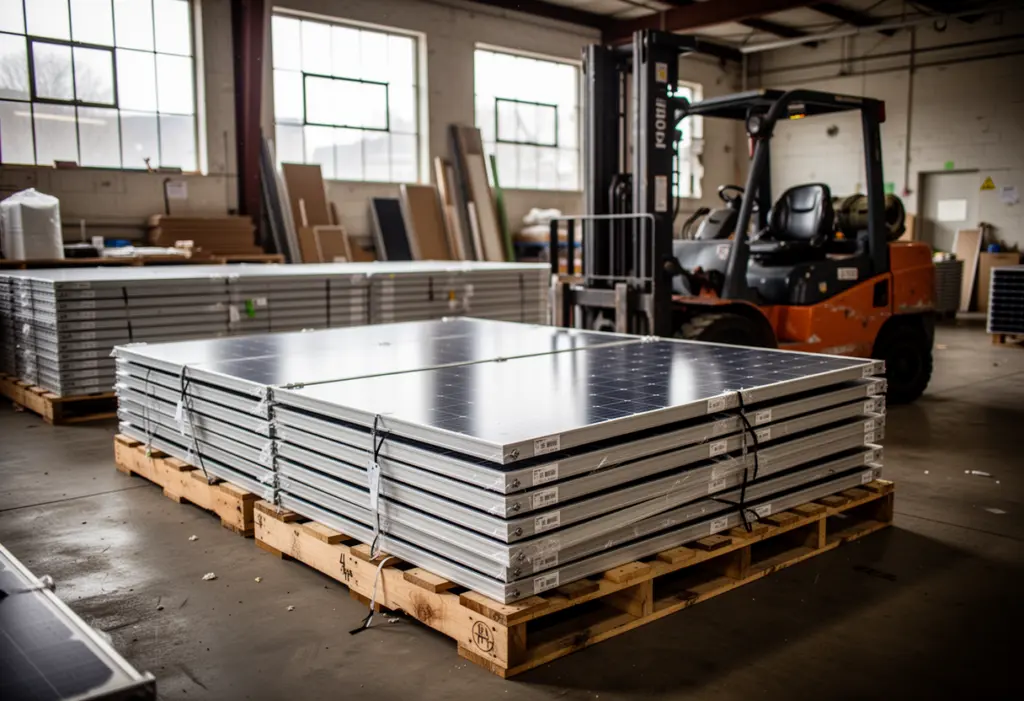
If you are told that tariffs are about to push the price of your system up and that signing this week protects you, the useful response is a question rather than a decision: which line in the quote moves, by how much, and can you show me the same system priced both ways? A price rise that appears only in the total and in none of the lines is a sales technique, not a supply chain event.
The larger 2026 price change was not a tariff
For a New York homeowner buying a system this year, the biggest single change to the net cost has nothing to do with import pricing. The 30% federal residential credit is gone. Section 25D was terminated for expenditures made after 31 December 2025, with an expenditure treated as made when the original installation is completed. Nothing in component pricing moves a net cost the way losing that line does, and any component-cost argument made alongside a quote that still shows a 30% federal credit is arguing about the small number while the large one is wrong.
What is actually exposed to component pricing
Only part of a residential quote is hardware bought on a world market. Modules, cells, inverters, batteries and the aluminium and steel in the racking are exposed. These are not:
- Labour, which is priced locally and does not move with an import cost at all.
- Permitting and inspection fees, set by your authority having jurisdiction.
- Interconnection application costs and any utility-side work.
- Sales and marketing overhead, including the cost of the lead that produced your appointment.
- Dealer fees inside financed offers, which are a finance cost wearing a hardware price.
- Roof repair, structural work and electrical service upgrades.
Because a large share of the total sits in that second list, a change in hardware input costs does not move the bottom line proportionally. Somebody quoting a percentage increase on the whole system from a percentage change in module pricing is doing arithmetic that does not follow.
How to test a claimed increase in ten minutes
- Ask for the quote itemised, with module make, model, rated wattage and count, and the inverter make and model. Then ask what the same system costs with an alternative module the installer also carries.
- Ask for the increase in dollars per watt, not as a percentage of the job. Divide the total by the DC watts yourself and compare the before and after figures.
- Ask when the price actually changes and what document sets it. A distributor price list has a date on it.
- Ask for the offer to be held in writing for a week. A genuine cost movement survives seven days; a deadline invented for the appointment does not.
This site does not publish a current price per watt, because a figure quoted today is stale by the time you read it and a stale number is worse than none. Collect three quotes, convert each to dollars per watt yourself, and compare like with like — same DC size, same equipment tier, same scope of roof and electrical work.
One incentive really does step down over time
There is a legitimate version of the shrinking-window argument, and it is not about tariffs. NY-Sun is structured as a megawatt block. Each region has capacity blocks, and the per-watt incentive steps down as each block fills — the programme is designed to phase out as the market matures. For homes it has run its course: the last standard residential blocks closed on 29 May 2025 in Con Edison territory, on 17 December 2025 Upstate and on 17 April 2016 on Long Island. As of September 2026 NYSERDA has no open NY-Sun block for homes in any utility territory; check NYSERDA’s NY-Sun dashboard for a new one. If a salesperson says a block is about to close, check that dashboard yourself on the day rather than accepting a number from a slide.
The cost that no tariff touches
Whatever happens to hardware, the Customer Benefit Contribution continues, and it is charged on the DC size of the array regardless of what the array produces, on systems interconnected on or after 1 January 2022. A 9 kW system on NYSEG pays 9 x $1.19 = $10.71 a month, roughly $128 a year. That matters here because the standard response to a feared price rise is to buy a bigger array now — which permanently raises this charge, and raises it whether or not the extra capacity ever earns anything. Rates are reset annually and are not fixed at interconnection.
What to hold on to while prices move
New York State still offers 25% of qualified expenditure capped at $5,000 on Form IT-255 for a principal residence, and it still reaches leases and PPAs of ten years or more. The state sales tax exemption on residential solar equipment still applies, with your locality deciding its own share separately. RPTL 487 still exempts the added value from property tax for 15 years where the municipality, county and school district have each not opted out, and only for a system constructed before 1 January 2030. None of those move with import pricing — which is exactly why they, rather than a rumoured hardware increase, should drive when you sign. Confirm each with NYSERDA, the Department of Taxation and Finance and your assessor before committing.
Frequently Asked Questions
Do tariffs raise the price of a residential solar system in New York?
Hardware such as modules, inverters, batteries and racking metal is exposed to import pricing, but labour, permitting, interconnection, sales overhead and electrical work are not. A hardware input change does not move the total proportionally.
How do I check whether a claimed price increase is real?
Ask for the quote itemised with module and inverter model numbers, ask for the increase in dollars per watt rather than as a percentage of the job, ask what dated document sets the new price, and ask for the offer to be held in writing for a week.
Is there any genuine reason to move quickly?
Not from NY-Sun. It is structured as megawatt blocks and the per-watt incentive stepped down as each regional block filled, but every residential block has now closed. As of September 2026 NYSERDA has no open NY-Sun block for homes in any utility territory; check NYSERDA’s NY-Sun dashboard for a new one.
Should I buy a larger system now to beat future price rises?
Be careful. The Customer Benefit Contribution is billed on DC size regardless of production, so a 9 kW array on NYSEG costs 9 x $1.19 = $10.71 a month, about $128 a year, whether or not the extra capacity earns anything.
This article is general information, not tax, legal or financial advice. Incentive amounts, eligibility rules and deadlines change and depend on your utility, your tax situation and your property. Confirm current terms with NYSERDA, your utility and a qualified tax professional before making a decision.
NY Solar Incentives
Independent New York solar research. We summarise NYSERDA, NY-Sun and federal programme rules from published sources and state plainly when a figure is an estimate. We are not a government agency and do not sell equipment.
Run the arithmetic on your own system
Check the dated program table and your arrangement before counting an incentive. Standard residential NY-Sun blocks are closed; Long Island Affordable Solar has a conditional income-verification route. The NY credit depends on qualified costs and tax liability, while the NYC abatement reduces future property-tax bills. The estimator keeps those timings separate.