Solar Panels on a Slate Roof in New York: What to Ask
On a slate roof the panels are the easy part. The attachment method and the trade doing the work decide whether the project is sensible, and both are questions you have to ask first.
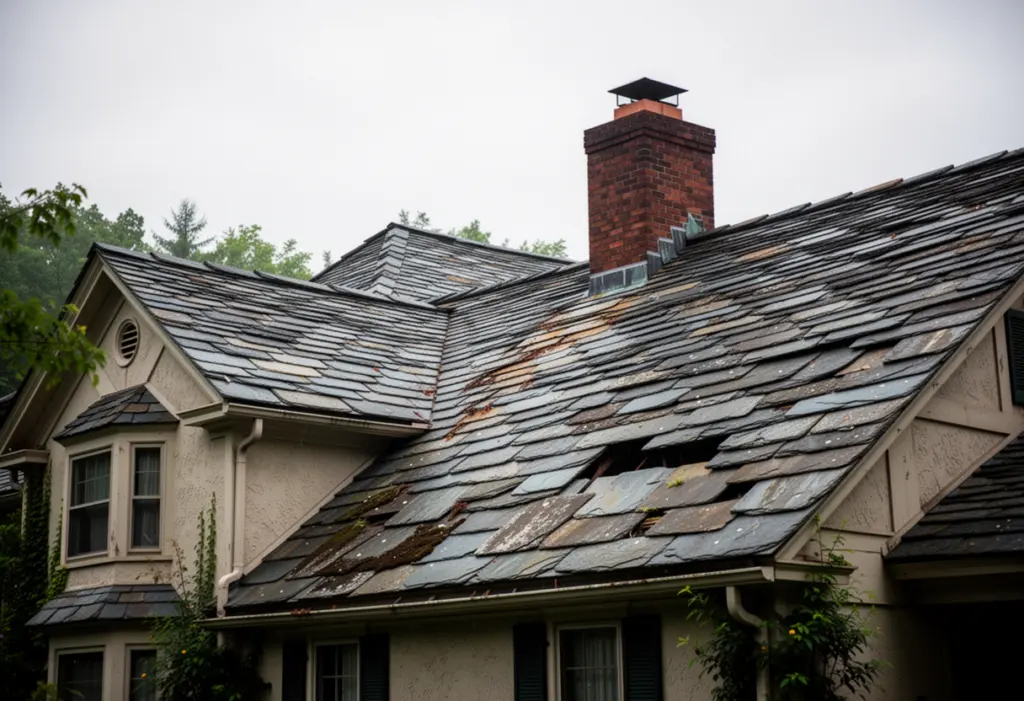
On a slate roof the panels are the easy part. What decides whether the project is sensible is the attachment method and who is qualified to execute it, because every fixing has to go through a brittle, individually laid, often century-old covering that cannot simply be walked on. Before comparing panel brands, get an answer to a plainer question: who is touching the slate, and who warrants the roof afterwards?
Why slate is a different job
Asphalt shingles flex, seal themselves around a lag bolt and forgive a great deal. Slate does none of that. It is stone: it cracks under point loads, it cannot be lifted and dropped back without care, and a slate broken during installation has to be replaced individually, ideally with a piece matched to the existing roof. Older roofs bring a further problem, which is that the nails and battens holding the slate may be closer to the end of their life than the slate itself is.
So a slate installation involves work an asphalt one does not: specialised hooks that sit beneath a slate and carry the rail without a hole through the middle of it, or a flashing detail that replaces the slate at each penetration entirely. Both take longer, both cost more, and both need somebody who has done it before on a roof like yours.
Two trades, one roof
A solar installer is not a slate roofer, and the two skills rarely sit in the same crew. Ask directly:
- Is a slate roofer subcontracted for the attachments, or is the solar crew doing it?
- Who warrants a leak that appears in year three, and in writing for how long?
- How many spare slates are being sourced, and are they matched to the existing roof?
- What is the remaining life of this roof in the roofer’s opinion, and should any plane be replaced before an array goes on it?
That last question is the one that saves money. Removing and resetting an array so the roof beneath it can be worked on is a real cost, and it is far cheaper to decide about the roof now than in year eight.
The arithmetic the extra work does not change
A harder installation costs more, and the New York State credit does not follow the price upward past a point. The credit is 25% of qualified expenditure, capped at $5,000 on Form IT-255, and the equipment has to be installed and used at your principal residence in New York State — a second home or a camp does not qualify. A job at $22,000 calculates to $5,500 and is paid at $5,000; the last $2,000 of price returns nothing at all.
There is a second limit that catches people. The credit is not refundable — it can only reduce New York State tax you actually owe, with any unused portion carried forward for up to five years. Those two rules together set a floor: the year you claim it plus five carry-forward years is six years of state tax, so a household owing less than $5,000 divided by six, about $833 a year, cannot absorb a full credit before the carry-forward runs out and the balance expires. Work out your own state liability from last year’s return before treating $5,000 as money in hand.
And do not assume every line on the invoice is qualified expenditure. Roof repair, slate replacement and structural work are roofing rather than solar energy system equipment. Ask for the contract to separate them as line items, and ask your accountant which lines belong on Form IT-255 rather than guessing at it yourself.
Alternatives worth pricing
If the array is destined for a low-slope section — a porch roof, a rear extension, a flat garage — ballasted or tilted racking may avoid penetrating slate at all. If the slate is genuinely near the end of its life, replacing that plane and mounting on the new covering can cost less overall than a delicate installation on old stone followed by a re-roof a few years later. And if neither works, community solar puts the same money to work with no roof involvement at all, and community solar subscribers pay no Customer Benefit Contribution.
Where 2026 incentives stand
For a slate house the property tax side is often the most valuable item on the list, because these are frequently older, substantial homes where a solar installation adds real assessed value. RPTL 487 exempts that added value for 15 years, but it depends on three separate opt-out checks — the municipality, the county and the school district each hold their own decision, and any one of them having opted out removes that share of the benefit. In New York City, Buffalo, Rochester, Syracuse and Yonkers there is no separate school check, since those districts levy no separate property tax. The system must also be constructed before 1 January 2030.
Beyond that: the state sales tax exemption on residential solar equipment and the Form IT-255 credit described above. NY-Sun is not on that list: as of September 2026 NYSERDA has no open NY-Sun block for homes in any utility territory; check NYSERDA’s NY-Sun dashboard for a new one. The 30% federal residential credit is not available — section 25D was terminated for expenditures made after 31 December 2025, and an expenditure counts as made when the original installation is completed, so any 2026 quote carrying it is materially wrong. Confirm your municipality, county and school district positions on section 487 with your assessor before relying on the exemption.
Frequently Asked Questions
Can solar panels be installed on a slate roof?
Yes, with the right attachment method and the right trade. Hooks that sit beneath a slate and carry the rail without piercing it, or a flashing detail replacing the slate at each penetration, are the usual approaches.
Who is responsible if the slate roof leaks afterwards?
Establish that in writing before work starts. A solar installer is not a slate roofer, so ask whether a roofer is subcontracted for the attachments and who warrants a leak appearing in year three, and for how long.
Does the higher installation cost increase my state credit?
Only up to the cap. The New York credit is 25% of qualified expenditure capped at $5,000, so a $22,000 job calculates to $5,500 and is paid at $5,000. The last $2,000 of price returns nothing.
Is the roof work itself covered by the solar credit?
Do not assume so. Roof repair and slate replacement are roofing rather than solar energy system equipment. Ask for the contract to separate them as line items and ask your accountant which belong on Form IT-255.
This article is general information, not tax, legal or financial advice. Incentive amounts, eligibility rules and deadlines change and depend on your utility, your tax situation and your property. Confirm current terms with NYSERDA, your utility and a qualified tax professional before making a decision.
NY Solar Incentives
Independent New York solar research. We summarise NYSERDA, NY-Sun and federal programme rules from published sources and state plainly when a figure is an estimate. We are not a government agency and do not sell equipment.
Run the arithmetic on your own system
Check the dated program table and your arrangement before counting an incentive. Standard residential NY-Sun blocks are closed; Long Island Affordable Solar has a conditional income-verification route. The NY credit depends on qualified costs and tax liability, while the NYC abatement reduces future property-tax bills. The estimator keeps those timings separate.