Solar Sales Tactics Worth Walking Away From
Most bad solar deals are not sold with lies. They are sold with pressure, with a price expressed as a monthly payment, and with a tax credit that no longer exists.
On this page 10 sections
- 01Pricing that expires today
- 02A quote with a 30 percent federal line
- 03A monthly payment offered instead of a price
- 04An array bigger than your bill
- 05A credit application before a quote
- 06An escalator nobody mentioned
- 07Refusing to leave the paperwork
- 08A government programme that is about to end
- 09What the honest 2026 arithmetic looks like
- 10Frequently Asked Questions
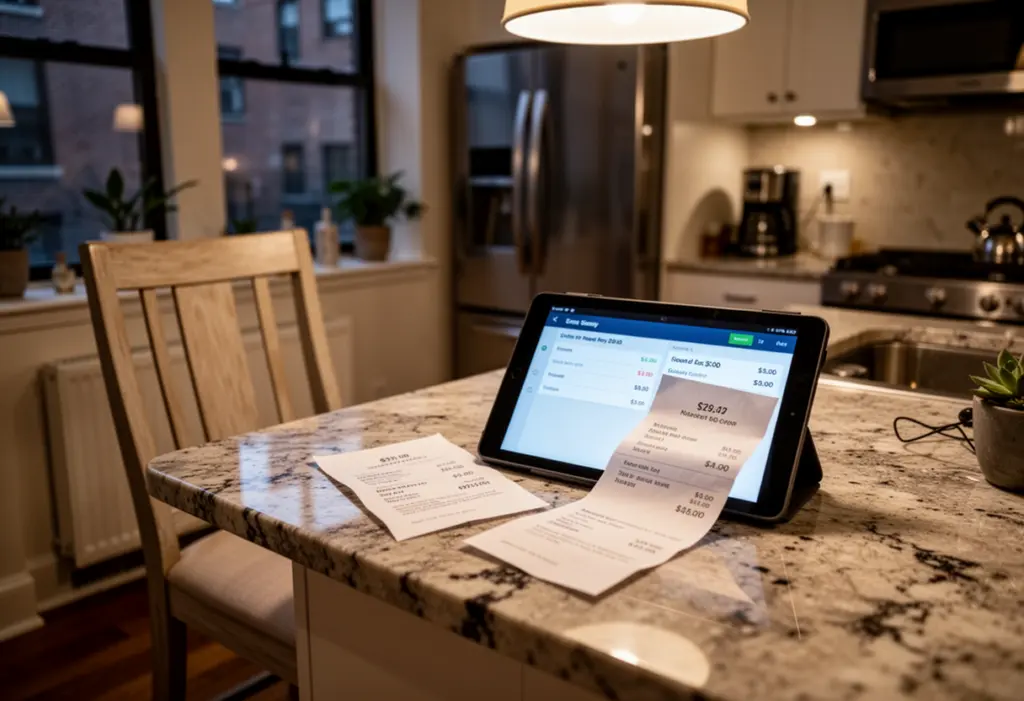
A good solar company will let you think about it. Nearly every tactic below works by removing that, and the single most useful response to all of them is the same sentence: send me the full written proposal and I will come back to you. Anything that cannot survive a night on the kitchen table was never a real offer.
Pricing that expires today
An installation that will take months to design, permit and interconnect does not have a price that is valid for four hours. Discounts tied to signing during the visit, to a manager approval that is available right now, or to a batch of panels supposedly allocated to your street are pressure devices. If the price is genuinely better this week, it will still be documented in writing tomorrow.
A quote with a 30 percent federal line
This one is not a matter of taste. The federal residential credit under section 25D was terminated for expenditures made after 31 December 2025, and an expenditure is treated as made when the original installation is completed. A 2026 residential purchase claims nothing federally, with no phase-down and no transition. A proposal that still shows 30 percent is materially wrong, and the savings arithmetic printed underneath it is wrong by roughly a third of the system price. Ask for a revised proposal without that line and compare that one.
A monthly payment offered instead of a price
If you cannot get the cash price and the financed price on the same page, you are being asked to buy a payment rather than a system. Low advertised interest rates in this industry are commonly paid for by a dealer fee built into the system price, so a headline rate below one percent and a cash number are not comparable figures. Ask both questions plainly: what is the price if I pay cash, and what is the price with this finance product. If the second is materially higher, the difference is the cost of the rate, and you can now compare it against a credit union loan or a home equity product on your own terms.
An array bigger than your bill
Oversizing is the easiest way to increase a commission, and it is sold as future-proofing. Under net metering an oversized array builds credits you never consume, and you still paid for the panels. Worse, you keep paying the Customer Benefit Contribution on capacity, because that charge is assessed on the DC size of the array rather than on production. Four unnecessary kilowatts in Central Hudson territory cost 4 x $1.67 = $6.68 a month for 2026, roughly $80 a year, forever, for electricity you never use. If a heat pump or an EV is genuinely coming, model that load and say so. If not, size to the bill you have.
A credit application before a quote
Being asked to run credit before you have seen a design, a production estimate and a price has the sequence backwards. It puts an approval in the room to create momentum, and it hands over your personal information to a company you have not decided on. The design comes first.
An escalator nobody mentioned
In a lease or a power purchase agreement, ask directly whether the payment rises each year and by how much. An escalator turns a comfortable first-year comparison into a different question in year twelve. Ask for the total of all payments over the full term, in dollars, on one line. A company that will not produce that number has told you something.
Refusing to leave the paperwork
Any of these should end the meeting: a contract that cannot be left with you overnight, a signature requested on a tablet you cannot read at your own speed, a refusal to email the full document set, or the claim that a signature is only an acknowledgement. Read it indoors, on paper, without an audience.
A government programme that is about to end
Urgency built on a programme deadline deserves a source. New York’s incentives do move, but they move in published ways: NY-Sun is a megawatt block structure in which each regional block closes when it fills, and as of September 2026 NYSERDA has no open NY-Sun block for homes in any utility territory; RPTL 487 requires construction before 1 January 2030. Neither of those is a reason to sign tonight, and neither is accurately described as a programme ending this week. Ask for the page it comes from.
What the honest 2026 arithmetic looks like
The benefit that a good salesperson leads with in New York is the state solar energy system equipment credit: 25 percent of qualified expenditure, capped at $5,000, claimed on Form IT-255. Three qualifications never make it into a pitch. It requires your principal residence in New York, so a second home, a seasonal property or a rental does not qualify. It is limited by your actual New York State tax liability, so a household with a small state tax bill does not receive the full $5,000 as cash. And because it carries forward for up to five years rather than being refundable, the benefit can arrive slowly.
It does reach leases and power purchase agreements of ten years or more, where the dead federal credit never did, and the ten-year minimum applies to the lease as well as to the PPA. Alongside it sits the state sales tax exemption on residential solar equipment. NY-Sun, once a contractor-applied price reduction, and its Affordable Solar incentive for low- to moderate-income households are closed for homes: as of September 2026 NYSERDA has no open NY-Sun block for homes in any utility territory; check NYSERDA’s NY-Sun dashboard for a new one. Ask how the quote treats each of them, and confirm the current rules with NYSERDA and the Department of Taxation and Finance rather than with the person selling you the system.
Frequently Asked Questions
What is the single clearest sign a solar quote is out of date?
A 30% federal tax credit line. Section 25D was terminated for expenditures made after 31 December 2025, with the expenditure treated as made when the original installation is completed, so a 2026 residential purchase claims nothing federally.
Why should I ask for both a cash price and a financed price?
Because low advertised interest rates are commonly paid for by a dealer fee built into the system price. The gap between the two prices is the real cost of the rate, and it lets you compare a credit union loan honestly.
Is a bigger array always better?
No. An oversized array builds net metering credits you never consume and still pays the capacity charge. Four unnecessary kilowatts in Central Hudson territory cost 4 x $1.67 = $6.68 a month for 2026, about $80 a year.
How much is the New York State credit actually worth to me?
It is 25% of qualified expenditure capped at $5,000 on Form IT-255, for equipment at your principal residence in New York. It is limited by your actual state tax liability and carries forward up to five years rather than being refundable.
This article is general information, not tax, legal or financial advice. Incentive amounts, eligibility rules and deadlines change and depend on your utility, your tax situation and your property. Confirm current terms with NYSERDA, your utility and a qualified tax professional before making a decision.
NY Solar Incentives
Independent New York solar research. We summarise NYSERDA, NY-Sun and federal programme rules from published sources and state plainly when a figure is an estimate. We are not a government agency and do not sell equipment.
Run the arithmetic on your own system
Check the dated program table and your arrangement before counting an incentive. Standard residential NY-Sun blocks are closed; Long Island Affordable Solar has a conditional income-verification route. The NY credit depends on qualified costs and tax liability, while the NYC abatement reduces future property-tax bills. The estimator keeps those timings separate.