How to Check a Solar Installer Licence in New York
A licence number printed on a proposal proves that somebody typed it. Confirming it means going to the office that issued it, and checking the same company is the one signing your contract.
On this page 7 sections
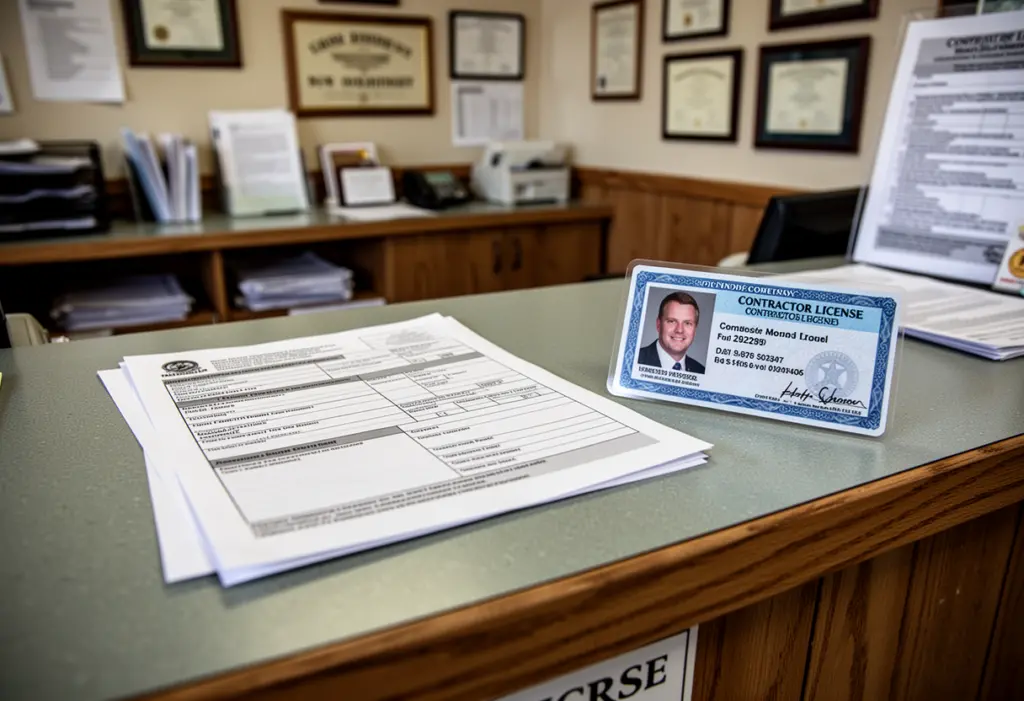
Licensing for electrical and home improvement work in New York is issued locally in most of the state rather than through one statewide register, which is why this question is harder than it should be. The office that can confirm a licence is the office that issued it, and which office that is depends on where the work will happen. So the practical method is not to search for a licence. It is to ask which body issued it, then go to that body and ask.
The four-step check
- Ask in writing for the exact legal name of the company that will hold the contract, its address, and every licence or registration number it holds, with the name of the issuing office beside each one.
- Contact that issuing office directly and confirm the number is current and held by that exact legal name. Numbers get transposed, and companies trade under names that are not the names on their registrations.
- Ask the same office, or your municipality’s building department, what it requires of a contractor pulling a residential solar permit at your address, and confirm this contractor meets it.
- Ask your building department what its own solar permit process is. That office has to sign the job off, so it is also the office most likely to recognise a contractor by name.
The name on the van is often not the name on the contract
Solar is frequently sold by one company and installed by another. The person at your door may work for a sales organisation, the contract may be with a dealer, the crew may be a subcontractor, and the entity holding the licence may be a fourth party. None of that is necessarily wrong, but you should know which is which before you sign.
Ask directly: which legal entity signs this contract, which performs the installation, which holds the licence, and which holds the workmanship warranty. If they are different companies, ask what happens to your warranty if one of them stops trading. Get the answers in writing beforehand, because afterwards you are querying something you already agreed to.
The permit is the check that cannot be faked
A licence number can be misquoted on a proposal. A permit cannot: it is issued by your municipality, in a name, for your address. Insist the installer pulls the electrical and building permits in the installer’s own name. If you are asked to pull the permit yourself as the homeowner, that is a transfer of responsibility for the work onto you, and it is the clearest single signal to stop the conversation. Ask for the permit number once issued and confirm it with the building department yourself.
Insurance and workers compensation are separate checks
Ask for a certificate of insurance showing general liability and workers compensation cover, issued by the insurer rather than typed up by the contractor. Check that the insured name matches the entity on your contract and that the dates cover your installation window rather than expiring the week before. If someone is injured on your roof and the contractor carries no workers compensation cover, the exposure can reach you.
The New York check almost nobody makes
When a block for homes is open, NY-Sun is applied by the contractor as a reduction in the price, not claimed by you on a form, so a contractor who is not participating in the programme cannot pass it to you at all, whatever else they hold. As of September 2026 NYSERDA has no open NY-Sun block for homes in any utility territory; check NYSERDA’s NY-Sun dashboard for a new one. So ask it plainly: does this price assume a NY-Sun incentive, and if so, which open block and what per-watt figure is being applied.
The same goes for NYSERDA’s Affordable Solar incentive for low- to moderate-income households: its last blocks for homes closed on 15 October 2025 in Con Edison territory and on 9 March 2026 in the Upstate region, so a proposal should not count it either. And the interconnection application to your utility is the contractor’s job too, so ask who submits it and for the reference number when it goes in.
What a licence does not tell you
A current licence is a floor, not a verdict. It does not tell you how long the company has traded under that name, whether the crew is employed or subcontracted, or what a workmanship warranty is worth if the company has gone by year six. Ask for the length of the workmanship warranty separately from the module and inverter warranties, and ask who honours it.
Be equally sceptical of the tax lines. A proposal showing a 30 percent federal credit as your benefit in 2026 is either stale or describing a system somebody else will own: section 25D was terminated for expenditures made after 31 December 2025, with an expenditure treated as made when the original installation is completed. What remains for a New York homeowner is the state credit of 25 percent capped at 5,000 dollars on Form IT-255 for a principal residence, the state sales tax exemption on residential solar equipment, and RPTL 487’s fifteen-year property tax exemption where the municipality, the county and the school district have each not opted out, which also requires the system to be constructed before 1 January 2030. NY-Sun has no open block for homes as of September 2026. Confirm all of them at source rather than from a brochure, because a proposal is a snapshot of the day it was printed.
Frequently Asked Questions
Is there one place to look up a solar installer licence in New York?
No. Licensing for electrical and home improvement work is issued locally in most of the state, so the office that can confirm a licence is the one that issued it. Ask the contractor which body issued each number they hold, then confirm it with that body directly.
What if the installer asks me to pull the permit?
Treat it as a reason to stop. Pulling the permit in your own name transfers responsibility for the work onto you as the homeowner. The permit should be pulled in the installer's own name, and you should confirm the number with the building department once it is issued.
Why does it matter which company signs the contract?
Because solar is often sold by one company, installed by another and warranted by a third. Ask which legal entity signs, which installs, which holds the licence and which honours the workmanship warranty, and what happens to that warranty if any of them stops trading.
Does the installer have to be in the NY-Sun programme?
Only to pass you a NY-Sun incentive, and as of September 2026 NYSERDA has no open NY-Sun block for homes in any utility territory, so there is none to pass on. When a block is open, NY-Sun is applied by the contractor as a price reduction rather than claimed by you, so a contractor outside the programme cannot deliver it. Ask whether the price assumes any NY-Sun incentive, and which open block it relies on.
This article is general information, not tax, legal or financial advice. Incentive amounts, eligibility rules and deadlines change and depend on your utility, your tax situation and your property. Confirm current terms with NYSERDA, your utility and a qualified tax professional before making a decision.
NY Solar Incentives
Independent New York solar research. We summarise NYSERDA, NY-Sun and federal programme rules from published sources and state plainly when a figure is an estimate. We are not a government agency and do not sell equipment.
Run the arithmetic on your own system
Check the dated program table and your arrangement before counting an incentive. Standard residential NY-Sun blocks are closed; Long Island Affordable Solar has a conditional income-verification route. The NY credit depends on qualified costs and tax liability, while the NYC abatement reduces future property-tax bills. The estimator keeps those timings separate.