PSEG Long Island Net Metering: How Credits Work
PSEG Long Island runs the LIPA system across most of Nassau and Suffolk. Here is how solar exports are credited, what the CBC costs, and the one rule unique to the island.
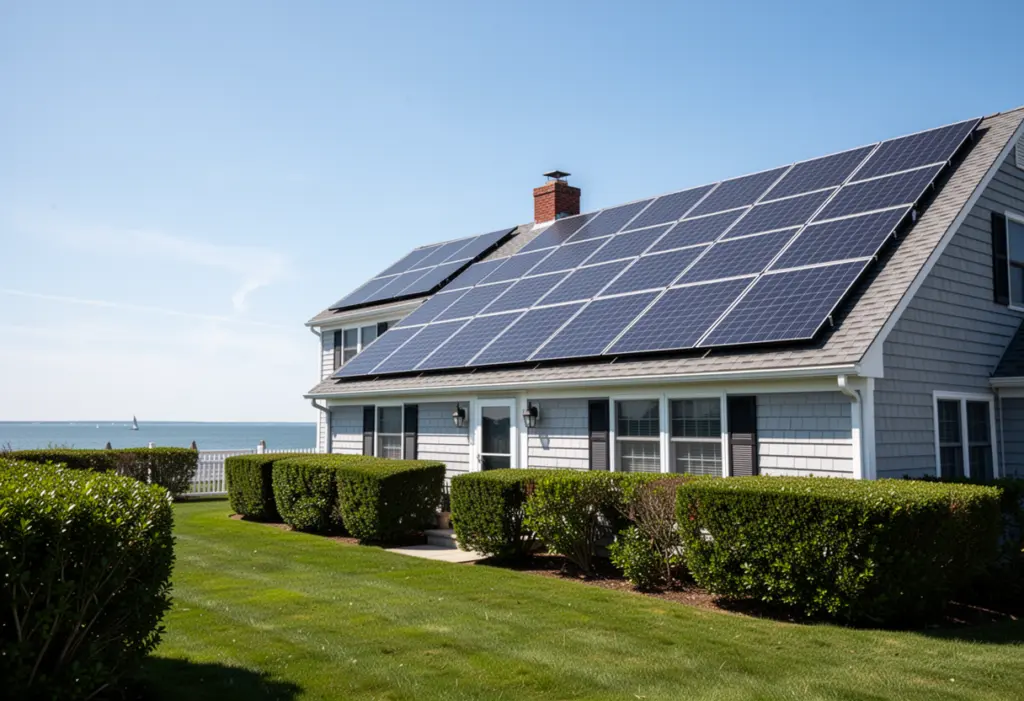
Most of Long Island’s electricity system is owned by the Long Island Power Authority and operated by PSEG Long Island. The village utilities of Freeport, Rockville Centre and Greenport, and Fishers Island, are the exception: they run their own municipal electric utilities, so the LIPA rules on this page do not describe them; ask the village utility for its own metering and interconnection rules. That split matters more than it sounds: rates and tariffs are set for the LIPA system, and one of them makes Long Island different from every other part of New York.
How exports are credited
Production feeds the house first, and only the surplus is exported and metered. Under Phase One net metering each exported kilowatt-hour is credited at the full retail rate, and a system interconnected today holds the arrangement for 20 years.
Long Island retail electricity is expensive by national standards, which is exactly what makes net metering valuable here — a full-retail credit is worth more where retail is high. It is the main reason Nassau and Suffolk have some of the densest residential solar uptake in the state.
The Customer Benefit Contribution on the LIPA system
Residential customers interconnecting on or after 1 January 2022 pay a monthly Customer Benefit Contribution based on the DC size of the system. The final 2026 residential rate for LIPA is $1.13 per kW-month.
- A 6 kW system: 6 × $1.13 = $6.78 a month, about $81 a year.
- An 8 kW system: 8 × $1.13 = $9.04 a month, about $108 a year.
- A 12 kW system: 12 × $1.13 = $13.56 a month, about $163 a year.
The charge applies on capacity every month regardless of production, is recalculated annually rather than locked in at interconnection, and does not apply to systems interconnected before 1 January 2022, to community solar, or to commercial accounts with a demand charge.
The rule that is unique to Long Island
Mass-market LIPA projects cannot opt into the Value Stack (VDER). Everywhere else in New York a residential customer has, at least in principle, a choice between net metering and the Value Stack tariff. On the LIPA system that second door is not open for mass-market projects, and NYSERDA’s own rate table records the VDER residential figure for LIPA as not applicable.
In practice this changes very little for a typical Nassau or Suffolk homeowner, because net metering is normally the better arrangement for a rooftop system anyway. It matters if you have been sold a comparison between the two routes — on Long Island that comparison is not a real choice.
Interconnection and the town permit
The utility sequence is standard: application, approval to install, installation, electrical inspection, meter work, permission to operate. What varies on Long Island is the town.
Nassau and Suffolk are organised into large towns — Hempstead, North Hempstead, Oyster Bay, Babylon, Islip, Brookhaven, Huntington, Smithtown, Riverhead, Southampton, East Hampton — plus dozens of incorporated villages that issue their own permits. Two houses a mile apart can face very different permitting authorities and timelines. Ask which authority is issuing your permit and what its current turnaround is; on the East End, architectural review adds a step that does not exist further west.
Coastal specifics
Wind load is the design factor that separates a Long Island installation from an upstate one. Racking and attachment must be specified for the local wind zone, and near the ocean that specification is meaningfully more demanding. It is a fair question to any installer: what wind load is this system designed to, and who confirmed it.
What stays on the bill
A basic service charge and the fixed portion of delivery remain for as long as the house is connected. Solar reduces the volumetric charges only, and the CBC adds a line that was not there before.
2026 incentives
The 30% federal residential credit under section 25D ended for expenditures made after 31 December 2025 — treated as made when the original installation is completed, so a December 2025 completion still qualifies even if permission to operate came later. New York’s 25% credit capped at $5,000 on Form IT-255 remains, as does the state sales tax exemption. As of September 2026 NYSERDA has no open NY-Sun block for homes in any utility territory; check NYSERDA’s NY-Sun dashboard for a new one. Long Island also has its own history of utility-side solar incentives; ask specifically what is open at the time you are quoted rather than relying on a figure from a previous year.
Frequently Asked Questions
What is the PSEG Long Island CBC rate in 2026?
The final 2026 residential rate for the LIPA system is $1.13 per kW-month of DC system size. An 8 kW system pays about $9.04 a month, roughly $108 a year.
Can Long Island solar customers choose the Value Stack instead of net metering?
No. Mass-market LIPA projects cannot opt into VDER, which is unique to Long Island among New York territories. Net metering is the arrangement available, and for a typical rooftop system it is normally the better one anyway.
Who issues the solar permit on Long Island?
Your town or incorporated village, not the utility. Nassau and Suffolk have large towns plus dozens of villages, each with its own process, and on the East End architectural review can add a further step.
Why is solar so common on Long Island?
Retail electricity rates are high by national standards, and net metering credits exports at the full retail rate. The higher the retail rate, the more each exported kilowatt-hour is worth.
This article is general information, not tax, legal or financial advice. Incentive amounts, eligibility rules and deadlines change and depend on your utility, your tax situation and your property. Confirm current terms with NYSERDA, your utility and a qualified tax professional before making a decision.
NY Solar Incentives
Independent New York solar research. We summarise NYSERDA, NY-Sun and federal programme rules from published sources and state plainly when a figure is an estimate. We are not a government agency and do not sell equipment.
Run the arithmetic on your own system
Check the dated program table and your arrangement before counting an incentive. Standard residential NY-Sun blocks are closed; Long Island Affordable Solar has a conditional income-verification route. The NY credit depends on qualified costs and tax liability, while the NYC abatement reduces future property-tax bills. The estimator keeps those timings separate.