SEU vs SER Cable: Two Letters That Decide Where It Runs
SE is the family, and the letter after it describes the build rather than the grade. SEU is flat with three conductors; SER is round with four. Almost every rule about where each may run follows from that.
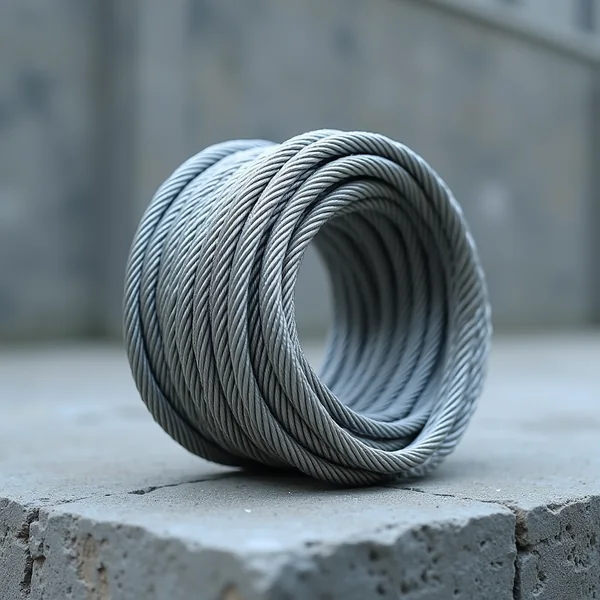
One is flat with a bare wrapped neutral and one is round with four conductors, and that single structural difference decides which side of the main disconnect each belongs on.
SEU vs SER Cable: One Family, Two Builds
Both are type SE cable. SE stands for service entrance, and the letter after
it is not a grade or a quality level — it describes how the cable is put
together. U is unarmored, and it is the flat one. R is round. Everything that
follows about where each may run comes from a single structural difference
between them, and once you see that difference the rest stops being arbitrary.
This is a common point of confusion during an electrification project,
because a panel upgrade, a subpanel for a heat pump and a feeder to a detached
garage all involve SE cable and all three want a different thing from it.
What is actually inside each one
SEU is flat, roughly oval in section. It carries two insulated conductors
lying side by side, and wrapped in a spiral around that pair is a set of bare
strands that are gathered and twisted into the third conductor at each end.
Those bare strands are the grounded conductor — the neutral. There is no fourth
conductor and no separate grounding conductor in the assembly at all.
SER is round. Inside the jacket are three individually insulated conductors
— two ungrounded and one insulated neutral — plus a separate equipment
grounding conductor, and that grounding conductor is a distinct wire rather
than a wrap. Four conductors, not three.
| SEU | SER | |
|---|---|---|
| Section | Flat or oval | Round |
| Insulated conductors | Two | Three |
| Neutral | Bare strands spiralled around the insulated pair |
An insulated conductor of its own |
| Equipment grounding conductor | None as a separate conductor |
Yes, a separate conductor in the assembly |
| Usual role | The service entrance run itself | A feeder to a subpanel, or a large four-wire appliance circuit |
| Exposure | Made for the outdoor part of the service run |
Generally an interior cable unless the jacket is marked otherwise |
The missing fourth conductor is the whole argument
On the supply side of the main disconnect, the neutral and the grounding
system are deliberately joined at exactly one point. Because they are the same
electrical path there, a three-conductor cable is enough for the run from the
weatherhead down through the meter and into the service equipment. That is what
SEU was built for, and it is why the neutral in it can be bare.
Downstream of that disconnect the rule inverts. A feeder heading out to a
subpanel has to keep the neutral and the equipment grounding path separate the
whole way, because if they are joined a second time, normal return current
starts flowing on metal that is only supposed to carry fault current. That
requires four conductors, and SEU does not have four. The
single-bond principle is the same idea seen from the
backup power side, where an islanding system has to be careful not to create a
second bond of its own.
This is the point at which a lot of do-it-yourself plans stop. Reusing the
old flat service cable as the feeder for a new subpanel looks economical and
does not work, because the cable is physically the wrong assembly for what a
feeder has to do. If you are pricing a subpanel for a heat pump and an EV
charger, the four-conductor feeder is part of
what the wiring line on that quote is made of.
Older editions did not say the same thing
Three-conductor arrangements downstream of the service were permitted in
older code editions in specific circumstances, most famously a feeder to a
separate building and a four-wire range or dryer circuit that predates the
current requirement. This matters for two reasons. Existing work installed
under an earlier edition is generally not made unlawful by a later one, so a
house can perfectly well contain a three-wire arrangement that nobody would
install today. And an internet answer written some years ago may be describing
that older edition with complete confidence.
Which edition governs your work is not something to infer from an article.
New York State’s Uniform Code and New York City’s own Electrical Code are two
distinct paths with separate adoption cycles, so the answer depends on where
the property is, and the edition in force is a question to put to the authority
having jurisdiction before the cable is bought. Nobody reading a website can
tell you that a particular installation is acceptable, and any source that does
is guessing on your behalf.
The temperature rating that catches people out
The conductors in modern SE cable carry a high-temperature insulation
rating, and it is printed on the jacket. It is tempting to size the cable
against that number. In practice two other limits usually bite first.
- The terminations. A breaker, a lug or a meter socket has
its own temperature rating, and the assembly can only be worked to the lowest
rating in the path. The conductor insulation being rated higher does not raise
the breaker. - Thermal insulation around the cable. Where type SE cable
is run inside a building as an interior feeder or branch circuit and passes
through thermal insulation, its ampacity has to be figured on a considerably
more conservative basis than the jacket printing suggests. In an older New York
house being air sealed and insulated at the same time as it is electrified,
this is not a corner case — it is the normal condition of a feeder running up
through a stud bay that is about to be filled.
The practical consequence is that the size printed on a cable does not by
itself tell you what it may serve. That determination belongs with the
sizing question, which is a separate calculation and the
place where continuous loads get their
additional allowance.
Aluminium, and why the terminations matter more than the cable
Most residential SE cable sold in the United States is aluminium, both SEU
and SER. That is normal and is not the frightening old solid aluminium branch
wiring of the 1960s and 1970s, which was a different alloy in a different
application. Modern SE cable uses an alloy developed for the job.
What it does mean is that the terminations carry the risk rather than the
cable. Aluminium needs lugs rated to accept it, it needs whatever antioxidant
treatment the equipment manufacturer specifies, and it needs to be tightened to
the torque figure on the equipment label with a tool that can actually produce
it. Loose aluminium terminations heat, and heating loosens them further. When a
service run is being replaced, the connections at each end — the
meter socket at one and the main lugs at the other —
are the parts of the job that decide how it ages.
Aluminium also needs a larger conductor size than copper for the same
capacity, which is why an aluminium SEU service run looks so much fatter than
homeowners expect for the amperage it carries.
Which one shows up where in an electrification job
- Raising the size of the service. The run from the
weatherhead through the meter to the main disconnect is SEU territory, or
individual conductors in conduit where the installation calls for it. This is
the run that changes when
the panel has to be upgraded to take on new load. - A subpanel for the heat pump, the EV charger or a backup
system. A four-conductor SER feeder, or four conductors in conduit.
Never the flat cable. - A detached garage or workshop. A four-conductor feeder,
with its own grounding electrode at the outbuilding. The
electrode conductor sizing is a separate question from the
feeder sizing and the two get confused constantly. - The branch circuits themselves. Usually not SE cable at
all. The circuit out to a heat pump condenser or a wall charger is normally
non-metallic sheathed cable indoors and something suited to the exposure
outdoors.
Telling them apart on site
You do not need the printing to identify these. Flat, with a bare spiral
wrap you can see under the jacket, is SEU. Round, with four separate conductors
when the jacket is opened, is SER. If a cable is already in place and you cannot
read the jacket, that identification plus its route is usually enough for an
electrician to say what it is doing and whether it can keep doing it.
The question worth asking a contractor is not which type they intend to use
but what the run is on each side of the main disconnect, because that is what
sets the answer. A quote that specifies four-conductor feeders to every
subpanel and treats the service run separately is describing the work
correctly.
Frequently Asked Questions
What is the difference between SEU and SER cable?
Both are type SE service entrance cable and the letter describes the construction. SEU is flat, with two insulated conductors and a bare neutral spiralled around them, so three conductors in total and no separate grounding conductor. SER is round, with three insulated conductors plus a separate equipment grounding conductor, so four in total. The fourth conductor is what decides where each one can be used.
Can I use SEU cable as a feeder to a subpanel?
A feeder downstream of the main disconnect has to keep the neutral and the equipment grounding path separate along its whole length, which needs four conductors, and SEU only contains three. That is a construction limit rather than a preference. Older code editions permitted three-conductor arrangements in some situations, which is why existing examples are still found, and it is also why older advice found online can be confidently wrong about current work.
Is SER cable rated for outdoor use?
Treat it as an interior cable unless the jacket carries the marking for the exposure you have in mind. SEU is the member of the family built for the outdoor portion of a service run. Where a four-conductor feeder has to go outside or underground, the usual answer is conductors in a suitable raceway or a cable specifically listed for that condition, not SER pulled through the weather.
Why is my service cable aluminium?
Most residential SE cable in the United States is aluminium, and it is a different alloy and a different application from the solid aluminium branch circuit wiring of the 1960s and 1970s that gave the material its reputation. The risk with modern SE cable sits at the terminations rather than in the run: it needs lugs rated to accept aluminium, the antioxidant treatment the equipment maker specifies, and tightening to the torque figure on the label.
Does the temperature rating printed on the cable tell me what it can carry?
Not on its own. The assembly can only be worked to the lowest temperature rating in the path, and the breaker or lug at each end usually has a lower one than the conductor insulation. Type SE cable run inside a building and passing through thermal insulation is treated far more conservatively again, which matters in a New York house being insulated and electrified in the same project.
Is SEU the same as USE cable?
No. USE is underground service entrance cable, built for direct burial, and it is not interchangeable with the cable used for an above-ground service run. A cable that appears in a trench and a cable that runs down an outside wall from a weatherhead are answering different questions, and the markings on the jacket are what distinguish them.
Can I tell which one I have without reading the jacket?
Usually. Flat or oval in section, with a bare spiral wrap visible under the covering, is SEU. Round, opening up to four separate conductors, is SER. That identification together with where the cable runs — on the supply side of the main disconnect or past it — is generally enough for an electrician to say what it is doing.
Do I need a permit to replace a service entrance cable in New York?
Work on the service is not the place to guess. New York State’s Uniform Code and New York City’s own Electrical Code are separate paths with their own adoption cycles, so what is required depends on where the property sits, and there is a utility disconnection and reconnection to coordinate as well. Ask the authority having jurisdiction which edition applies and what it wants to see, before the materials are ordered.
NY Solar Incentives
Independent New York solar research. We summarise NYSERDA, NY-Sun and federal programme rules from published sources and state plainly when a figure is an estimate. We are not a government agency and do not sell equipment.
Run the arithmetic on your own system
Check the dated program table and your arrangement before counting an incentive. Standard residential NY-Sun blocks are closed; Long Island Affordable Solar has a conditional income-verification route. The NY credit depends on qualified costs and tax liability, while the NYC abatement reduces future property-tax bills. The estimator keeps those timings separate.