What Solar Panels Cost in Southampton, NY in 2026
On the South Fork the biggest variable in a solar quote is not the equipment. It is whether the house is your principal residence, because New York's credit turns entirely on that question.
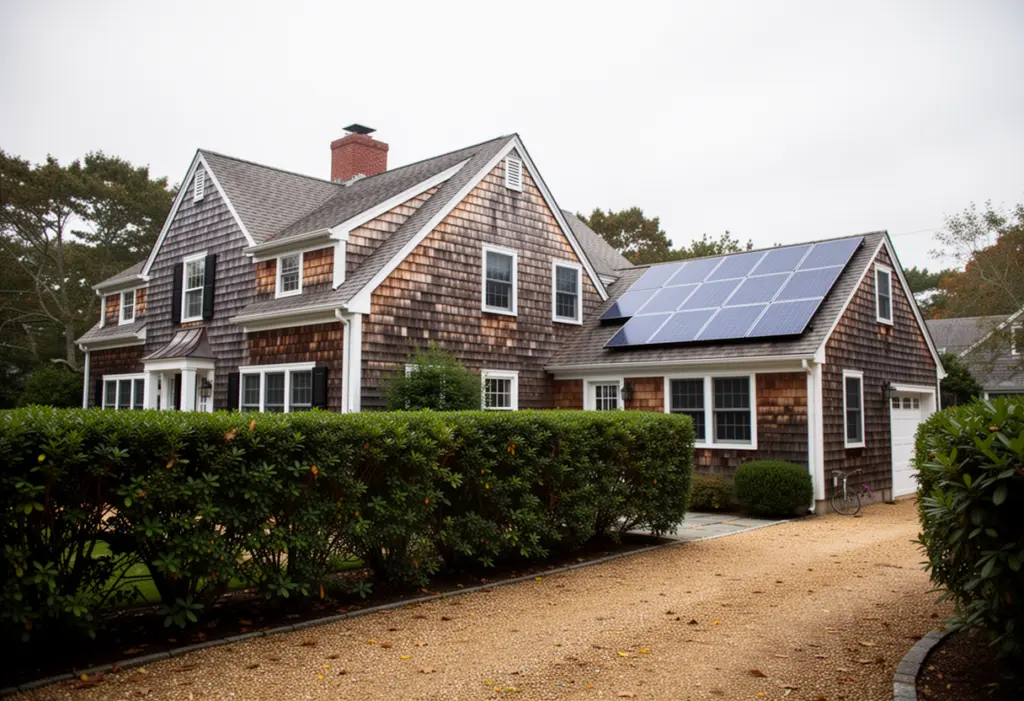
The largest single variable in what solar costs a Southampton homeowner is not the panel brand and not the inverter. It is whether the house is your principal residence. New York’s solar credit, 25 percent of qualified expenditure capped at $5,000 on Form IT-255, requires that the equipment be installed and used at the taxpayer’s principal residence in New York State. A seasonal house, a second home or a property you rent out does not qualify. On the East End that one test decides more money than any negotiation over hardware.
If the house is your second home
You are not left with nothing, but you are left with less, and the arithmetic should be done before you sign rather than in April. The federal position is the same either way: the 30 percent residential credit under section 25D ended for expenditures made after 31 December 2025, and an expenditure is treated as made when the original installation is completed. There is a carve-out that matters here more than almost anywhere else in New York. Where the work is in connection with the construction or reconstruction of a structure, the expenditure is instead treated as made when your original use of that structure begins. Given how much of the South Fork is new build and gut rebuild, raise that with your accountant before anyone sets a schedule; do not let an installer decide it for you.
Several benefits do not depend on principal residence at all: the state sales tax exemption on residential solar equipment, the RPTL 487 property tax exemption on added value (claimed by filing form RP-487 with the assessor), and full retail rate net metering. NY-Sun’s contractor-applied price reduction would belong on that list, but PSEG Long Island’s last residential NY-Sun block closed on 17 April 2016, and as of September 2026 NYSERDA has no open NY-Sun block for homes in any utility territory. The business-side credit also survives for whoever owns a leased or PPA system, which is why third-party offers can still price in an incentive that never appears on your own return.
Design review is a schedule item, not a formality
Southampton is a town containing several incorporated villages, and the village is usually the authority that matters. Southampton Village, Quogue, Westhampton Beach and Sagaponack each run their own building department, with their own review process and their own appetite for what is visible from the road. Ask at the first site visit whether the proposed array is visible from a public way and whether that triggers architectural or historic review. The answer changes the design, because the fix is normally to move modules onto rear planes, use all-black hardware and rethink conduit routing, and every one of those changes costs money or production or both.
What building near the ocean does to a quote
- Wind loading. Attachment spacing near the coast is not the same as inland. Ask how many roof penetrations the engineered attachment schedule requires and who warrants them against leaks.
- Cedar and slate. These roofs need specialist flashing and specialist labour. A quote priced off an asphalt shingle assumption will not survive contact with the roof.
- Screening and canopy. The mature hedging and tree cover that give a South Fork property its privacy also take the low winter sun. Insist on an on-site shading assessment and ask for December and January production figures specifically, not just an annual total.
- Flood elevation. On low-lying parcels, ask where the inverter and any battery will be mounted and at what height.
Large arrays, a fixed cap, and a charge that ignores occupancy
East End houses tend to be big, and big houses justify big arrays. Two consequences follow. First, the state credit is capped, so a $5,000 ceiling reached at $20,000 of qualified expenditure means the marginal kilowatt on a large array carries no state incentive whatsoever. Second, the Customer Benefit Contribution is billed on the DC size of the system, not on production and not on occupancy. At the 2026 LIPA and PSEG Long Island residential rate of $1.13 per kW-month, an 11 kW array pays about $12.43 a month, roughly $149 a year — and it pays it in February with the house shuttered exactly as it does in July. For a seasonal property that is worth putting in the model rather than discovering on a bill.
The charge applies to systems interconnected on or after 1 January 2022 and the rates are recalculated annually rather than locked in. Confirm the utility name on your own bill: most of the town is served by the LIPA system operated by PSEG Long Island, but Long Island has genuine exceptions, and Greenport across on the North Fork runs its own municipal electric department, which sits outside Public Service Commission rules entirely.
Checking the 2026 position yourself
NY-Sun incentives step down as each regional megawatt block fills, and on Long Island the last residential block closed in April 2016. As of September 2026 NYSERDA has no open NY-Sun block for homes in any utility territory; check NYSERDA’s NY-Sun dashboard for a new one rather than accepting a NY-Sun number in a sales deck. For property tax, RPTL 487 exempts the added value for 15 years where the village or town, Suffolk County and the school district have each declined to opt out — three separate enquiries with the assessor — and the system must be constructed before 1 January 2030. Incentive programmes change; check NYSERDA and the New York State Department of Taxation and Finance before signing anything.
Frequently Asked Questions
Can I claim the New York solar credit on a Southampton second home?
No. The credit on Form IT-255 requires the system to be installed and used at your principal residence in New York State. A seasonal house, a second home or a rental does not qualify, though other benefits such as the sales tax exemption and RPTL 487 do not depend on that test.
Does a seasonal house still pay the solar capacity charge?
Yes. The Customer Benefit Contribution is billed monthly on the DC size of the array regardless of production or occupancy. At the 2026 rate of $1.13 per kW-month, an 11 kW system pays about $12.43 a month, roughly $149 a year, whether anyone is in the house or not.
Will village design review affect my solar design?
Often, yes. Southampton Village, Quogue, Westhampton Beach and Sagaponack each run their own building department. Ask early whether the array is visible from a public way, because moving modules to rear planes changes both production and price.
Is the federal credit really unavailable for a 2026 install?
For a buyer, yes. Section 25D ended for expenditures made after 31 December 2025, with the expenditure treated as made when the original installation is completed — and for construction or reconstruction of a structure, when your original use of it begins. Ask your accountant which test applies to your project.
This article is general information, not tax, legal or financial advice. Incentive amounts, eligibility rules and deadlines change and depend on your utility, your tax situation and your property. Confirm current terms with NYSERDA, your utility and a qualified tax professional before making a decision.
NY Solar Incentives
Independent New York solar research. We summarise NYSERDA, NY-Sun and federal programme rules from published sources and state plainly when a figure is an estimate. We are not a government agency and do not sell equipment.
Run the arithmetic on your own system
Check the dated program table and your arrangement before counting an incentive. Standard residential NY-Sun blocks are closed; Long Island Affordable Solar has a conditional income-verification route. The NY credit depends on qualified costs and tax liability, while the NYC abatement reduces future property-tax bills. The estimator keeps those timings separate.