What Solar Panels Cost in Bay Shore, NY
Bay Shore is an unincorporated hamlet in the Town of Islip, so the town issues the permit and PSEG Long Island handles the interconnection. Both change what a quote should contain.
On this page 7 sections
There is no single price for solar in Bay Shore, and anyone quoting one before looking at your roof is quoting an average. What can be said precisely is what moves the number here: the Town of Islip issues the permit because Bay Shore is an unincorporated hamlet rather than a village, PSEG Long Island handles interconnection and net metering on the LIPA system, and the housing stock and the proximity of the Great South Bay do the rest. The ZIP code is 11706, with Brightwaters at 11718, West Islip at 11795 and Islip at 11751 immediately around it.
The roof is usually the biggest variable
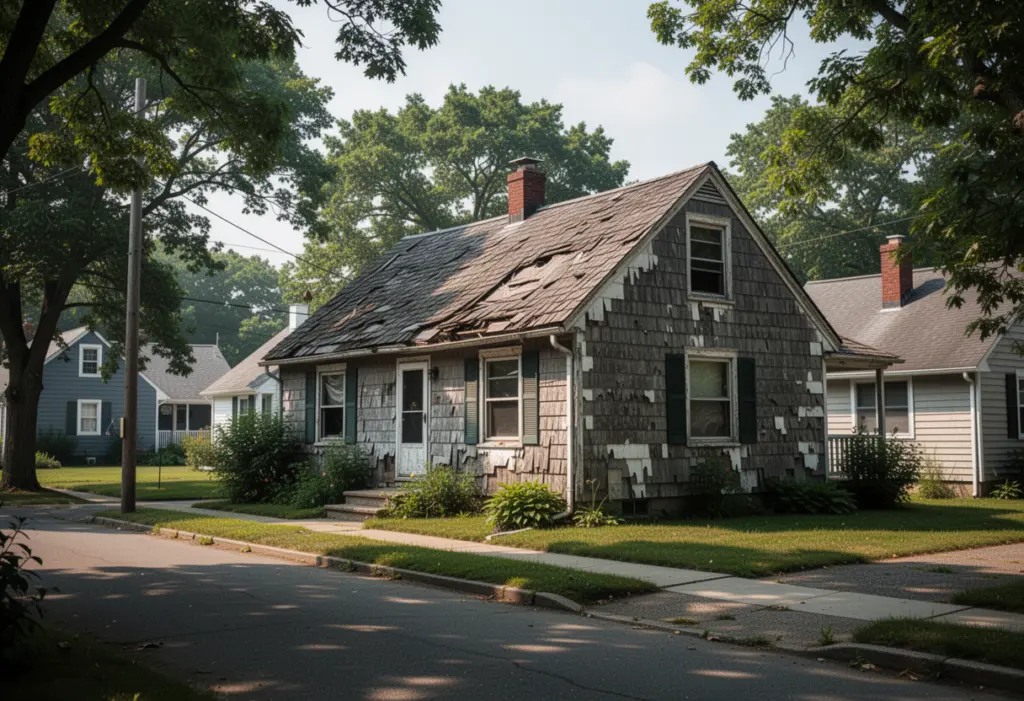
Much of Bay Shore is post-war Capes, ranches and split levels, and that housing stock produces two effects on a quote. Smaller, cut-up roof planes with dormers and vents mean more racking and more roof penetrations per kilowatt than a single clean southern plane, so the labour per watt rises. And a house of that age has been re-roofed at least once, or is due.
If the shingles have under ten years left, replace them first. Removing and reinstalling an array to re-roof underneath it is a cost with no offsetting benefit, and it is entirely avoidable by sequencing the two jobs. Ask any installer to state, in writing, the remaining roof life they assumed.
The second age-related item is the service panel. A 100 amp service that already carries a heat pump or an electric vehicle charger may not accept a solar breaker without an upgrade, and that upgrade is a real line item that should be established before the system is designed rather than discovered during installation.
The water, which is specific to the south shore
Bay Shore sits on the Great South Bay, with the Fire Island ferry terminals at the foot of it, and the streets closest to the water sit differently on the flood maps from those a mile north. Ask two questions early: what flood zone is this property in, and where will the electrical equipment be mounted? Where a parcel is in a mapped flood zone, the height of the inverter, the disconnect and any battery stops being an aesthetic preference and becomes a design and permitting question. It is far cheaper to answer before the design is drawn.
Salt air is worth a sentence too. Ask what the racking and fastener specification is for a coastal exposure, and what the warranty says about corrosion.
Who issues the permit
Bay Shore is unincorporated, so the Town of Islip building department is the authority having jurisdiction. That is not true of every address in the neighbourhood: Brightwaters is an incorporated village and issues its own permits, so two houses a few minutes apart can face different reviewers and different timelines. Ask which authority your address falls under and whether it has adopted the New York State Unified Solar Permit, which standardises residential permitting for systems of 25 kW DC and under and has been taken up by a large number of authorities across the state.
PSEG Long Island, and the charge on capacity
Interconnection and net metering run through PSEG Long Island, which operates the LIPA system. Confirm that from the name printed on your own bill rather than from a map, because Long Island contains genuine exceptions: the municipal electric utilities of Freeport and Rockville Centre in Nassau, Greenport in Suffolk, and Fishers Island are outside PSEG Long Island altogether, and a municipal customer sits outside Public Service Commission net metering and the state interconnection process entirely.
For a PSEG Long Island customer, the Customer Benefit Contribution applies to systems interconnected on or after 1 January 2022 and is billed on DC size rather than production. An 8.5 kW array pays 8.5 × $1.13, about $9.61 a month or roughly $115 a year at the 2026 residential rate. It is charged in February as well as July, and the rates are reset annually rather than fixed at interconnection.
How to compare the quotes you get
- Reduce every quote to cost per watt of DC capacity on the gross price, before any incentive. Comparing net prices compares two different sets of assumptions about your tax return.
- List what is included: roof work, service upgrade, tree work, permit and inspection fees, monitoring, and the warranty behind each component and behind the labour.
- Ask for December and January production separately from the annual total. A satellite shading estimate and a real site assessment diverge most in the low winter sun, and the trees on the north side of a lot do not matter while the ones to the south do.
- Ask what degradation rate the 25-year savings figure assumes, and what electricity price escalation. An optimistic escalation rate can manufacture any payback period you like.
The 2026 incentives that apply to a Bay Shore address
The one that most often decides a Long Island quote is the state credit: 25 percent of qualified expenditure capped at $5,000 on Form IT-255, at your principal residence, non-refundable and limited by your New York State liability with a five-year carryforward. On a $26,000 system, 25 percent is $6,500 and the cap holds it at $5,000, so the last $6,000 of that system earns nothing further from the state. Around it sit the sales tax exemption on residential equipment and the 15-year RPTL 487 exemption, claimed by filing form RP-487 with the assessor, where the town, the county and the school district have each not opted out — three separate checks worth making with the assessor by name. The contractor-applied NY-Sun reduction adds nothing at present: PSEG Long Island’s last residential NY-Sun block closed on 17 April 2016, and as of September 2026 NYSERDA has no open NY-Sun block for homes in any utility territory; check NYSERDA’s NY-Sun dashboard for a new one. The 30 percent federal credit is not among them: section 25D ended for expenditures made after 31 December 2025, treated as made when the original installation is completed. Verify each of these with NYSERDA, the Department of Taxation and Finance and your assessor before relying on a proposal.
Frequently Asked Questions
Who issues the solar permit in Bay Shore?
The Town of Islip, because Bay Shore is an unincorporated hamlet rather than a village. Neighbouring Brightwaters is an incorporated village and issues its own permits, so nearby addresses can face different reviewers.
Which utility serves Bay Shore for solar?
PSEG Long Island, which operates the LIPA system, handles interconnection and net metering. Confirm it from the name printed on your own bill, since Freeport, Rockville Centre, Greenport and Fishers Island run their own municipal electric utilities.
What does the capacity charge cost here?
The Customer Benefit Contribution is billed on DC size for systems interconnected on or after 1 January 2022. An 8.5 kW array pays 8.5 x $1.13, about $9.61 a month or roughly $115 a year at the 2026 residential rate.
Does being near the Great South Bay change the design?
It can. Ask what flood zone the property is in and where the inverter, disconnect and any battery will be mounted, because in a mapped flood zone equipment height becomes a permitting question. Ask about coastal racking and fastener specification too.
This article is general information, not tax, legal or financial advice. Incentive amounts, eligibility rules and deadlines change and depend on your utility, your tax situation and your property. Confirm current terms with NYSERDA, your utility and a qualified tax professional before making a decision.
NY Solar Incentives
Independent New York solar research. We summarise NYSERDA, NY-Sun and federal programme rules from published sources and state plainly when a figure is an estimate. We are not a government agency and do not sell equipment.
Run the arithmetic on your own system
Check the dated program table and your arrangement before counting an incentive. Standard residential NY-Sun blocks are closed; Long Island Affordable Solar has a conditional income-verification route. The NY credit depends on qualified costs and tax liability, while the NYC abatement reduces future property-tax bills. The estimator keeps those timings separate.