Who Pulls the Solar Permit: Installer or Homeowner?
In a normal residential solar contract the installer pulls the permit. If you are being asked to pull it yourself, understand what moves across with it before you agree.
On this page 9 sections
- 01What pulling the permit actually means
- 02Why a homeowner permit gets suggested
- 03What moves across with the signature
- 04Five questions that settle it in one call
- 05Unpermitted is the genuinely expensive version
- 06Two documents you must end up holding
- 07The bill starts only when the paperwork ends
- 08The incentives all assume a properly permitted system
- 09Frequently Asked Questions
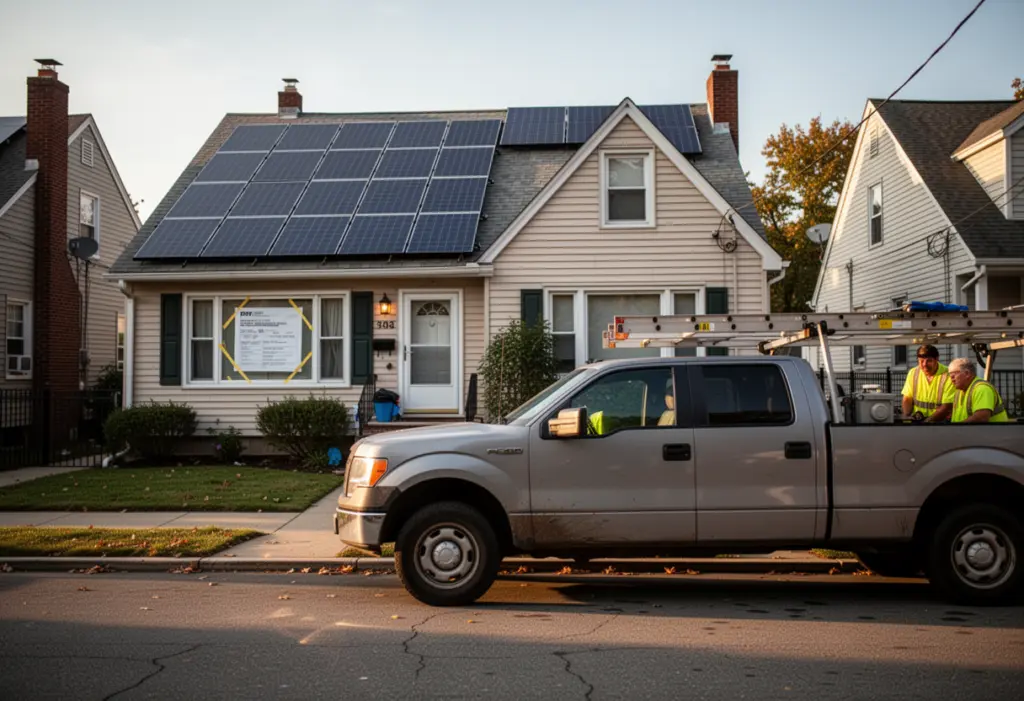
In a normal residential solar contract the installer pulls the permit, and that is the arrangement you want. The permit holder is the party the building department treats as responsible for the work complying with code, so who signs the application is not an administrative detail. It decides who answers when something is wrong.
What pulling the permit actually means
The permit is issued to a named holder. Inspections are booked against that holder, correction notices are addressed to them, and the final sign-off is issued in their name. When a licensed contractor holds it, the code compliance obligation sits with the business that did the work and carries insurance for it.
Why a homeowner permit gets suggested
Two reasons come up. Occasionally the fee is lower for an owner application. Far more often, the contractor is not registered or licensed in that particular jurisdiction, and an owner application is the route around that.
Here is the uncomfortable version: an installer who asks you to pull the permit because it is quicker is frequently telling you they are not set up to work in your town. That is worth knowing for reasons that go well beyond paperwork, because the same registration confirms insurance on file.
What moves across with the signature
- You become the party responsible to the building department for compliance, and the person they call.
- Correction notices, re-inspection scheduling and re-inspection fees land with you unless your contract says otherwise in writing.
- If the installer stops answering, the open permit is yours to close — and an open permit follows the property into a sale.
- What you can recover from a contractor, and what your insurer expects of work on your home, may both be affected. Those are questions for your own attorney and your own insurer, and not for a sales visit.
Five questions that settle it in one call
- Are you registered or licensed to work in this specific jurisdiction, and under what number?
- Whose name goes on the permit application?
- Who schedules and attends the inspections?
- Who pays for a re-inspection if a correction is issued?
- Who obtains the final sign-off, and will you send me a copy of it?
Get the answers in the contract rather than in a conversation. A clause naming the permit holder and assigning re-inspection costs takes one sentence and removes the entire argument.
Unpermitted is the genuinely expensive version
Skipping the permit is not a shortcut, it is a dead end. Your utility will not interconnect a system without the inspection and sign-off, so an unpermitted array cannot legally be energised. A buyer’s attorney will find the gap during a sale. An insurer may ask questions about unpermitted electrical work on a claim. And retro-permitting means exposing finished work for inspection, which costs far more than the permit would have.
Two documents you must end up holding
The permit with its final sign-off, and the electrical certificate of compliance. Keep them with the interconnection paperwork, the stamped plans and the warranty documents. That file is what answers a buyer, an insurer or an assessor years from now, and it is far easier to collect in the month of installation than in the week of a closing.
The bill starts only when the paperwork ends
The Customer Benefit Contribution applies to systems interconnected on or after 1 January 2022, billed monthly on DC capacity rather than on production. A 6 kW array in Con Edison territory pays 6 x $1.29, about $7.74 a month or $93 a year. An unpermitted system pays none of it, for the simple reason that it earns nothing either — it cannot be interconnected at all.
The incentives all assume a properly permitted system
RPTL 487, the fifteen-year property tax exemption on the added value of the system, is claimed through your assessor, and an exemption application for a system with no permit record is a conversation nobody wants to have. It applies only where your municipality, county and school district have each not opted out, and requires construction before 1 January 2030.
NY-Sun is not available to a home right now: as of September 2026 NYSERDA has no open NY-Sun block for homes in any utility territory; check NYSERDA’s NY-Sun dashboard for a new one. If a block reopens, it is applied by your contractor as a reduction in the contract price rather than claimed by you — and the contractor applying it should be the same one registered to pull your permit, which makes that a useful single test of whether you are dealing with an established local operator. New York does still offer 25% capped at $5,000 on Form IT-255 for equipment at your principal residence, and a state sales tax exemption on residential solar equipment. The 30% federal residential credit is gone, terminated for expenditures made after 31 December 2025. Verify all of it with NYSERDA and the New York State Department of Taxation and Finance at the time you sign, because these programmes change.
Frequently Asked Questions
Should the installer or the homeowner pull the solar permit?
The installer, in nearly every case. The permit holder is the party the building department treats as responsible for code compliance, so having a licensed and insured contractor hold it keeps that responsibility where the work was done.
Why would an installer ask me to pull the permit?
Sometimes the owner fee is lower, but more often the contractor is not registered or licensed in that jurisdiction. That is worth knowing, because the same registration is what confirms insurance is on file locally.
What happens if solar is installed without a permit?
The utility will not interconnect it, so it cannot legally be energised. It also surfaces during a sale, may raise questions with an insurer, and retro-permitting means exposing completed work for inspection at greater cost.
Which documents should I keep after installation?
The permit with its final sign-off and the electrical certificate of compliance, filed with the interconnection paperwork, the stamped plans and the warranties. Collect them during installation rather than during a closing.
This article is general information, not tax, legal or financial advice. Incentive amounts, eligibility rules and deadlines change and depend on your utility, your tax situation and your property. Confirm current terms with NYSERDA, your utility and a qualified tax professional before making a decision.
NY Solar Incentives
Independent New York solar research. We summarise NYSERDA, NY-Sun and federal programme rules from published sources and state plainly when a figure is an estimate. We are not a government agency and do not sell equipment.
Run the arithmetic on your own system
Check the dated program table and your arrangement before counting an incentive. Standard residential NY-Sun blocks are closed; Long Island Affordable Solar has a conditional income-verification route. The NY credit depends on qualified costs and tax liability, while the NYC abatement reduces future property-tax bills. The estimator keeps those timings separate.